




Most teens with scoliosis do not complain about anything. There is usually no pain and no limp, only small changes that are easy to miss, like a shirt that hangs a little crooked or a pair of pants that never sits level. That is why the early signs of scoliosis in teens are often spotted first by a parent, a school nurse or a doctor at a routine checkup, not by the teen.
The good news is that you can learn what to look for in a few minutes. In this guide you will see the visible signs of scoliosis, how scoliosis differs from simple slouching, how to do a quick forward bend check at home, and when it is time to book a visit with your child’s doctor. In most teens, the cause of scoliosis is unknown, so nothing a parent did or did not do is to blame.
Quick answer. The most common signs of scoliosis in teens are uneven shoulders, one shoulder blade that sticks out more than the other, an uneven waist, one hip that looks higher, and one side of the rib cage that looks more prominent when the teen bends forward. Most curves are mild and painless, so check for these changes instead of waiting for back pain, and see a doctor if you notice one or more of them.
What Are the Early Signs of Scoliosis in Teens
Ask your teen to stand relaxed with their back to you, in a fitted T-shirt or swimwear, with arms hanging loosely at the sides. Then look for these signs, which are the ones doctors list most often.
- Uneven shoulders. One shoulder sits higher than the other.
- One shoulder blade sticks out. One shoulder blade looks more prominent or sits higher than the other.
- An uneven waist. The space between the arm and the body looks bigger on one side, or the waistline folds more on one side.
- One hip looks higher. Pants, skirts or shorts may hang unevenly, even when they fit well.
- The rib cage looks different on each side. One side may push forward or look more rounded, especially when your teen bends forward.
- The body leans to one side. The head may not sit directly above the pelvis.
Not every teen will show all of these signs. One or two clear signs are enough reason to get your teen checked.
Why the Teen Years Matter Most
Adolescent idiopathic scoliosis is the most common type, and it is found from around age 10 onward. Curves tend to progress most rapidly during the adolescent growth spurt, before the bones finish growing, and girls are more likely than boys to have a curve that gets worse. This is why early detection matters. A doctor can monitor a small curve through the growth years, and an early visit is much easier than one after the curve has grown.
Does Scoliosis Hurt
Usually not in the early stage. A mild curve often develops slowly and causes no pain, so a teen with no back pain can still have scoliosis. For that reason, pain is not a reliable way to check for it. Looking at the back, shoulders, waist and hips is more useful.
Is It Scoliosis or Just Slouching
A teen who slouches can usually straighten up when reminded, and the uneven look goes away. In structural scoliosis, standing taller does not remove the difference between the two sides, and the back looks uneven when the teen bends forward. If your teen mostly rounds the upper back or walks with the shoulders pushed forward, that is closer to a posture habit, and our guide on walking hunched over and simple posture fixes is the better place to start.
How to Check for Scoliosis at Home With the Forward Bend Test
The Adam’s forward bend test is the standard screening that doctors and school nurses use, and you can repeat the same simple version at home. It does not diagnose anything. Only an X-ray can confirm scoliosis, and doctors usually define it as a sideways curve of at least 10 degrees on an X-ray. Think of this check as a way to decide whether your teen needs a doctor’s visit, not as a replacement for one.
What You Need
A well-lit room, a second person to look at the back, and a teen who is comfortable in a fitted T-shirt, a sports top or swimwear so the back and rib cage are easy to see.
How to Do the Forward Bend Test
- Ask your teen to stand with the feet together and the knees straight, arms hanging loosely, palms together.
- Ask them to bend forward slowly from the waist, as if diving into a pool, with the head down and the hands pointing toward the toes.
- Stand behind your teen and look along the back at eye level. Take your time and look at the upper back, the mid back and the lower back.
- Look for one side of the rib cage or back that sits higher than the other, a bump on one side, or shoulder blades that do not match.
- If your teen rolled down too fast or leaned to one side, ask them to repeat it more slowly and evenly.
A photo taken from behind can help you compare the back again in a few weeks.
What the Results Mean
If one side of the back looks higher or rounder than the other, book a visit with your child’s doctor. You cannot measure the curve at home, because the angle is only measured on an X-ray, and a clinician may also use a scoliometer to estimate trunk rotation. If the back looks even, that is reassuring, but it does not fully rule out scoliosis. The test is better at spotting curves in the upper and mid back than in the lower back, so keep watching the shoulders, waist and hips, and mention any concern at the next checkup. In some teens the unevenness disappears when they bend forward, which can point to a posture-related cause, but a doctor should make that call.
Scoliosis vs Kyphosis in Teens
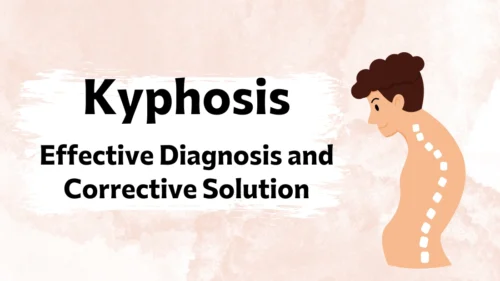
Many parents notice a “crooked” or “rounded” back and are not sure which condition they are looking at. The main difference is the direction of the curve. Scoliosis curves sideways, while kyphosis rounds the upper back forward.
| Scoliosis | Postural kyphosis | Scheuermann’s kyphosis | |
|---|---|---|---|
| Direction of the curve | Sideways, with some twisting of the spine | Forward rounding of the upper back | Forward rounding of the upper back, often a sharper hump |
| Best seen from | Behind, and when bending forward | The side | The side |
| Typical signs | Uneven shoulders, waist or hips, one side of the rib cage higher | Rounded shoulders and a slouched upper back | A more fixed hunch, sometimes with back pain |
| Can your teen fix it by standing tall | No, the difference remains | Yes, the curve can be straightened | No, standing straight does not remove it |
| What is behind it | Cause unknown in most teens | Slouching habits, such as looking down at schoolwork or a phone | Wedge-shaped vertebrae, and it tends to run in families |
The kyphosis rows follow pediatric hospital guidance on kyphosis in teens. A teen can have more than one problem, and only an exam and an X-ray can tell them apart. If you want the full picture on kyphosis, read our guide on kyphosis diagnosis, symptoms, tests and treatment. If your teen mainly slouches, the stretches in our hunched posture guide are the better next step.
Who Checks Teens for Scoliosis
Scoliosis is usually found in one of three places: a routine checkup, a school screening program, or a sports physical. Many schools run screenings, but not all do, so a clean school result should not replace your own look at your teen’s back. Scoliosis can run in families, yet most teens who have it have no relatives with the condition, so a missing family history does not rule it out.
What Does Not Cause Scoliosis
Parents often worry that a heavy backpack, a bad sleeping position or sports caused the curve. They did not. Carrying a heavy backpack does not cause scoliosis, and no activity is known to cause or correct it. Most teens with scoliosis can stay active and do not need to give up the things they enjoy.
When to See a Doctor for Scoliosis in a Teen
Book a visit with your teen’s pediatrician if you notice any of these:
- Uneven shoulders, waist or hips that you can see while your teen stands relaxed.
- A higher side of the rib cage or back during the forward bend check.
- A change over a few weeks, such as a shoulder blade that sticks out more than before.
- Back pain that lasts or wakes your teen at night.
Do not wait for the next routine checkup, because a fast growth spurt can change a curve quickly. Seek urgent medical care if your teen has new leg weakness, numbness or tingling, or changes in bladder or bowel control, because these are not typical for a simple curve and need prompt assessment.
What Happens at the Doctor’s Visit
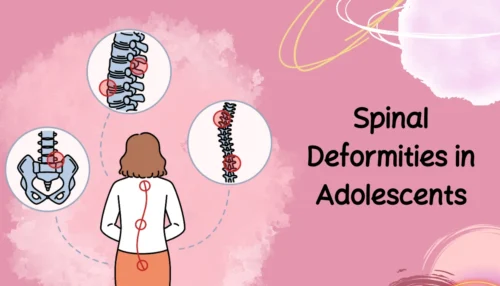
The doctor will ask about your teen’s growth, family history and, for girls, when periods started, because these details show how much growing is left. Next comes a physical exam that includes the forward bend test. If the exam suggests a curve, your teen will have a standing X-ray to confirm it and measure the angle. Some teens also have a hand X-ray to estimate how much growth remains. An MRI is only used when the doctor suspects another cause, such as a spinal cord problem. If the diagnosis is confirmed, your pediatrician may refer you to a pediatric orthopedic surgeon.
How Scoliosis Is Treated in Teens
Treatment depends on the size of the curve and how much your teen still has to grow, as described in this Mayo Clinic overview of scoliosis treatment.
- Small curves usually need no treatment, only regular checkups to see whether the curve changes as your teen grows.
- Moderate curves in a growing teen may be treated with a brace. A brace usually does not reverse the curve, but it can keep it from getting worse, and it works better the more it is worn.
- Large or fast-growing curves may lead to a discussion about surgery.
Braces only help while the bones are still growing. Girls most often stop growing around age 14 and boys around age 16, though it varies from teen to teen. Your doctor will explain which option fits your teen, and the choice should always come from a specialist’s exam and X-rays.
Sitting, Backpacks and School Desks
Many parents wonder whether long hours at a school desk or a heavy backpack caused their teen’s scoliosis. Medical sources say they do not. Poor posture and heavy backpacks do not cause scoliosis, although they can cause back pain and tiredness in any teen. That is still a good reason to set up a comfortable study space:
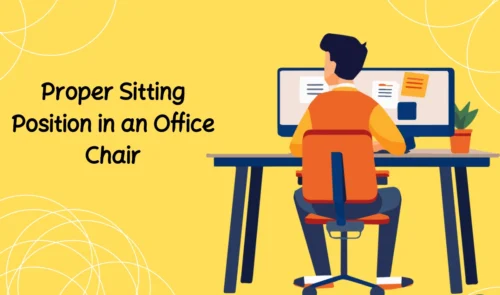
- Desk and chair height. Your teen’s feet should rest flat on the floor, with the screen near eye level. Our office chair setup checklist walks through it step by step.
- Regular movement. Encourage your teen to stand and stretch often during long study sessions.
- Backpack habits. Use both straps, keep the bag close to the back and keep the load light.
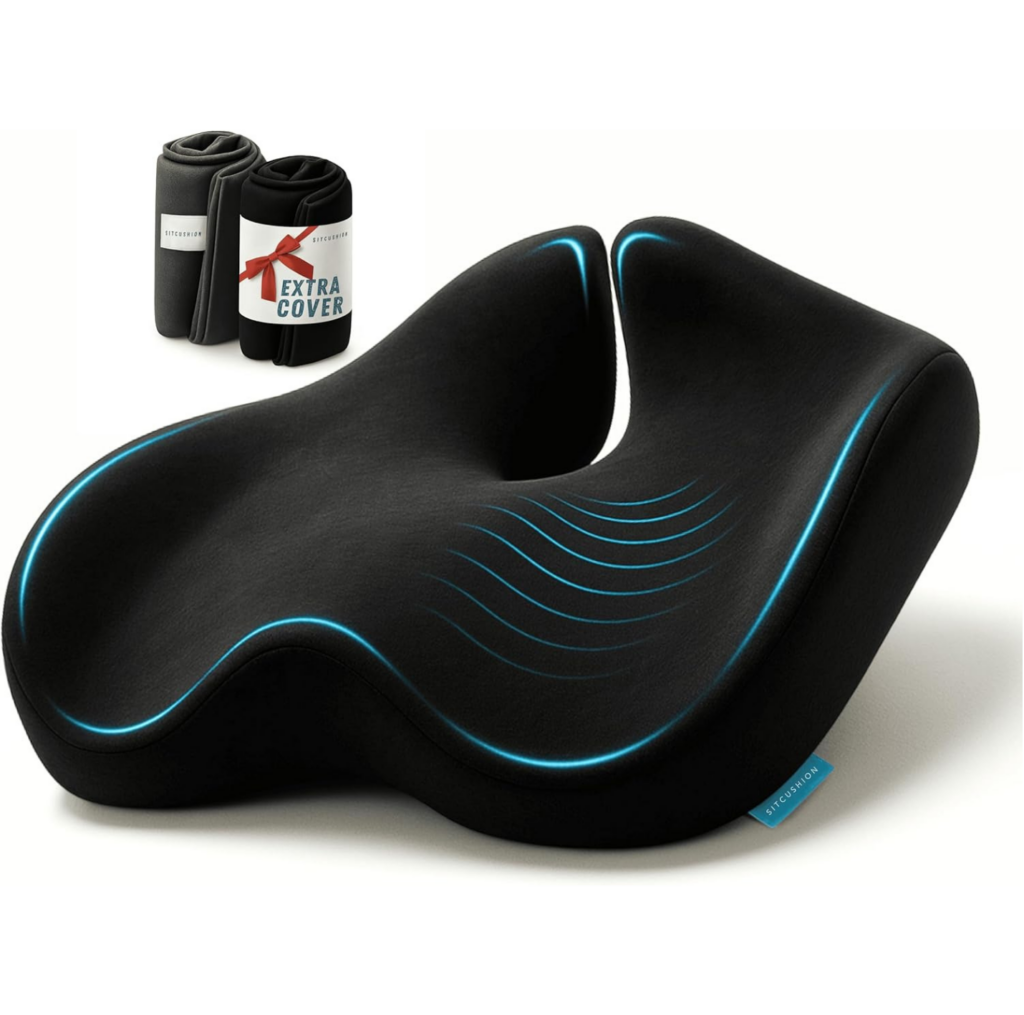
- A supportive seat. If your teen sits on a hard chair for hours, a seat cushion may make sitting more comfortable. It will not treat or straighten scoliosis, and a teen who has had spinal surgery should ask the surgeon before using any seat support.
Frequently Asked Questions About Scoliosis in Teens
What are the first signs of scoliosis in a teenager?
The first signs are usually uneven shoulders, one shoulder blade that sticks out more than the other, an uneven waist, one hip that looks higher, and one side of the rib cage that looks more prominent when your teen bends forward. Early scoliosis is usually painless, so look at the back instead of waiting for pain.
At what age does scoliosis start in teens?
Scoliosis most often appears from age 10 onward, usually in the early teen years during the growth spurt. Roughly 2 to 3 out of every 100 teens have it. Boys and girls develop mild curves at about the same rate, but girls are much more likely to have a curve that gets worse.
Can scoliosis go away on its own?
A structural scoliosis curve does not usually disappear by itself. However, most curves are mild, and many never need treatment, only regular checkups to make sure the curve is not growing. A doctor decides how often to monitor it based on the curve size and how much growing your teen has left.
Does scoliosis hurt in teens?
Usually not at first. A mild curve often causes no pain, which is why many teens do not know they have it. Some teens have back pain or tiredness, but pain that lasts, wakes your teen at night or comes with leg weakness, numbness or changes in bladder or bowel control should be checked by a doctor promptly.
Is scoliosis hereditary?
Scoliosis can run in families, but most teens who have it have no relative with the condition. A mild case in a parent or grandparent may also have gone unnoticed. A missing family history does not rule scoliosis out, so check your teen’s back regardless.
Can bad posture or a heavy backpack cause scoliosis?
No. Bad posture and heavy backpacks are not known to cause scoliosis, and in most teens the cause is unknown. They can cause back pain or fatigue, so good sitting habits and a light backpack still matter for comfort.
How do you test for scoliosis at home?
Use the forward bend test. Stand behind your teen, who bends forward from the waist with the knees straight, arms hanging and the head down. If one side of the rib cage or back looks higher than the other, book a doctor’s visit. This is only a screening, and an X-ray is needed to confirm scoliosis and measure the curve.
Can scoliosis get worse after a teen stops growing?
The risk is low once the bones stop growing, because curves mostly progress during the growth spurt. Small curves of about 30 degrees or less usually stop or progress very slowly. Larger curves may keep progressing slowly, so the doctor will tell you how long follow-up should continue.
Can teens with scoliosis play sports?
Yes, in most cases. Most teens with scoliosis do not need to limit their activities, and a teen who wears a brace can usually take it off for sports. After spinal surgery, return to sports usually takes about 3 to 6 months, so follow the surgeon’s advice.
What is the difference between scoliosis and kyphosis in teens?
Scoliosis is a sideways curve, best seen from behind. Kyphosis is a forward rounding of the upper back, best seen from the side. A teen with postural kyphosis can usually straighten up when reminded, while a teen with scoliosis or Scheuermann’s kyphosis cannot fully correct the curve by standing tall.
Can a seat cushion help with scoliosis?
A seat cushion cannot treat, correct or straighten scoliosis. It may make long hours of sitting at a desk more comfortable for a teen with back or tailbone discomfort. Scoliosis care comes from a doctor, who may recommend monitoring, a brace or surgery depending on the curve.
Final Thoughts
Scoliosis in teens is common, usually mild and often painless, which is why a parent’s eyes are the best early screening tool. Check your teen’s shoulders, waist, hips and rib cage, do the forward bend test, and see a pediatrician if anything looks uneven. Early detection means the doctor can watch a small curve through the growth spurt instead of meeting it late. For more guides on posture and sitting comfort, visit our Knowledge Center.
Medical Disclaimer
This article is for general information and is not medical advice. It cannot diagnose scoliosis or any other condition. If you notice signs of scoliosis in your teen, talk to a doctor. sitcushion products are designed to provide ergonomic support and comfort and are not medical devices.