




Hemorrhoids are swollen veins in the anal canal and rectum, and they are one of the most common reasons adults look for relief online. If you have them, or want to avoid them, you may be wondering whether exercise for hemorrhoids is safe, which workouts actually help and whether the gym can make things worse.
The short answer is that regular, gentle movement is one of the most useful habits you can build. Moderate exercise keeps your bowels moving and helps you avoid constipation, while long periods of sitting do the opposite. The catch is that some activities, such as heavy lifting, put extra pressure on the area and are best modified or skipped.
In this guide you will find the 7 best exercises for hemorrhoids, including yoga poses and Kegels, a clear list of what to avoid, what the research does and does not show, and the warning signs that mean it is time to see a doctor.
What are the best exercises for hemorrhoids? Low-impact activities such as walking, swimming, gentle yoga and pelvic floor exercises are the best choices. They help mainly by preventing constipation, supporting a healthy weight and breaking up long periods of sitting, which lowers pressure on the veins in the anal canal. Heavy lifting, deep weighted squats and long rides on a hard bike seat are the activities most likely to aggravate symptoms, so modify or skip them during a flare-up. Research on exercise as a direct way to prevent hemorrhoids is limited, so treat it as one part of a plan that also includes fiber, fluids and avoiding straining.
This article is for general education and is not medical advice. If you have bleeding, severe pain or symptoms that do not improve, talk to a doctor.
What the Research Says About Exercise and Hemorrhoids
Hemorrhoids, also called piles, are common, and it is natural to expect that staying active would prevent them. The honest answer is that exercise helps mostly in indirect ways. Regular movement reduces constipation, supports a healthy weight and breaks up long periods of sitting, and all three are linked to less pressure on the veins in the anal canal. There are no large trials showing that any specific workout prevents hemorrhoids on its own, so exercise works best alongside a high-fiber hemorrhoid diet, enough fluids and not straining on the toilet.
Can the Gym Cause Hemorrhoids?
It can, in some cases, but the evidence is still early. A 2025 pilot survey of 312 athletes found that hemorrhoids were reported by 57% of people who cycled or rode horses and 48% of bodybuilders, while trekking and skiing were linked to a lower risk. Because it was a small questionnaire study, it shows an association, not proof of cause.
The mechanism makes sense, though. Heavy lifting and holding your breath while you strain raise pressure inside the abdomen, which pushes more blood into the veins around the anus. That is why Cleveland Clinic advises avoiding heavy weightlifting squats and similar movements. If you lift, choose a moderate weight, keep your form controlled and exhale on the effort instead of bearing down.
Now let’s look at the seven exercises that are generally the safest and most useful.
1. Walking, the Easiest Place to Start

Walking is the most reliable exercise for hemorrhoids because it is gentle, free and easy to scale. It encourages regular bowel movements, gets you out of your chair and rarely aggravates symptoms.
- Aim for 20 to 30 minutes of brisk walking most days. If you are new to exercise, start with 10 minutes and build up.
- A short walk after meals can help your digestion get going.
- Adults are advised to get about 150 minutes of moderate activity a week, and daily walks make that target easy to reach.
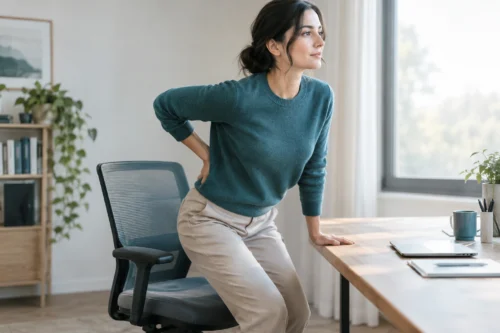
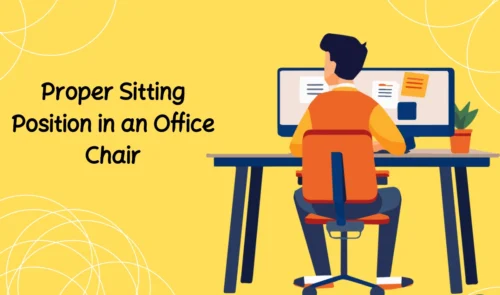
- If you work at a desk or drive for a living, stand and walk for a few minutes every hour. Our guide on sitting with hemorrhoids for office workers and drivers has more practical ideas.
2. Yoga for Hemorrhoids, Gentle Poses That Ease Tension

Does yoga help hemorrhoids? It can help in supporting ways. Some studies suggest that yoga may relieve constipation and improve digestion, and slow breathing helps your pelvic muscles relax. Research on yoga specifically for hemorrhoids is limited, so think of it as a way to reduce tension and support bowel regularity rather than a treatment.
These yoga poses for hemorrhoids are gentle and beginner friendly:
- Legs-up-the-wall pose. Lie on your back with your hips near a wall and rest your legs straight up against it. Relax your arms and breathe slowly for 5 to 10 minutes. It takes the load of gravity off your lower body.
- Child’s pose. Kneel, sit back toward your heels and fold forward with your arms stretched out in front. Hold for 30 to 60 seconds. If sitting on your heels is uncomfortable, widen your knees or place a folded blanket between your hips and heels.
- Wind-relieving pose. Lie on your back and hug one knee to your chest for 20 to 30 seconds, then switch sides and finish with both knees. It is a simple way to ease bloating and gas.
- Cat-cow stretch. On your hands and knees, slowly alternate between arching and rounding your back for 8 to 10 breaths. It gently mobilizes your spine and pelvis.
- Reclined bound angle pose. Lie on your back, bring the soles of your feet together and let your knees fall open, supporting them with pillows if needed. This version avoids the pressure of sitting on the floor.
Skip any pose that causes pain, pressure or a feeling of bearing down, and be careful with long seated poses. These poses suit men and women alike. If you are pregnant or recently gave birth, check with your doctor or midwife first and read our guide to hemorrhoids during pregnancy.
3. Swimming, Low-Impact Cardio Without the Pressure
Swimming and water walking use the whole body while the water’s buoyancy takes weight off your lower body, so there is very little jarring or pressure on the area. It is excellent cardio and also helps with stress and healthy weight.
A few practical tips make it more comfortable:
- Wear a swimsuit that fits comfortably and is not too tight.
- Gently pat the area dry afterward instead of rubbing it, and shower after swimming.
- Wait to swim until symptoms settle if you currently have bleeding or severe pain, and see a doctor if either continues.
4. Kegel Exercises for Hemorrhoids, Strength and Support

Do Kegels help hemorrhoids? Possibly in a supporting role, but the evidence is thin. Kegels strengthen the pelvic floor muscles that surround the rectum and help with bowel control, and a stronger, better-coordinated pelvic floor may make bowel movements smoother. There is little direct research showing that Kegels prevent or treat hemorrhoids, so treat them as a bonus rather than the main event. They work for men and women alike.
- Sit or lie down and tighten the muscles you would use to hold back gas or stop the flow of urine. Your belly, buttocks and thighs should stay relaxed.
- Hold for 3 to 5 seconds, then relax for the same amount of time.
- Repeat 10 times, up to three times a day. Keep breathing normally throughout.
Stopping your urine mid-stream is a handy way to find the right muscles, but do not make a habit of practicing Kegels while you urinate. If you feel pain, or if your pelvic floor already feels very tight, stop and talk to your doctor, because extra squeezing can make a tense pelvic floor worse. A pelvic floor physical therapist can check your technique.
5. Diaphragmatic Breathing and Reverse Kegels, Learning to Relax
Straining is one of the biggest triggers for hemorrhoids, and many people tighten their pelvic floor instead of relaxing it when they try to pass stool. Diaphragmatic breathing and reverse Kegels teach the opposite. According to pelvic floor physical therapists at Hinge Health, they encourage the pelvic floor to relax, which makes bowel movements easier and reduces straining.
How to practice:
- Sit or lie down comfortably with one hand on your chest and one on your belly.
- Breathe in slowly through your nose so your belly rises and your pelvic floor gently lengthens and softens, as if it were settling downward.
- Breathe out slowly and let everything return to rest.
- Repeat for 5 to 10 breaths, once or twice a day. You can also practice while sitting on the toilet.
The goal is a gentle release, never pushing or bearing down. Resting your feet on a small stool while you are on the toilet also helps your pelvic floor relax.
6. Stretching and Mobility, Small Moves That Release Tension
Gentle stretches will not cure hemorrhoids, but they ease tension in the hips, back and pelvis and give you an easy way to break up a long day of sitting. Move slowly, hold each stretch for 20 to 30 seconds per side and breathe steadily. Do not bounce or force the stretch.
- Lying hamstring stretch. Lie on your back, loop a towel or strap around one foot and slowly lift that leg toward the ceiling.
- Lying figure-four stretch. Lie on your back, cross one ankle over the opposite knee and gently draw the legs toward your chest to open the hip.
- Supine spinal twist. Lie on your back with your knees bent and let both knees fall slowly to one side while your shoulders stay on the floor.
A 10-minute routine in the evening is plenty. These stretches pair well with the yoga poses in exercise 2.
7. Light Strength Training, Done With Good Form
Strength training is not off-limits if you have hemorrhoids or want to prevent them. The problem is lifting very heavy loads while holding your breath and bearing down, which raises pressure inside the abdomen. Lighter, controlled strength work builds muscle and supports a healthy weight without that pressure.
Good options include:
- Glute bridges and bird dog for the hips and core
- Resistance band rows and light dumbbell presses
- Lighter weights with more repetitions instead of maximal lifts
Follow these ground rules:
- Choose a weight you can lift 12 to 15 times with good form.
- Exhale on the effort and never hold your breath or strain.
- Rest between sets and stop if you feel pressure, pain or a bulge near the anus.
If you have an active flare-up, wait until it settles or ask your doctor which exercises are safe for you.
Exercises to Avoid or Modify With Hemorrhoids
Most people do not need to give up exercise. The goal is to avoid activities that raise pressure inside the abdomen or press directly on the area, especially during a flare-up. Use this table as a quick guide.
| Activity | Verdict | Why and how to adjust |
|---|---|---|
| Walking, swimming, gentle yoga, stretching, breathing exercises | Safe for most people | Low pressure on the area. These are the best place to start. |
| Jogging, elliptical, light aerobics | Usually fine, modify if sore | Bouncing can irritate a flare-up. Switch to an elliptical or a brisk walk until symptoms settle. |
| Cycling | Pause during a flare-up | A narrow seat presses on the area. When you return, keep rides short and use a wider, well-padded seat. |
| Heavy weightlifting and heavy squats | Avoid during a flare-up, limit afterward | They raise abdominal pressure, which is why Cleveland Clinic advises avoiding them. |
| Sit-ups, crunches, leg lifts | Avoid during a flare-up | They strain the abdomen and increase pressure. Try bird dog or glute bridges instead. |
| Rowing and horseback riding | Avoid during a flare-up | Both put direct, repeated pressure on the area. |
| Jumping and high-impact workouts | Pause during a flare-up | Repeated jolting can irritate swollen tissue. |
| Sitting on an exercise ball | Use with caution | There is little research on this. A firm, rounded surface can press on the area, so keep sessions short and stop if it hurts. |
Remember that the evidence here is still developing. A 2025 survey of athletes linked cycling, horseback riding and bodybuilding with more hemorrhoids, but it cannot prove cause. Listen to your body, and if an exercise causes pain or pressure, choose something gentler.
Can You Exercise With Hemorrhoids Right Now?
Usually yes, as long as the activity is gentle and comfortable. Staying active helps keep your bowels regular, and there is no need to stop moving unless something hurts. During a flare-up:
- Choose walking, swimming, stretching and breathing exercises.
- Stop any exercise that increases pain, pressure or swelling.
- Do not strain or hold your breath.
- Afterward, gently clean the area, pat it dry and change out of sweaty clothes. A warm bath for 10 to 15 minutes can ease soreness. For more relief options, see our guide to hemorrhoids, causes, symptoms and effective treatments.
If you have bleeding or severe pain, rest and read our guides on bleeding hemorrhoids and thrombosed hemorrhoids. If you have recently had a hemorrhoid procedure, follow your surgeon’s instructions and ask when it is safe to return to each type of exercise.
A Simple Weekly Plan to Get Started
- Every day. Walk for 20 to 30 minutes and practice 5 minutes of diaphragmatic breathing.
- Three days a week. Add 15 minutes of gentle yoga or stretching.
- Two days a week. Do 20 minutes of light strength training with good form.
- Optional. Kegels up to three times a day.
Build up gradually, and take an easier week if you have a flare-up.
Everyday Habits That Support Your Exercise
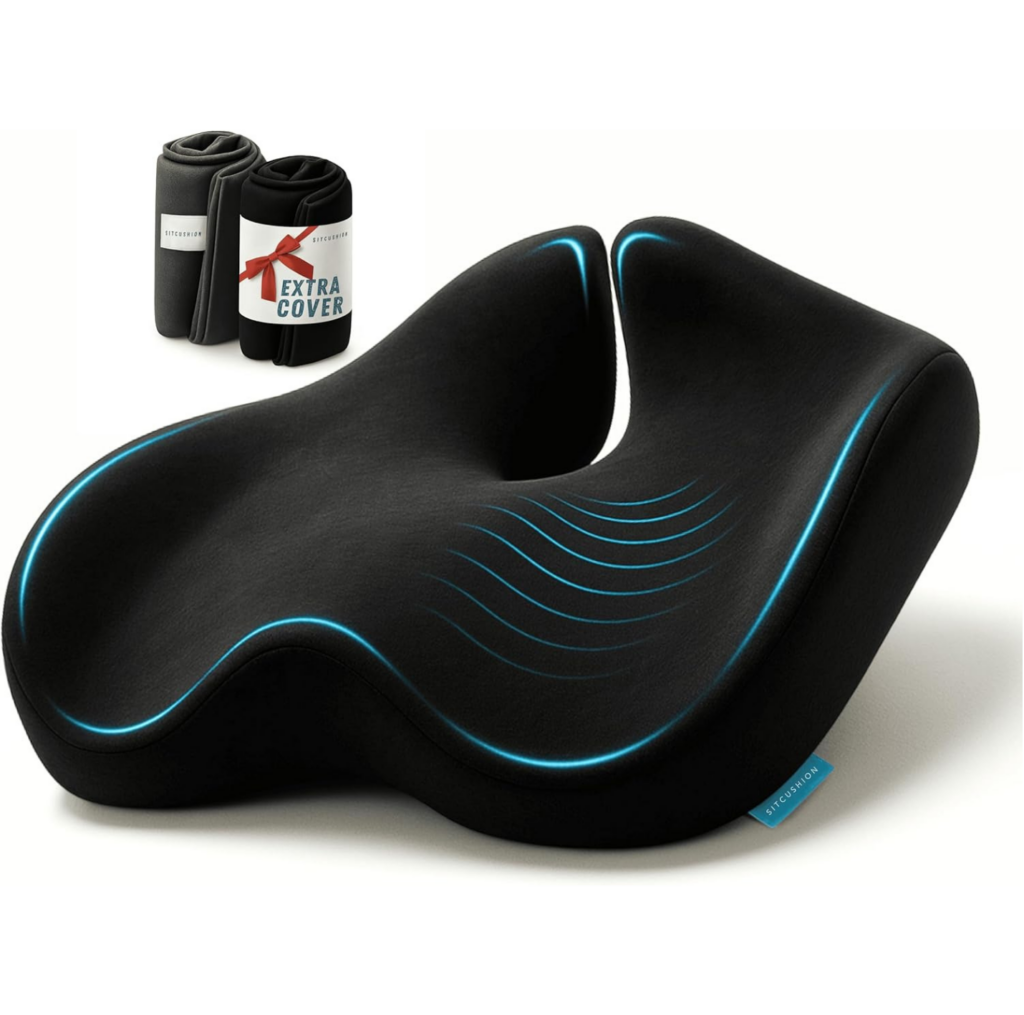
Exercise works best as part of a bigger plan. Eat plenty of fiber and drink enough water with our high-fiber hemorrhoid diet guide, avoid sitting on the toilet longer than you need to, and stand up and move regularly if you sit at a desk or drive for a living. If you sit for long stretches, a supportive cushion can reduce pressure, and our guide to the best hemorrhoid cushions for sitting explains how to choose one.
When to See a Doctor
Exercise and self-care are helpful, but some symptoms need medical attention. See a doctor if you notice:
- Rectal bleeding that is new, heavy or keeps coming back, especially if you are over 45 or your bowel habits have changed
- Black, maroon or tarry stools, or bleeding with dizziness or weakness
- Severe pain or a hard, painful lump near the anus
- A lump that cannot be pushed back in
- Fever or signs of infection
- Symptoms that do not improve after about a week of home care
If hemorrhoids keep returning, our guide to hemorrhoids that will not go away explains the next steps.
Frequently Asked Questions About Exercise and Hemorrhoids
What are the best exercises for hemorrhoids?
The best exercises are low-impact activities that keep your bowels moving without pressing on the anal area: walking, swimming, gentle yoga, stretching, diaphragmatic breathing and light strength training with good form. Walking is the best starting point because it is free, easy to scale and rarely irritates hemorrhoids. Pelvic floor exercises such as Kegels may add support, but the evidence for them is thinner. These exercises suit men and women alike. If you are pregnant or recently gave birth, check with your doctor or midwife first and read our guide to hemorrhoids during pregnancy.
How much exercise do I need to help prevent hemorrhoids?
A good target is about 150 minutes of moderate activity a week, which works out to roughly 20 to 30 minutes of brisk walking on most days. If you are starting from very little activity, begin with 10 minutes and add a few minutes each week. Short walks to break up long periods of sitting count too. Consistency matters far more than intensity, so a gentle daily routine will do more for you than an occasional hard workout.
Can exercise cause hemorrhoids?
Regular, moderate exercise does not cause hemorrhoids and generally helps prevent them, because being inactive and constipated raises pressure in the area. Certain activities, however, may aggravate them or contribute for some people, mainly heavy lifting with breath-holding, heavy squats and activities that press on the area such as cycling and horseback riding. The evidence is still limited. A 2025 survey of 312 athletes found hemorrhoids were more common among cyclists, riders and bodybuilders, but it cannot prove that the sport was the cause. The practical approach is to keep moving, avoid straining and adjust or pause the activities above if symptoms appear.
Can I lift weights or go to the gym with hemorrhoids?
Yes, with a few adjustments. Choose a weight you can lift 12 to 15 times with good form, exhale as you lift and never hold your breath or bear down. Skip maximal lifts and heavy weighted squats, and replace sit-ups and crunches with exercises such as bird dog and glute bridges. If you are in the middle of a flare-up, lower the load or take a break until symptoms settle. Stop right away if you feel pressure, pain or a bulge near the anus.
Does yoga help hemorrhoids?
It can help in supporting ways, although research on yoga specifically for hemorrhoids is limited. Some studies suggest yoga may relieve constipation and improve digestion, and slow breathing helps the pelvic floor relax, which can reduce straining. Gentle poses such as legs-up-the-wall, child’s pose, wind-relieving pose, cat-cow and reclined bound angle are good choices. Skip any pose that causes pain, pressure or a feeling of bearing down, and be careful with long seated poses. Yoga is not a treatment, so it does not replace medical care for bleeding or severe pain.
Do Kegel exercises help hemorrhoids?
Possibly in a supporting role, but there is little direct evidence that Kegels prevent or treat hemorrhoids. They strengthen the pelvic floor, while relaxing those muscles is just as important for passing stool without straining, so pair Kegels with diaphragmatic breathing and reverse Kegels. To do a Kegel, tighten the pelvic floor for 3 to 5 seconds, relax for the same amount of time and repeat 10 times, up to three times a day, without holding your breath. If you feel pain or your pelvic floor already feels tight, stop and ask your doctor or a pelvic floor physical therapist.
Can exercise cure hemorrhoids or make them shrink?
No. Exercise cannot cure hemorrhoids or shrink existing swollen veins on its own. What it can do is reduce constipation, support a healthy weight and break up long periods of sitting, which together lower the pressure that triggers flare-ups. Most mild hemorrhoids improve with fiber, fluids and avoiding straining, and persistent ones may need medical treatment. See our guide to hemorrhoid treatments, and talk to a doctor if symptoms do not improve after about a week of home care.
Is it safe to exercise during a hemorrhoid flare-up?
Usually yes, as long as the activity is gentle and comfortable. Walking, swimming, stretching and breathing exercises are generally fine for both internal and external hemorrhoids. Pause heavy lifting, cycling, rowing, sit-ups and jumping until symptoms settle, and stop any exercise that increases pain, swelling or pressure. Afterward, gently clean the area, pat it dry and change out of sweaty clothes. If you have bleeding, severe pain or a hard, painful lump, rest and see a doctor.
Is cycling or sitting on an exercise ball bad for hemorrhoids?
Cycling is best paused during a flare-up, because a narrow seat presses directly on the area and cycling was among the activities linked to more hemorrhoids in the 2025 athlete survey, although that survey cannot prove cause. When you return, keep rides short, use a wider padded seat and get off the saddle regularly. For an exercise ball, there is little research, but a firm, rounded surface can press on the area and sitting on it for long periods is still sitting. Use it for short periods only and stop if it is uncomfortable.
When can I exercise after hemorrhoid treatment?
It depends on the procedure, so follow your surgeon’s or doctor’s written instructions. Walking is usually encouraged early because it supports circulation and helps prevent the constipation that can interfere with healing. Heavy lifting, straining and high-intensity workouts are usually delayed, but the timing varies by procedure and by person, so ask exactly when each type of exercise is safe. Contact your doctor if you notice heavy bleeding, worsening pain or fever.
The Bottom Line on Exercise and Hemorrhoids
The best exercises for hemorrhoids are the gentle ones you can do consistently, such as walking, swimming, yoga, breathing and light strength work. They will not cure hemorrhoids, but they support regular bowel movements, reduce long periods of sitting and help you avoid the straining that makes hemorrhoids worse. Skip heavy, high-pressure workouts during a flare-up and see a doctor when warning signs appear. For more practical guides, visit our Knowledge Center.
Hemorrhoids affect millions of adults in the United States every year. They can be uncomfortable, painful, and disruptive to daily life. While medical treatments exist, lifestyle adjustments—especially exercise—can play a major role in prevention and relief.
Many people ask questions like: Is exercise for hemorrhoids safe? Can working out make them worse? What are the best exercises to prevent hemorrhoids? And does yoga for hemorrhoids really help?
This article explores all of these questions with science-backed answers, practical tips, and a list of the safest and most effective exercises for long-term prevention.