







Yes, you can sit with hemorrhoids, but how long you sit and how you sit make a big difference. Sitting puts steady pressure on the veins around the anus and rectum, so long, uninterrupted stretches at a desk or behind the wheel are what usually turn mild discomfort into a painful flare-up.
Sitting is not proven to create hemorrhoids on its own, but the link is real. A case-control study in the Sudan Journal of Medical Sciences found that people who sat five or more hours a day had higher odds of hemorrhoids or anal fissures than people who sat less. Cleveland Clinic also lists sitting too long on the toilet among the common causes.
This guide shows you how to sit with hemorrhoids at your desk and in your car, which office chair setup helps, and when a seat cushion is worth adding. If you notice bleeding, a hard painful lump or pain that does not improve, see a doctor.
Does Sitting Cause Hemorrhoids?

Sitting does not cause hemorrhoids on its own, but long, uninterrupted sitting is a common trigger for flare-ups and may raise your risk. The veins around the anus and rectum are normal anatomy. They become hemorrhoids when they swell, and the main drivers of that swelling are pressure and poor blood flow in the area.
When you sit, your body weight presses on the anal and rectal region. On a hard seat, or for hours at a time, that pressure can slow blood flow out of the veins, so they swell and get irritated. This is why sitting at a desk with hemorrhoids or driving for hours so often makes pain, itching and pressure worse.
The research points to a link, not proof. In the study mentioned above, people with hemorrhoids or anal fissures sat more hours per day on average than people without them, and sitting five or more hours daily was associated with higher odds. A study like this shows an association only, so it cannot prove that sitting alone is the cause. Other factors often matter as much or more, including straining, constipation, long sessions on the toilet, pregnancy, extra body weight and a low-fiber diet. You can read the full list in our guide to hemorrhoid causes, symptoms and treatments.
So can sitting in an office chair cause hemorrhoids? It can contribute, especially when you sit for many hours without breaks, on a hard or unsupportive seat, and combine that with other risk factors. The good news is that how long, how and on what you sit is the part you control most, and the sections below show you how.
How to Sit With Hemorrhoids the Right Way
The best sitting position for hemorrhoids is an upright, supported posture where your weight rests on your thighs and sit bones instead of pressing into the sore area, your feet are supported, and you change position often. Small adjustments to your seat and posture can make a real difference in how much pressure reaches the veins around the anus.
Set Up Your Posture
Use this quick checklist at your desk or in any chair:
- Sit all the way back so your hips touch the backrest, and use the chair’s lumbar support to keep your lower back supported. Slouching tends to tip your weight back toward the tailbone and rear.
- Keep your feet flat on the floor or on a stable footrest. According to Oregon OSHA’s computer workstation checklist, your thighs should be roughly parallel to the floor and your lower legs roughly perpendicular to it.
- Leave a small gap between the front edge of the seat and the back of your knees. A seat that is too deep presses behind the knees and pushes you to slide forward or slouch.
- Look for a rounded “waterfall” front edge and a cushioned seat. A hard, flat seat concentrates pressure under the buttocks.
- Spread your weight evenly across both sides and shift position regularly instead of holding one posture.
Choose a Softer, Supportive Seat
Hard surfaces such as wooden chairs, stools and bare metal seats put the most pressure on the area. Harvard Health advises sitting on a cushion rather than a hard surface to help reduce swelling of existing hemorrhoids. At the other extreme, very soft sofas and deep recliners let your hips sink and make you slouch, so a firm but padded seat usually works better. If your chair is hard, a supportive cushion can help, and our hemorrhoid cushion comparison explains which shape suits which situation.
Change Position Often
Even a perfect posture becomes a problem if you hold it for hours. Stand up, walk for a minute or two, or switch between sitting and standing about every 30 to 60 minutes. If a position increases pain, stop and change it rather than pushing through.
Best Office Chair for Hemorrhoids
No chair can treat hemorrhoids, but the best office chair for hemorrhoids is one that spreads your weight over a firm, padded, adjustable seat instead of a hard, flat one. A good ergonomic chair for hemorrhoids lets you keep your feet flat, your back supported and the pressure off the sore area for longer, so you can work without constant discomfort.
What to Look for in a Chair
- A cushioned seat with a rounded “waterfall” front edge. This reduces pressure under the buttocks and behind the thighs, and it is a standard feature of ergonomic chairs.
- Adjustable seat height, so your feet rest flat on the floor and your thighs stay roughly parallel to it.
- Adjustable seat depth, or a seat that fits you, with a small gap behind your knees so you are not pushed forward or into a slouch.
- Adjustable lumbar support, which helps you sit back with an upright spine instead of sliding onto your tailbone.
- A breathable seat fabric. Heat and moisture can add to irritation around the area, so avoid slick or non-breathable covers.
What to Avoid
- Hard, flat or thin seats, such as wooden chairs, stools and bare plastic, which concentrate pressure.
- Very soft or sagging seats, which let you sink and slouch and can make the pressure worse.
- Deep bucket-style seats with raised edges, which can force you into one fixed position.
Already Have a Hard Chair?
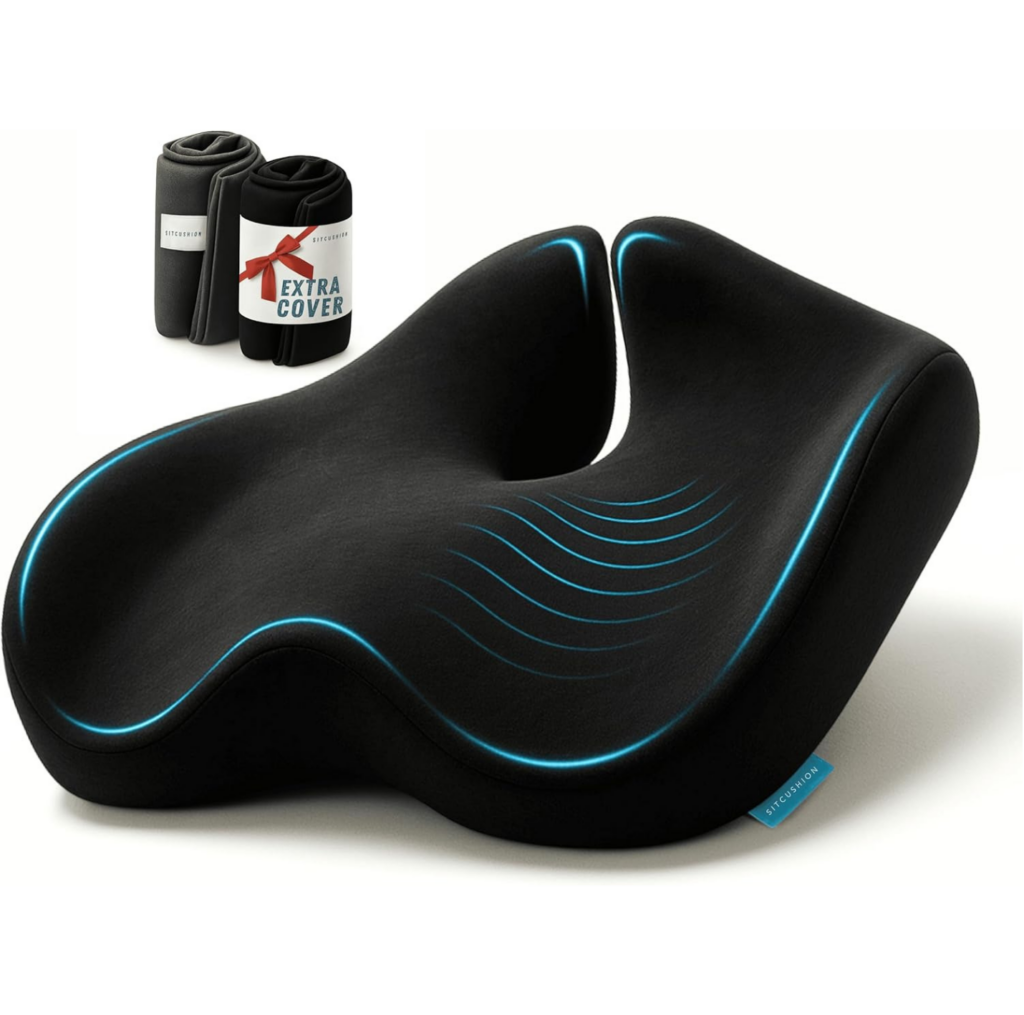
You do not have to replace your chair to sit more comfortably. A supportive seat cushion can turn a hard office chair into a better one, and our Office Seat Cushion uses memory foam with a U-shaped cutout designed for long sitting. A cushion adds height, so lower your seat afterwards until your feet are flat on the floor again, and place it on a firm, flat seat so it does not sink.
Even the best chair works only if you stand up and move regularly, which is what we cover next.
Driving and Truck Driving With Hemorrhoids

Yes, you can drive with hemorrhoids, but long drives are harder than sitting at a desk because you cannot stand up whenever you like and the seat transmits road vibration straight to your body. A good seat setup and planned breaks keep driving manageable, whether you commute or drive for a living.
Do Truck Drivers Get Hemorrhoids?
Many do, and truck driver hemorrhoids are a well-known occupational complaint. Long hours in one posture, vibration from the road and limited opportunities to move all add pressure to the area. An older NIOSH-sponsored report on interstate truck drivers listed forced body posture and whole-body vibration among factors that cannot be ruled out as contributors to several driver health problems, including hemorrhoids. Research on this topic is still limited, and the link is an association rather than proof of cause. Irregular meals and delaying bathroom stops can also lead to constipation and straining, which are major triggers on their own.
Set Up Your Driver’s Seat
- Raise or lower the seat so you can see the road clearly while your thighs stay supported along the full length of the cushion.
- Leave a small gap between the front edge of the seat and the back of your knees.
- Adjust the backrest and lumbar support so your hips sit back against the seat instead of sliding forward.
- Make small posture changes about every 30 minutes, such as shifting your weight and adjusting the lumbar support, so no single spot carries the pressure for hours.
Plan Your Stops

On long drives, stop every one to two hours when you can, get out, walk for a few minutes and stretch. Even a short walk restores circulation and takes the pressure off. Also, don’t hold it in, because delaying a bowel movement can make stools harder and increase straining.
Is a Car Seat Cushion Worth It?
If your seat is hard or too flat, a cushion can make long drives more comfortable by spreading your weight across the thighs and hips. Our Car Seat Cushion uses charcoal-infused memory foam with a U-shaped coccyx cutout, a non-slip base and an angled profile. Because a cushion adds height, lower your seat or check your headroom and pedal reach first. It is designed for standard sedans, hatchbacks and compact SUVs, and it is not designed for extra-deep bucket seats or bench-style truck seats, so measure your seat before buying.
Donut Cushion or U-Shaped Cushion When You Sit With Hemorrhoids
A cushion cannot treat hemorrhoids, but it can make sitting easier, and the right shape depends on how long you sit and how sore you are. Neither shape is wrong for everyone, so it helps to match the cushion to the situation.
A donut cushion is a ring with an open center that keeps your weight off the area directly under the opening. It suits short sits and flare-ups, such as the first days after surgery or childbirth, when reducing direct pressure matters most. Its limits are that the open center offers no support to the tissue above it, and it can add pressure around the hips and thighs if you sit for many hours. Some colorectal specialists also caution that ring cushions may not suit prolapsed hemorrhoids, so check with your doctor first if yours are swollen or protruding.
A memory foam cushion with a U-shaped cutout supports your thighs and hips while leaving the tailbone and rear area free of direct pressure. Because it spreads your weight more evenly, it is usually the better choice for long sitting at a desk or behind the wheel.
For any cushion, a few features matter more than the label:
- Firm, high-density foam that does not flatten under your weight
- A non-slip base so it stays in place
- A breathable, removable cover for heat and hygiene
- A firm, flat seat underneath, since soft sofas and deep recliners let the cushion sink
Our donut vs memory foam comparison walks through both options in detail, including who should choose which.
Move More, Stand Up Often and Fix Your Toilet Habits
The best seat in the world still cannot replace movement. Hemorrhoid flare-ups are driven by pressure, so the more often you take that pressure off, the more comfortable your days become. These habits work together with the posture, chair and cushion tips above.
Take Short Movement Breaks
You should not sit for long, uninterrupted stretches. Set a reminder to stand up every 30 to 60 minutes and walk around for two to five minutes. Even a short walk to refill your water bottle gives the area a rest and restores circulation. Regular activity also helps your bowels work normally, and Harvard Health suggests starting with short walks and building up gradually. For gentle options, see our guide to the best exercises to prevent hemorrhoids.
Use a Sit-Stand Desk if You Can
A standing desk lets you alternate between sitting and standing, which cuts the total hours you spend seated. It does not treat hemorrhoids, and standing all day is not the goal, since long standing can be tiring too. Aim for a mix, such as sitting for 30 to 45 minutes and then standing for 10 to 15, and adjust it to what feels comfortable.
Keep Toilet Time Short
Long sessions on the toilet put the same pressure on the veins as a ring seat, so they are one of the easiest habits to fix. Cleveland Clinic recommends limiting toilet time to no more than five minutes. In practice:
- Leave your phone outside, because scrolling makes it easy to lose track of time.
- Get up and try again later if nothing happens within a couple of minutes.
- Raise your feet on a small step stool. This helps you pass stool with less straining.
Support Your Bowel Habits
Straining is one of the biggest triggers for flare-ups, so keeping stools soft matters as much as how you sit. Eat enough fiber from fruits, vegetables, whole grains and beans, and drink enough water to go with it. Our guide to the high-fiber hemorrhoid diet shows what to eat, drink and avoid.
Frequently Asked Questions About Sitting With Hemorrhoids
Can you sit with hemorrhoids?
Yes, you can sit with hemorrhoids, but you should limit long, uninterrupted sitting and make the seat as comfortable as possible. Sit on a firm, padded surface instead of a hard one, keep your feet supported, and stand up regularly to take pressure off the area. If sitting is very painful, shorten your sits, change position often and see a doctor if the pain does not improve.
Does sitting cause hemorrhoids?
Sitting is not proven to cause hemorrhoids by itself, but long sitting is linked to a higher risk. In a case-control study, people who sat five or more hours a day had higher odds of hemorrhoids or anal fissures. This shows an association, not a single cause. Straining, constipation, long toilet sessions, pregnancy and low fiber intake also play a major role, so reducing sitting time works best together with healthier bowel habits.
Why does sitting make hemorrhoids hurt more?
Sitting puts direct pressure on the swollen veins and can slow blood flow out of the area, so swelling and tenderness increase the longer you stay put. Hard surfaces make this worse by concentrating your weight under the buttocks. That is why pain often builds over a long workday or drive and eases when you stand or walk.
How long can you sit with hemorrhoids?
There is no exact safe time limit, because it depends on how severe your symptoms are and what you sit on. As a practical rule, stand up and move every 30 to 60 minutes, and take shorter sits during a flare-up. If pain starts to build before then, change position or take a break sooner instead of pushing through.
What is the best sitting position for hemorrhoids?
The best position is upright and supported, with your hips back against the backrest, your feet flat on the floor or a footrest, and your thighs roughly parallel to the floor. Keep a small gap behind your knees, use the chair’s lumbar support and avoid slouching onto your tailbone. Shift your weight regularly instead of holding one posture. Our section on how to sit with hemorrhoids has the full checklist.
What is the best office chair for hemorrhoids?
The best office chair for hemorrhoids has a cushioned seat with a rounded “waterfall” front edge, adjustable seat height and depth, and adjustable lumbar support. These features spread your weight and let you keep your feet flat. Avoid hard, flat or thin seats and very soft seats that let you sink. No chair treats hemorrhoids, so combine a good chair with regular breaks. If your chair is hard, a supportive Office Seat Cushion can help.
How should you sit in a car with hemorrhoids?
Adjust the seat so your thighs are supported along their full length, leave a small gap behind your knees and set the lumbar support so your hips stay back against the seat. Make small posture changes about every 30 minutes, and on longer trips stop every one to two hours to walk for a few minutes. If your seat is hard, a cushion that fits your seat can make long drives more comfortable.
Do truck drivers get hemorrhoids?
Many do, because long hours in one posture, road vibration and limited movement all add pressure, and irregular bathroom stops can lead to constipation and straining. Research on drivers is limited, so it is considered a risk factor rather than a certainty. Regular stops, a well-adjusted seat, enough fiber and water and not delaying bowel movements all help.
Does sitting on a cushion help hemorrhoids?
A cushion can help you sit more comfortably by reducing pressure on the sore area, but it does not heal or treat hemorrhoids. A donut cushion suits short sits and flare-ups, while a memory foam cushion with a U-shaped cutout is usually better for long sitting at a desk or in the car. Read our guide to the best hemorrhoid cushions for sitting to choose between them.
Is a standing desk good for hemorrhoids?
A standing desk can help because it cuts the number of hours you spend sitting, which takes pressure off the area. It is not a treatment, and standing all day is not the goal, since long standing is tiring too. A mix works best, for example sitting for 30 to 45 minutes and standing for 10 to 15, adjusted to what feels comfortable.
When should you see a doctor about hemorrhoids?
See a doctor if you notice rectal bleeding, severe or worsening pain, a hard painful lump near the anus, hemorrhoids that stay outside and cannot be pushed back in, or symptoms that do not improve after about a week of home care. Bleeding can also come from other conditions, so do not assume it is hemorrhoids. Seek urgent care for heavy bleeding or if you feel dizzy or faint. For more detail, see Cleveland Clinic’s overview of hemorrhoids and our guide to long-lasting hemorrhoids and long-term solutions.
Final Thoughts on Sitting With Hemorrhoids
So, can you sit with hemorrhoids? Yes, and you can do it more comfortably than you might think. The goal is not to avoid sitting altogether but to reduce the pressure that builds when you sit too long, on the wrong surface, in the wrong position.
Start with the basics. Sit upright and supported with your feet flat, choose a padded seat with a rounded front edge, and set up your car seat so your thighs are supported. Stand up and move every 30 to 60 minutes, keep toilet time short and keep your stools soft with enough fiber and water. If your chair or seat is hard, a supportive cushion can help, and the right shape depends on how long you sit.
Most flare-ups ease with these changes, but bleeding, severe pain or symptoms that do not improve are reasons to see a doctor.
Ready to make long sitting easier? Browse our seat cushion collection or read more guides in our Knowledge Center. Every sitcushion cushion is backed by a lifetime money-back guarantee.