

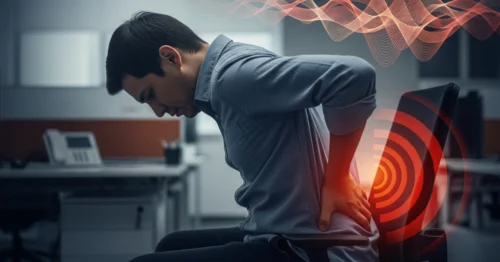



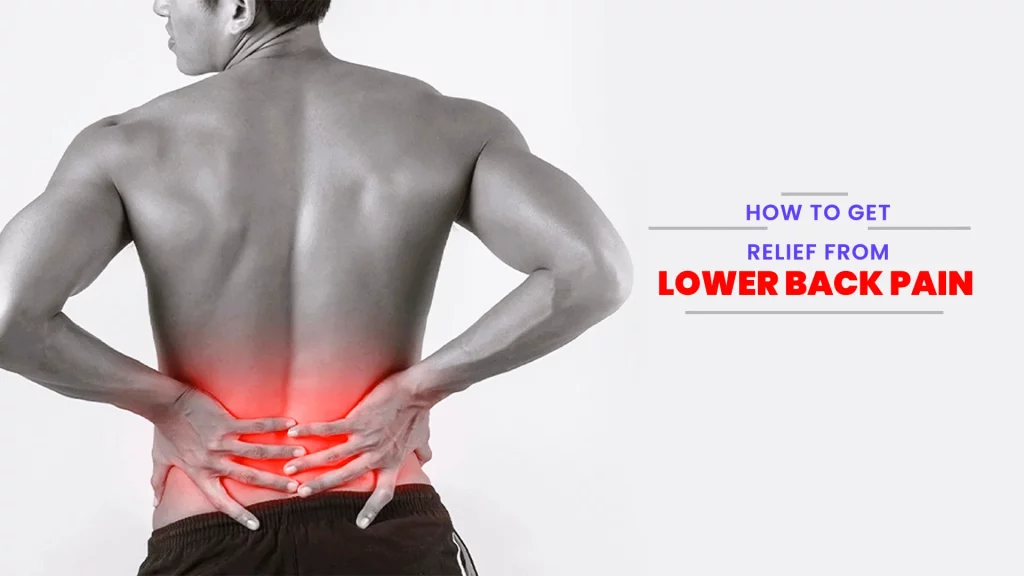
Does your lower back start aching by mid-afternoon, even though you can’t quite pinpoint when it began? You’re far from alone. Research shows that up to 80% of people will experience low back pain at some point in their lives — and for most of them, the cause isn’t a serious injury or condition, but everyday habits: how they sit, how they move, and how they respond to small flare-ups before they turn into recurring problems.
The encouraging part is that lower back pain usually responds remarkably well to simple, consistent changes — not expensive treatments or invasive procedures. In this guide, we’ll walk through 12 practical, evidence-informed methods, from posture and movement to targeted therapies and ergonomic support, that can help you find lasting relief. Some are habits you already know you should build; others — like the right way to use heat versus cold, or one small daily adjustment to how you sit — are easy to overlook, but make a real difference.
1. Maintain Proper Sitting Posture
Posture is one of the most overlooked contributors to lower back pain, yet the mechanics behind it are well documented. When you sit without proper support, your lumbar spine loses its natural inward curve, which increases pressure on the spinal discs and raises muscle activity in the lower back. Over time, this added load is often what turns an ordinary day at a desk into hours of discomfort.
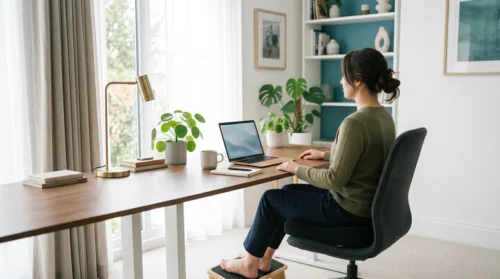
The fix doesn’t have to be complicated: keep your ears, shoulders, and hips roughly aligned, avoid slouching forward, and try to preserve your lower back’s natural curve whether you’re sitting or standing. Small adjustments — like raising your monitor to eye level or adding lumbar support — can meaningfully reduce the strain on your spine throughout the day.
For a deeper, step-by-step breakdown, see our guides on fixing your posture with ergonomic support and correcting a forward-hunched posture.
2. Stay Physically Active
It may seem counterintuitive when your back hurts, but staying active is one of the most well-supported ways to manage lower back pain. The American College of Physicians recommends exercise as a first-line, non-drug treatment for low back pain, ahead of medication, because it carries fewer risks and helps address the underlying issue rather than just masking symptoms.
Low-impact activities like walking, swimming, or cycling are especially effective — they strengthen the core and back muscles that support your lumbar spine, without putting excessive strain on the joints. Regular movement also improves overall flexibility, which helps reduce the stiffness that often makes back pain feel worse.
For a full routine you can follow, see our guide to 13 effective exercises for back pain relief.
3. Use Cold Therapy for Acute Flare-Ups

Cold therapy is most useful in the early stages of a back injury or sudden flare-up. Research on the mechanisms of heat and cold therapy shows that cold reduces blood flow, swelling, and muscle spasm at the site of pain — which is why it’s most often recommended within the first 48 hours after a strain, rather than for pain that’s been lingering for weeks.
To use it safely: wrap an ice pack or gel pack in a thin towel (never apply ice directly to skin), hold it against the painful area for 15–20 minutes, and repeat every few hours as needed. Stop immediately if your skin turns numb or bright red.
For a detailed breakdown of exactly when to reach for ice versus heat — including timing for different stages of pain — see our guide on OTC pain relief and recovery for lower back pain.
4. Apply Heat Therapy
Heat therapy has some of the stronger evidence behind it among home remedies for back pain. A Cochrane systematic review found moderate evidence that heat-wrap therapy provides a short-term reduction in pain and disability for people with acute or subacute low back pain — and that combining heat with light exercise further improves the results.
The mechanism is straightforward: heat increases blood flow to the area, which relaxes tight muscles, eases stiffness, and helps clear the buildup that contributes to soreness. A heating pad, warm compress, or a warm bath for 15–20 minutes at a time can offer meaningful relief, particularly for pain that’s more about stiffness and tension than acute injury.
As a general rule, heat tends to work best once the initial swelling from an injury has settled — usually a day or two in. For the full timing breakdown between ice and heat, see our guide on OTC pain relief and recovery for lower back pain.
5. Stretch Regularly
Tight hamstrings, hips, and lower back muscles are common contributors to lower back pain, since limited flexibility in these areas increases the pull on the lumbar spine during everyday movement. A brief daily stretching routine can help counteract the stiffness that builds up from sitting or repetitive activity, and it’s one of the active, non-drug approaches recommended by the American College of Physicians for managing low back pain.
A few stretches worth prioritizing: the knee-to-chest stretch (lying on your back and gently pulling one knee toward your chest) to release tension in the lower back, the hamstring stretch to reduce pull on the pelvis, and the child’s pose to gently decompress the spine. Hold each stretch for 20–30 seconds without bouncing, and stop if you feel sharp pain.
For a complete, step-by-step stretching and exercise routine, see our guide to 13 effective exercises for back pain relief.
6. Try Yoga or Pilates
Yoga and Pilates occupy a distinct place in back pain management: unlike stretching or general exercise alone, they combine movement, core strengthening, and body awareness in a way that specifically targets the muscles supporting the spine. A systematic review and meta-analysis of randomized controlled trials found that yoga meaningfully reduces pain and disability in people with chronic low back pain, with benefits that held up across multiple studies — which is part of why it’s included among the active, non-drug therapies recommended by major clinical guidelines.
A few beginner-friendly options worth starting with:
Cat-Cow Pose — On hands and knees, alternate between arching and rounding your back slowly with your breath. This gently mobilizes the spine and warms up the surrounding muscles.
Child’s Pose — Kneeling, sit back onto your heels and stretch your arms forward on the floor. This decompresses the lower back and is a good reset between other movements.
Pelvic Tilts (a core Pilates fundamental) — Lying on your back with knees bent, gently flatten your lower back against the floor by engaging your core, then release. This builds the deep core strength that takes pressure off the spine during everyday movement.
A word of caution: if you have a diagnosed spinal condition, a herniated disc, or pain that radiates down your leg, it’s worth checking with a doctor or physical therapist before starting a new yoga or Pilates routine, since not every pose is appropriate for every type of back pain.
7. Use Proper Lifting Techniques
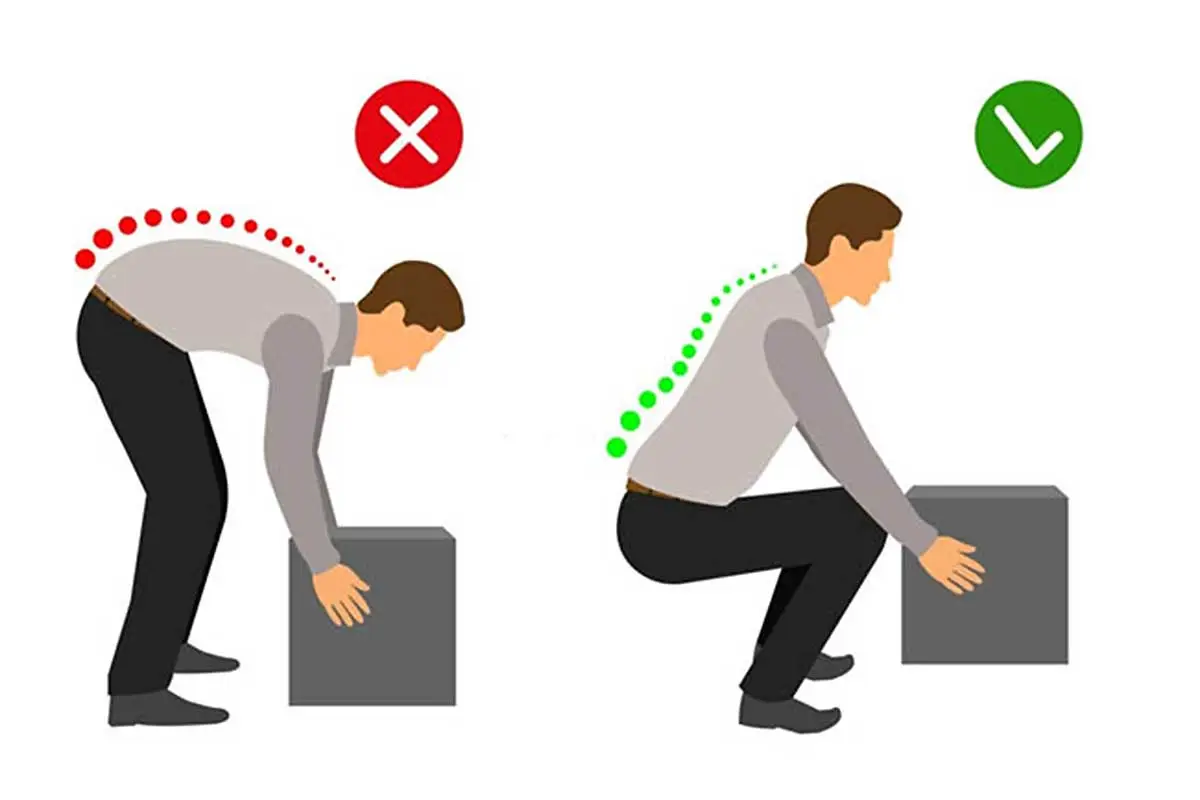
Improper lifting is one of the most common triggers of acute low back injury, and also one of the most preventable. According to NIH ergonomics guidance, lifting with a rounded or twisted back forces the spine out of its natural alignment, placing excess stress on the ligaments and muscles that support it — which is exactly the kind of load that leads to sudden strains.
The core principles are simple to remember, even if they take practice to apply consistently: keep the load as close to your body as possible, since distance from your center of gravity multiplies the strain on your lower back. Bend at your hips and knees rather than your waist, letting your legs — not your spine — absorb the effort. Keep your back in a neutral position throughout the lift, engaging your core rather than arching or rounding your spine. And never twist while holding a load; if you need to change direction, pivot with your feet instead of rotating your torso, since a twisting motion under load is one of the most common causes of lifting injuries.
It’s worth being realistic here: good form reduces risk, but it doesn’t eliminate it entirely — even careful lifters can strain a muscle. If an object feels too heavy or awkwardly shaped to lift safely alone, it’s worth using a dolly, asking for help, or breaking the load into smaller pieces rather than pushing through.
8. Maintain a Healthy Weight
Body weight has a direct, well-documented relationship with spinal load. Research on body composition and chronic low back pain shows that excess weight — particularly around the midsection — increases axial loading on the lumbar spine and can accelerate degeneration of the spinal discs over time. Adipose tissue is also metabolically active, meaning it can contribute to low-grade inflammation that may heighten pain sensitivity.
This isn’t about chasing a specific number on the scale — it’s about reducing the mechanical stress your spine carries day to day. Small, sustainable shifts tend to matter more than dramatic changes: adding short walks into your day, choosing activities that are easy on the joints (like swimming or cycling), and building meals around whole foods rather than heavily processed ones.
If weight is a factor in your back pain, it’s worth discussing a personalized, realistic plan with your doctor — someone who can account for your full health picture rather than a one-size-fits-all target.
9. Prioritize Quality Sleep
Sleep and back pain have a two-way relationship: pain disrupts sleep, and poor sleep quality — along with the wrong sleep surface — can make pain worse. A well-known randomized controlled trial published in The Lancet followed over 300 adults with chronic low back pain and found that those using a medium-firm mattress had significantly less pain and disability than those on a firm mattress — contradicting the old advice that a hard, firm sleep surface is always best.
A few adjustments that can help:
Reassess your mattress if it’s aging or feels unsupportive. A sagging or overly soft mattress can let your spine fall out of alignment overnight.
Support your sleep position. Side sleepers often benefit from a pillow between the knees to keep the hips level; back sleepers can place a small pillow under the knees to maintain the lower back’s natural curve.
Keep a consistent sleep schedule. Irregular sleep patterns are linked to increased pain sensitivity, so going to bed and waking at similar times each day can help.
If your back pain is consistently worse in the morning or disrupts your sleep most nights, it’s worth mentioning to a doctor — it can sometimes point to a specific underlying cause that’s worth investigating.
10. Stay Hydrated
It’s easy to overlook, but hydration plays a real role in spinal health. Your intervertebral discs — the cushion-like structures between each vertebra — rely on a high water content to maintain their shock-absorbing properties. When you’re consistently under-hydrated, this can affect how well your discs handle the everyday compressive load placed on your spine.
The general recommendation is straightforward: aim for consistent water intake throughout the day rather than large amounts at once, and increase it further if you’re physically active or in a hot climate. While hydration alone won’t resolve back pain, it’s a simple, low-effort habit that supports the rest of your spine health routine.
11. Try Acupuncture or Massage Therapy
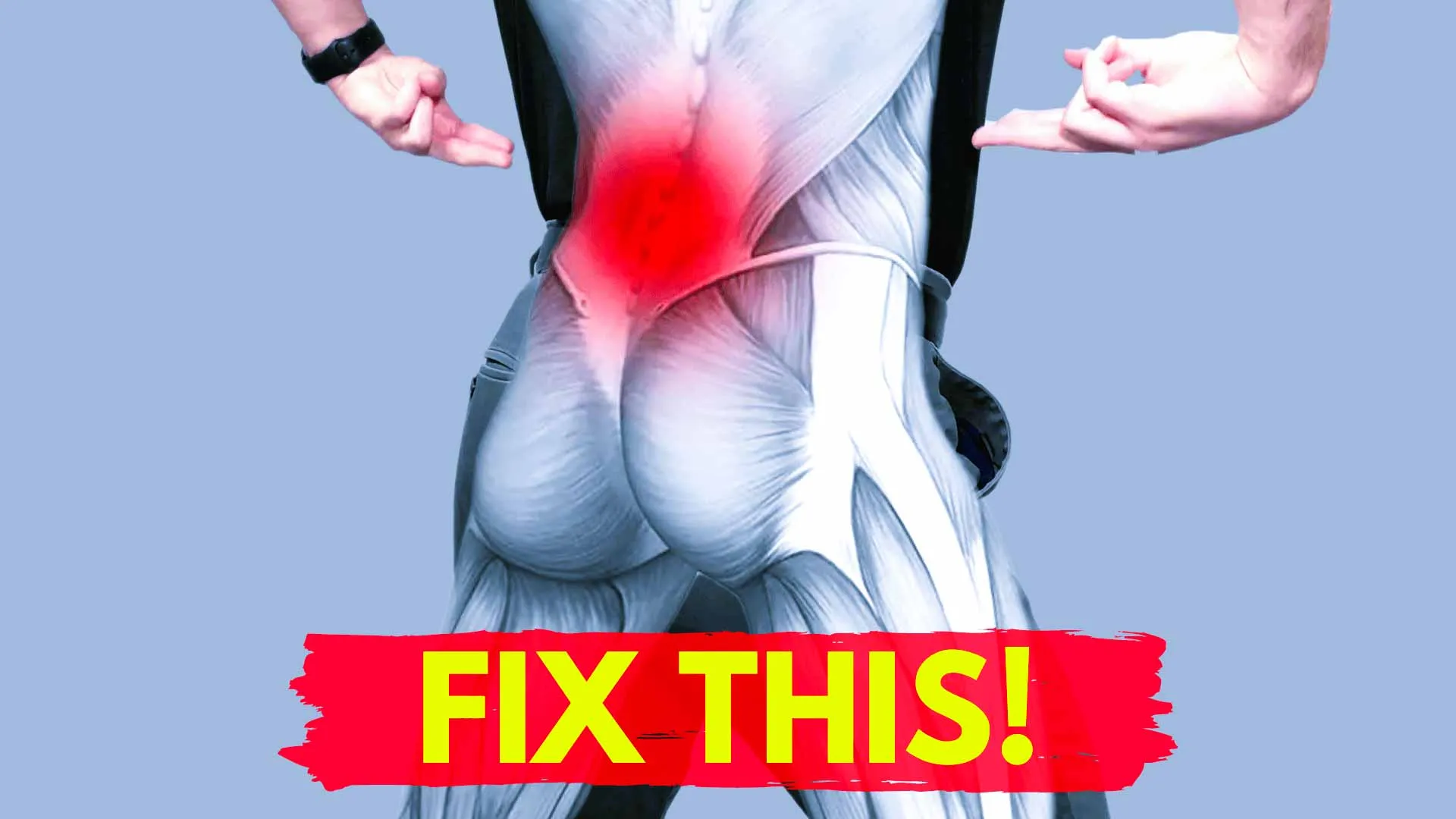
Acupuncture and massage therapy are both included among the non-drug treatments recommended by the American College of Physicians as first-line options for low back pain, alongside exercise and other active therapies — largely because they carry fewer risks than medication while still showing measurable benefit for many people.
Acupuncture involves inserting thin needles at specific points on the body, which is thought to stimulate the nervous system and trigger the release of natural pain-relieving chemicals. Massage therapy works through the muscles and soft tissue directly, improving circulation and helping to release the tension and tightness that often accompanies chronic back pain.
Neither is a cure on its own, and results vary from person to person — but for many, combining one of these therapies with the movement-based methods above (like stretching or staying active) provides better relief than either approach alone. If you’re considering acupuncture, look for a licensed practitioner, and let your massage therapist know specifically where your pain is concentrated so they can tailor the session.
12. Use an Ergonomic Seat Cushion
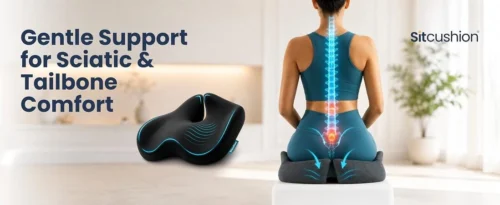
If you spend hours a day sitting — whether at a desk, in a car, or anywhere else — the cushion (or lack of one) beneath you plays a bigger role in your back pain than most people realize. Sitting on a flat, unsupportive surface concentrates your body weight onto the ischial tuberosities and coccyx, which can tilt the pelvis, flatten the lumbar spine’s natural curve, and increase pressure through the lower back over the course of a day.
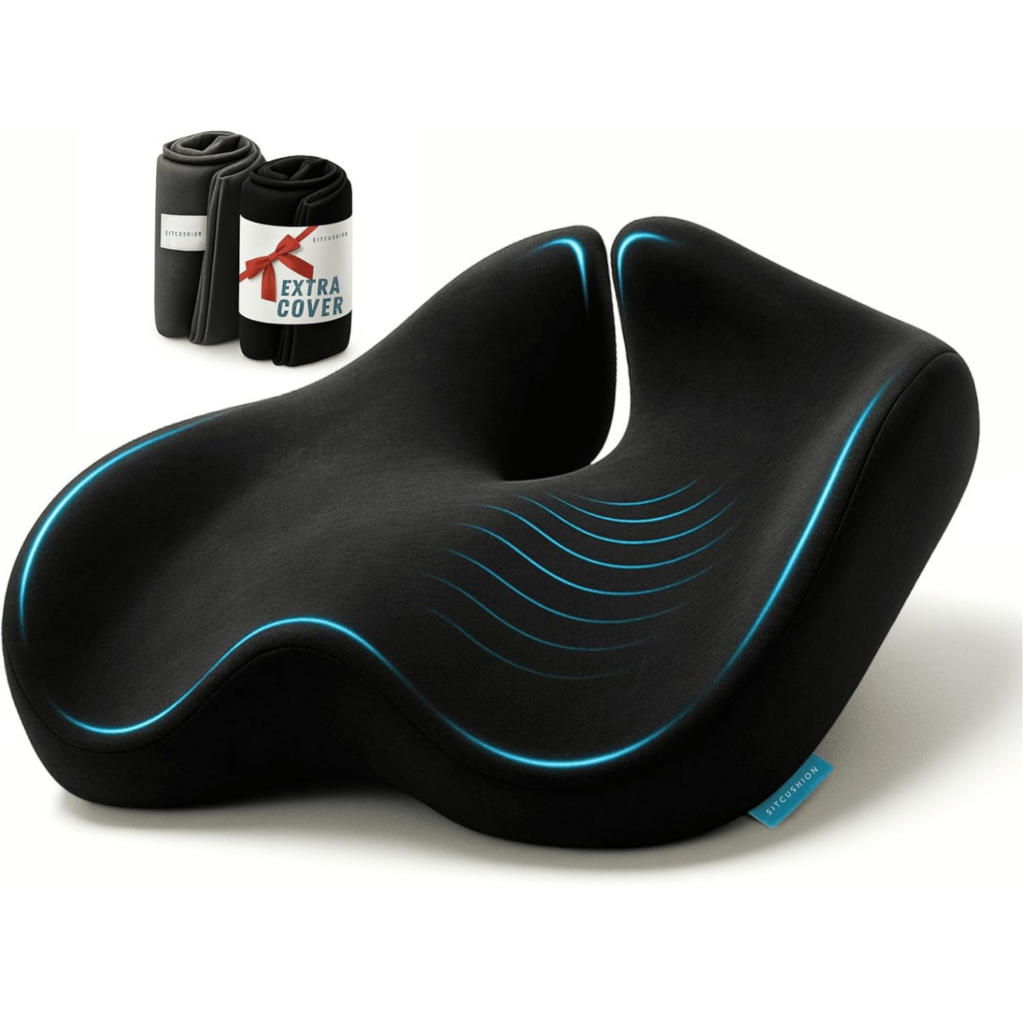
An ergonomic seat cushion addresses this directly. Look for one with a rear cutout design that lifts the tailbone off the seating surface and redistributes weight across the hips and thighs, made from a high-density memory foam that holds its shape rather than flattening out after a few weeks of daily use. A washable, breathable cover helps with hygiene over time, and a non-slip base keeps the cushion in place on office chairs, car seats, or any other seat you use regularly.
Our ergonomic seat cushions are built with exactly these features — designed to relieve pressure and support better posture whether you’re working, driving, or traveling. For a closer look at what to prioritize when choosing one for lower back pain specifically, see our full guide on which seat cushion is best for lower back pain.
The Bottom Line
Lower back pain is common, but it doesn’t have to be something you simply live with. The 12 methods in this guide — from correcting your posture and staying active, to using the right therapy at the right time and supporting your body with an ergonomic seat cushion — work best when combined rather than relied on individually. Small, consistent changes to how you sit, move, and recover tend to add up to meaningfully better days.
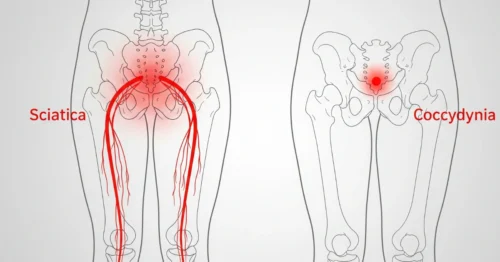
That said, it’s worth knowing when home care isn’t enough. If your pain is severe, doesn’t improve after a few weeks of consistent self-care, radiates down one or both legs, or comes with numbness, weakness, or changes in bladder or bowel control, it’s important to see a doctor rather than continuing to manage it on your own.
For more practical guides on back health, posture, and everyday comfort, visit our Knowledge Center.
Frequently Asked Questions
What is the fastest way to relieve lower back pain?
For most people, a combination of gentle movement, short-term heat or cold therapy, and correcting your sitting posture provides the quickest relief. Complete rest is not recommended — light activity, like walking, typically speeds up recovery more than staying still.
Should I rest or stay active when my lower back hurts?
Staying active is generally better than bed rest. Prolonged rest can weaken the muscles supporting your spine and may slow recovery. Most guidelines recommend continuing light, low-impact activity as soon as you’re able, while avoiding movements that clearly worsen your pain.
Should I use ice or heat for lower back pain?
Use ice within the first 48 hours after a new strain or injury to reduce swelling, and switch to heat afterward to relax muscles and improve blood flow. For pain that’s more about stiffness than a recent injury, heat is usually the better first choice.
How long does lower back pain usually last?
Most cases of acute lower back pain improve significantly within a few weeks, often within a month, with simple self-care. Pain lasting longer than 12 weeks is considered chronic and generally benefits from a more structured approach, ideally guided by a doctor or physical therapist.
Can a seat cushion really help with lower back pain?
Yes — an ergonomic seat cushion with a coccyx cutout and supportive memory foam can reduce pressure on the tailbone and help maintain proper pelvic alignment while sitting, which lowers strain on the lower back during long periods at a desk or in a car.
When should I see a doctor for lower back pain?
See a doctor if your pain is severe, doesn’t improve after a few weeks of self-care, radiates down one or both legs, or is accompanied by numbness, weakness, fever, or changes in bladder or bowel control — these can indicate a condition that needs medical evaluation.