







A posture cushion can make it easier to sit upright, but it cannot correct your posture on its own. It works by changing the angle or height of your seat, which nudges your pelvis and lower back toward a more neutral position. Whether that change is big enough to matter depends on the cushion, your chair, and how your body is built.
The research is encouraging but mixed. In a study of 60 healthy adults, a forward-inclined wedge reduced overall spinal flexion compared with sitting on a flat mat, and a simple block changed pelvic position more than the wedge did. Another study found that a sloped seat did not change pelvic tilt for people with limited hip flexion. In plain terms, a cushion helps some sitters more than others, and it works best alongside a well-set-up chair, a raised screen, and regular movement.
This guide explains how posture cushions work, which types are worth considering, what each one is good for, and when a cushion is the wrong tool. Sitcushion makes seat cushions built for pressure relief and comfort, so we also cover cushion types we do not sell, to help you choose honestly. If your main problem is pain rather than posture, our office chair seat cushion guide is a better starting point.
| Question | Short answer |
|---|---|
| Can a posture cushion help? | Yes, it can make an upright position easier to find and hold, especially a wedge or a firm contoured cushion. |
| Can it fix posture alone? | No. Chair height, screen position, muscle endurance, and how often you move matter just as much. |
| Who benefits most? | People who slump after an hour or two at a desk, in the car, or on the sofa. |
| Who should check with a doctor first? | Anyone with a diagnosed spine condition, ongoing pain, or numbness. |
| How long to adjust? | Plan for about 1 to 2 weeks. Start with shorter sessions and build up. |
How Do Posture Cushions Work?

A posture cushion works by changing the angle or height of your seat so your pelvis sits in a more upright position, which makes it easier for your lower back to keep its natural curve.
Why do we slouch when we sit?

We slouch because sitting makes the pelvis roll backward, which flattens the inward curve of the lower back and rounds the spine above it. A flat chair seat does nothing to resist this tilt. After an hour or two, tired muscles stop resisting it as well, and you slide into the familiar slump without noticing.
What can a posture cushion actually change?
A posture cushion can change four things, and each cushion type relies mainly on one of them.
Seat angle. A wedge is thicker at the back and slopes toward the knees, which tilts the pelvis slightly forward. This is the mechanism most studied in the research above.
Hip height. Lifting your hips a little above your knees opens the angle at the hip. That reduces the pull of the hamstrings on the pelvis, which is one reason a very low seat encourages slouching.
Stable, even support. A firm, contoured cushion keeps your sit bones in place and spreads your weight evenly, so you stop shifting and sliding to find comfort. Sitcushion cushions work mainly this way, through pressure relief and a stable base. Our Car Seat Cushion also has an angled profile, but none of our cushions is designed as a posture-tilting wedge.
Constant small movement. An air-filled disc makes your body adjust continuously to stay balanced. It can keep you more alert to how you are sitting, though the evidence for lasting posture change is thinner than for wedges.
What can’t a posture cushion do?
A posture cushion cannot fix a chair that is the wrong height, a screen that is too low, or muscles that tire after long hours. It also cannot make you move. Posture is something you do, not something a cushion holds for you, and the research above shows that the effect varies from person to person.
How do you know if a cushion is working?
A cushion is working if you can sit upright with less effort, shift less, and need fewer “sit up straight” resets during the day. It is not working if you feel new pain, pressure behind the knees, numbness, or the sensation of being pushed forward off the seat. In that case, stop using it, check the height and size, and talk to a doctor if the symptoms continue.
Which Types of Posture Cushions Are Worth Considering?
There are four main types of posture cushions, and each one helps sitting in a different way: wedge cushions tilt the pelvis, contoured cushions with a cutout stabilize the sit bones, multi-zone cushions combine shaped support areas, and active sitting discs keep you moving.
| Type | How it helps posture | Best for | Main limits |
|---|---|---|---|
| Wedge cushion | Tilts the pelvis slightly forward | Slouching at a desk or in a low seat | Can slide, and may not change pelvic tilt for everyone |
| Contoured cushion with a cutout | Gives a stable base and spreads weight evenly | Shifting, sliding, or sitting unevenly | Does not tilt the pelvis |
| Multi-zone cushion | Combines a firm base with shaped support | Long sessions in one chair | Design and quality vary widely between brands |
| Active sitting disc | Makes you adjust constantly to stay balanced | Short, alert sessions | Tiring over long hours, not suited to driving |
What is a wedge cushion best for?
A wedge cushion is best for people who slump forward because the seat is flat, low, or tilted back. It is thicker at the back and slopes toward the knees, which raises the hips relative to the knees and tilts the pelvis forward. This is the design most studied for sitting posture, and it can make an upright position easier to find.
Wedges have trade-offs. A thin or slippery wedge can slide forward, and a steep one can feel like it is pushing you off the chair. As the research above shows, people with limited hip flexion may see little change in pelvic tilt, so a wedge helps some sitters more than others. If you feel strain in your thighs or knees, try a gentler angle or a shallower seat depth.
Does a contoured cushion with a cutout help posture?
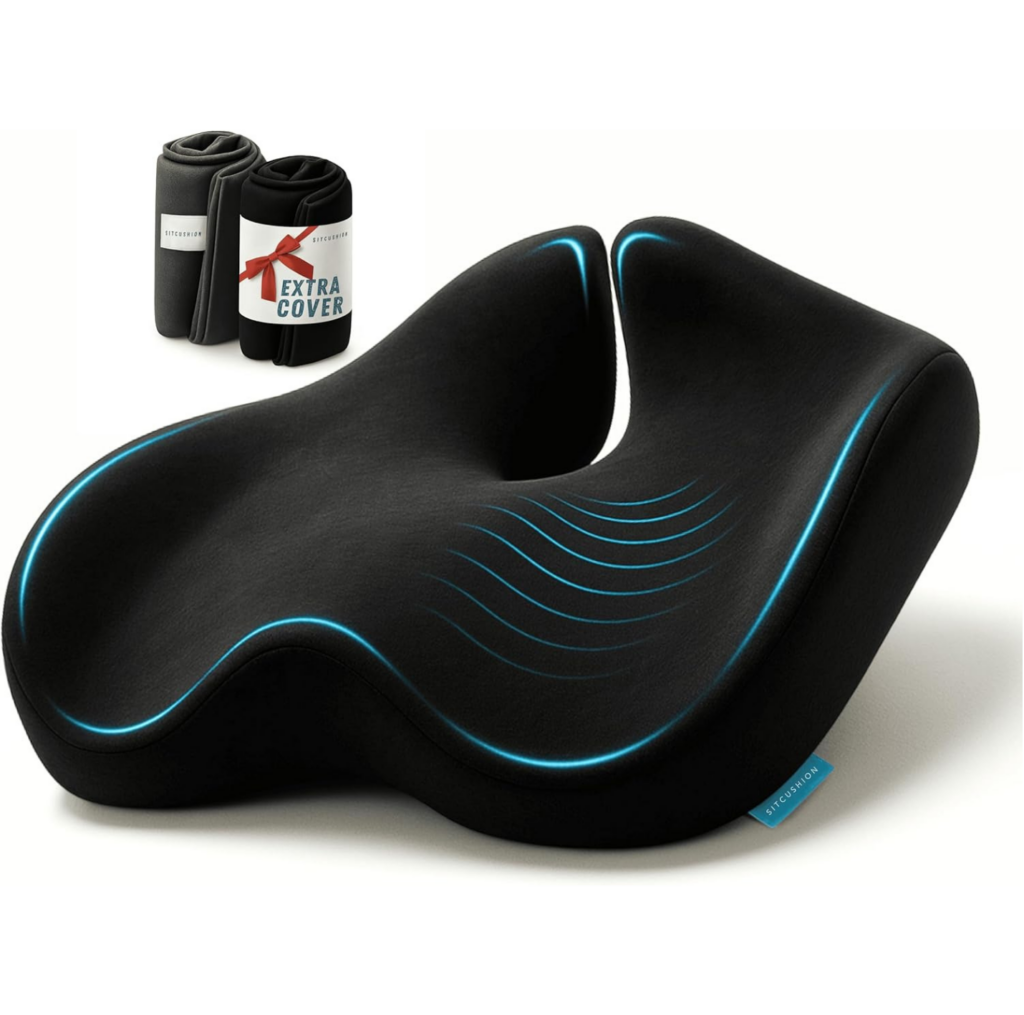
A contoured cushion with a cutout helps posture indirectly, by giving you a stable, comfortable base so you stop shifting, sliding, and sitting unevenly to avoid pressure. The cutout at the back keeps pressure off your coccyx (tailbone), and the contoured foam supports your ischial tuberosities, the sit bones you actually sit on.
Sitcushion’s Office Seat Cushion and Car Seat Cushion both use a U-shaped coccyx cutout with memory foam, and the Car Seat Cushion also has an angled profile. None of our cushions is designed mainly to tilt the pelvis for posture. Their main job is pressure relief and all-day comfort. If you want a mechanical nudge toward sitting upright, a wedge is the more direct tool. If you tend to slump because sitting becomes uncomfortable, a stable cushion like this can reduce that.
How do you choose a good multi-zone cushion?
A multi-zone cushion is worth considering if you sit for long sessions in one chair and want support that combines a firm base with shaped contours, for example firmer under the thighs and softer under the sit bones. “Multi-zone” is not a standardized term, so judge the cushion by what it is made of and how it fits, not by the label. Check four things:
Size. The cushion should fit your seat without hanging over the edges or leaving your thighs unsupported.
Thickness. A thicker cushion lifts you higher, so make sure your feet still rest flat and your arms still reach the desk comfortably. You may need to lower the chair or add a footrest.
Firmness. Press down with your hand. If you can feel the seat beneath the foam, it will bottom out once you sit on it, and the support will disappear.
Grip. A non-slip base matters because a cushion that slides under you cannot hold your position.
Is an active sitting disc a good choice?
An active sitting disc suits short, focused sessions when you want to stay alert and aware of how you sit. It is an air-filled or flexible disc that moves under you, so your body makes constant small adjustments to stay balanced.
Evidence that this builds lasting posture is thin. A systematic review of seven studies found no evidence that dynamic sitting works as a stand-alone approach for low back pain. A disc can also become tiring over long periods, and it is not suitable for driving, where you need a stable, predictable seat. Use it in short blocks and switch to a stable seat when you stop concentrating on your balance.
How Do You Choose and Use a Posture Cushion?
To get a real posture benefit, match the cushion to your situation, set up your chair first, and build up use gradually. A good cushion in a badly set up chair will do little, and a well-set-up chair with a poorly chosen cushion can make sitting worse.
Which posture cushion fits your situation?
The right cushion depends on why you slump and where you sit. Use this table as a starting point.
| Your situation | Better fit | Why |
|---|---|---|
| You slump forward in a low or flat seat | Wedge cushion | Tilts the pelvis forward and lifts the hips |
| You shift, slide, or sit unevenly because sitting gets uncomfortable | Contoured cushion with a cutout | Gives a stable, pressure-relieving base |
| You sit in one chair for many hours | Multi-zone or contoured cushion | Combines a firm base with shaped support |
| You want to stay alert in short work blocks | Active sitting disc | Keeps you making small adjustments |
| You drive long distances | Stable cushion, never a disc | A predictable seat matters more than movement |
How should you set up your chair before adding a cushion?

Set up your chair before you add a cushion, because the cushion changes your seat height and angle. General ergonomic guidance points to the same basics.
Feet. They should rest flat on the floor or on a footrest, never dangling.
Knees. They should sit at roughly the same level as your hips, or slightly lower.
Back. Your lower back should be supported by the backrest, with your hips pushed back into the seat.
Screen. The top of your monitor should be near eye level, so your head is not drifting forward.
Arms. Your forearms should rest comfortably, with your shoulders relaxed.
Because a cushion lifts you, you may need to lower the chair or add a footrest after you place it. If your feet no longer touch the floor, the cushion is too thick for your setup or the chair needs adjusting.
How do you start using a posture cushion?
Start with shorter sessions and build up over about 1 to 2 weeks. Your body is used to your old sitting position, and a new angle or height can feel unfamiliar at first. Mild awareness of your posture is normal. New pain, numbness, or pressure behind your knees is not. If that happens, stop using the cushion, check the height and size, and speak with a doctor if symptoms persist.
How often should you get up?
Get up every 30 minutes or so, even for a minute or two. No cushion can hold a perfect posture for hours, and the body is built to move. A small Columbia University study of 11 adults found that five minutes of walking every 30 minutes gave the best results among the schedules tested for blood sugar and blood pressure. It did not measure posture, but it supports the same principle: moving often matters more than holding one position well.
Do posture cushions work in a car, at a desk, and on a sofa?
Posture cushions work best on a firm, flat surface, so results differ by setting.
At a desk. This is where cushions are most useful. Set up the chair first, then add the cushion and recheck your feet, knees, and screen height.
In a car. A stable cushion can help, but it also raises your seat height, which changes your view and your distance to the pedals and wheel. Check that your head still clears the roof and your knees are not too high. For more, see our guide to car seat cushions for long drives. Avoid air discs or wobbly cushions while driving.
On a sofa. Soft sofas let a cushion sink, which cancels most of its effect. If you want better posture there, sit on a firmer part of the sofa or choose a firm cushion that keeps its shape.
Frequently Asked Questions
Do posture cushions actually work?
Posture cushions can help some people sit more upright, but they are not a stand-alone fix. Studies of wedge-style seating aids show measurable changes in spine and pelvis position in healthy adults, while other research shows little change for people with limited hip flexion. Results depend on the cushion, the chair, and the person, and they are strongest when combined with a well-set-up workstation and regular movement.
Can a posture cushion make back pain worse?
Yes, a poorly chosen or badly used cushion can cause discomfort. A cushion that is too thick, too steep, or too narrow, or one used for too long too soon, can create pressure behind the knees or leave your feet off the floor. If you feel new pain, stop using it and recheck the size and your chair height.
Some symptoms need prompt medical attention rather than a cushion adjustment. The NHS advises seeking urgent help if back pain comes with numbness, tingling, or weakness in both legs, or numbness around the genitals or buttocks.
How long does it take to get used to a posture cushion?
Most people need about 1 to 2 weeks to adjust. Start with shorter sessions and increase gradually, because a new seat height or angle can feel unfamiliar at first. Mild awareness of your posture is normal, while sharp pain, numbness, or tingling is not.
Is a wedge cushion better than a flat cushion for posture?
A wedge is more direct for slouching, because its slope tilts the pelvis forward. A flat contoured cushion is better when you slump because sitting is uncomfortable, since it gives a stable, pressure-relieving base. Neither is better for everyone, so choose by the reason you slouch and where you sit.
Can I use a posture cushion all day?
You can, as long as you move regularly and the cushion fits your chair and body. No cushion can hold one position for hours without tiring the muscles, so stand up every 30 minutes or so and vary how you sit.
Can a seat cushion fix forward head posture or rounded shoulders?
Not directly. A seat cushion mainly affects the pelvis and lower back, while head and shoulder position depends on screen height, desk setup, and upper-body habits. A cushion may help you sit taller overall, but raise your screen to eye level and take movement breaks if your neck or shoulders feel strained.
Sitcushion Office Seat Cushion
A contoured memory foam cushion with a U-shaped coccyx cutout, a non-slip base, a washable cover, and a lifetime money-back guarantee, built for all-day comfort and pressure relief.
Bottom Line
A posture cushion is a useful aid, not a cure. It can make sitting upright easier when the type matches your situation, but it works best alongside a properly adjusted chair, a screen at eye level, and regular movement.
If comfort and pressure relief are your priorities, browse our seat cushion range. For more practical guidance, visit our Knowledge Center.