





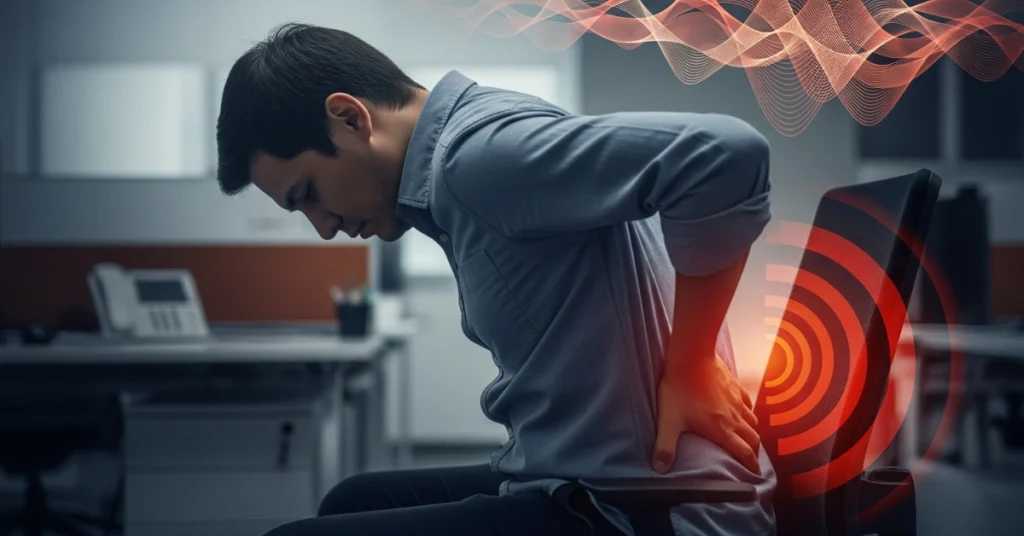
This guide explains what an office chair cushion can and cannot do, how it differs from lumbar support, and what to check before you buy, including shape, thickness, size, firmness and base. If you want the research behind seat cushions first, read our guide on whether a seat cushion really helps. One note on transparency: Sitcushion makes seat cushions, so our Office Seat Cushion appears in this guide, with its limits explained. A seat cushion is a comfort tool, not a medical treatment. See a doctor if your pain comes with numbness, leg weakness or bowel or bladder changes, or if it keeps getting worse.
Which Office Chair Cushion Is Right for Your Back Pain
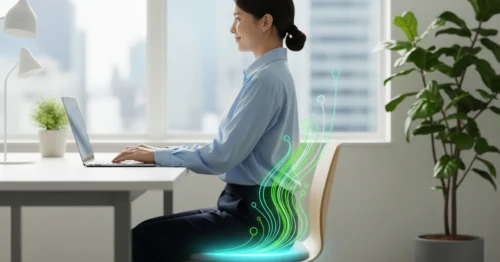
The right office chair cushion depends on where the pain sits and what your chair already gives you. A U-shaped cushion with a rear cutout suits pressure at the tailbone and sit bones, while an ache higher in the lower back usually calls for lumbar support instead, and many people end up needing both. Use the table below to match your situation to what to look for.
| If this describes you | What to look for | Why it matters |
|---|---|---|
| Pain or pressure at the tailbone and sit bones after an hour or two | A U-shaped cushion with a rear cutout and firm memory foam | The cutout keeps the tailbone off the seat, and firm foam does not collapse under your weight |
| Lower back ache with a chair that has little back support | Lumbar support behind your back, with a seat cushion only if your seat is also uncomfortable | A seat cushion sits under you and does not fill the gap behind your lower back |
| Buttock or leg discomfort when you sit, without numbness or weakness | A contoured, firm cushion that spreads weight, in a size that fits your seat | It can reduce pressure under you, but it cannot treat the cause of nerve pain |
| Feet no longer flat or desk feels too high after adding a cushion | A thinner cushion, a lower chair setting or a footrest | A thick cushion raises your seat height and changes your whole setup |
| Cushion keeps sliding on a smooth chair | A non-slip base and a size that matches your seat | A cushion that shifts leaves your tailbone unprotected |
If you want a comparison by pain type across every seat, read our broader guide on which seat cushion is best for lower back pain. To compare all of our models side by side, see our seat cushion page.
Seat Cushion vs Lumbar Support for Office Chair Back Pain
A seat cushion sits under you and a lumbar support sits behind your lower back, so they solve different problems. The two are often mixed up, and many product listings use both terms for the same item, which is one reason people buy the wrong one.
A seat cushion spreads your body weight over a wider area and can keep sensitive spots such as the tailbone and sit bones off the hard seat. It can also change your seat height and pelvic position slightly. What it cannot do is fill the gap between your lower back and the backrest.
A lumbar support is a pillow or built-in curve that supports the inward curve of your lower back. It helps when you slouch away from the backrest or your chair has a flat back, but it does nothing for pressure under your tailbone.
As a rough guide, pain at the base of the spine, buttocks or back of the thighs points toward a seat cushion, while a dull lower back ache that builds through the day with a gap behind your back points toward lumbar support. Many people need both. Before buying either, check whether your chair already has an adjustable lumbar support, because adjusting it costs nothing. Sitcushion makes seat cushions and not lumbar pillows, so if your pain is clearly in the lower back curve, a lumbar support may help you more than any seat cushion, ours included.
Where the Sitcushion Office Seat Cushion Fits
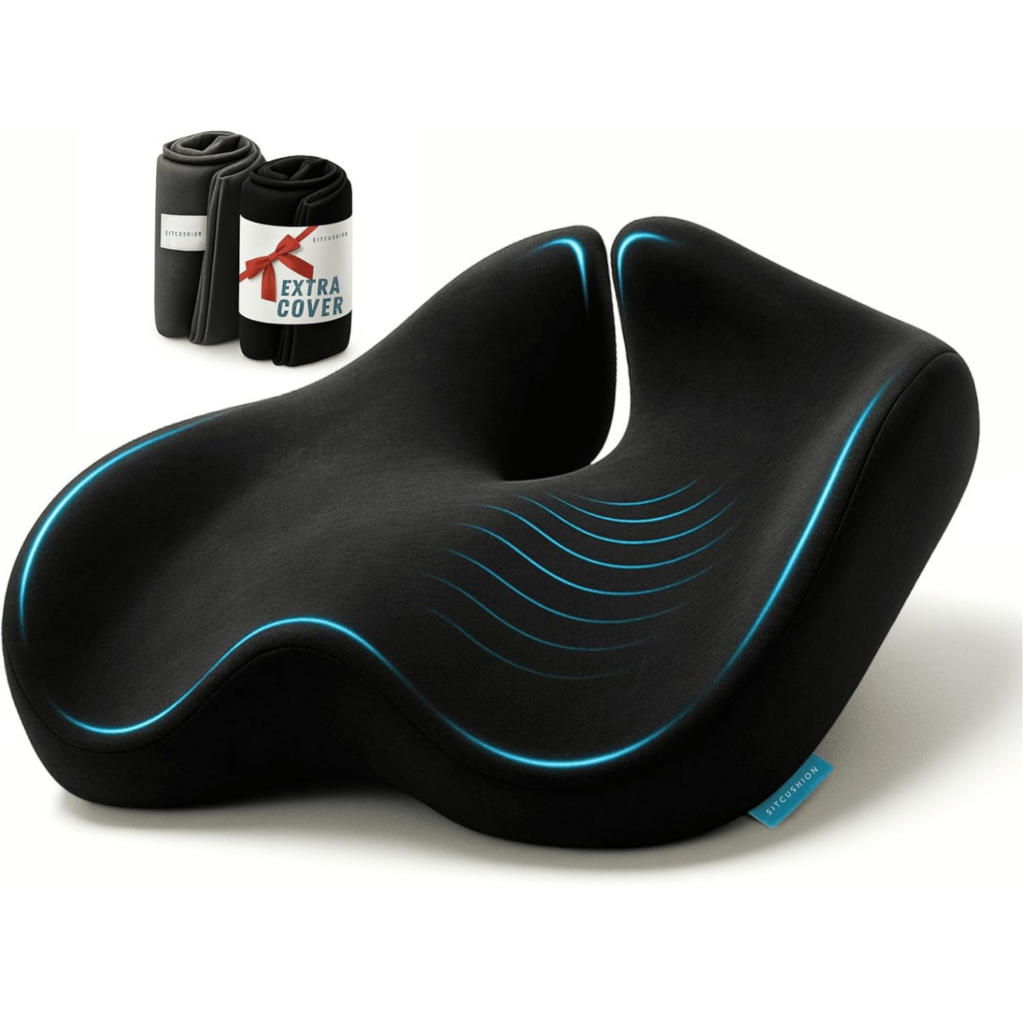
The Sitcushion Office Seat Cushion is built for people with tailbone and sit-bone pressure during long desk hours. It measures 17.5″ × 20″ × 5″ and combines a U-shaped coccyx cutout with charcoal-infused memory foam, a non-slip base, a carrying handle and a removable, machine-washable cover. It comes in several colors, including a Cooling Black version, and some versions include a spare cover. At about 5 inches thick, it raises your seat height, so check that your feet still rest flat and your desk height still works. It suits firm, flat office chairs and is a poor match for soft sofas or low desks where you cannot adjust your chair. Every Sitcushion product is backed by a lifetime money-back guarantee. We cover its full details and trade-offs later in this guide.
Why Sitting at a Desk All Day Causes Back Pain
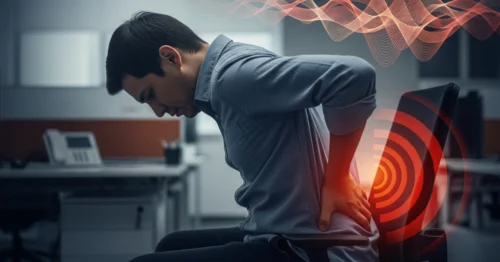
Desk work hurts mainly because you stay in one position for hours, not because of a single faulty chair part. Three things usually combine. First, static sitting keeps the same muscles and joints loaded without a break. Second, a hard or flat seat concentrates your weight on small areas, mainly the tailbone and sit bones. Third, a chair that does not fit your body, with the wrong height, depth or back support, pushes you into a slumped posture without you noticing.
Movement matters more than most people expect. In a six-month cluster-randomized trial of 133 high-risk office workers, those given a dynamic cushion designed to encourage postural shifts developed new low back pain far less often than those given a placebo pad, with 10% affected in the cushion group. The same study found the cushion did not reduce pain or disability in people who already had pain. It also tested a dynamic cushion, not a U-shaped foam one, so its main lesson is about changing position often, which any cushion works best alongside. For a simple routine, see our guide to the 20-minute sit, stand and move cycle.
What to Check Before You Buy an Office Chair Cushion
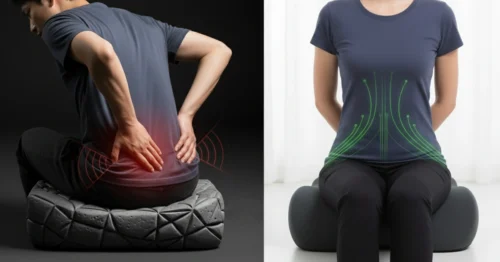
Check six things before you buy: shape, thickness, size, firmness, base and how the cushion fits your chair. A cushion that is wrong on any one of them can leave your tailbone unprotected or push your whole desk setup out of line.
Shape
For tailbone and sit-bone pressure, a U-shaped cushion with a rear cutout is the most common design, while a flat pad suits general sitting fatigue. The cutout keeps your tailbone off the seat while your thighs and sit bones share the load. A flat pad adds cushioning, but your tailbone still rests on the foam. Check that the cutout is large enough for your body and sits at the back of your seat. A wedge profile tilts your pelvis slightly, which some people like and others find arches their lower back, so try it for a few days before committing. If you are comparing a ring-shaped donut with a cutout design, read our guide to donut pillows versus coccyx cutouts.
Thickness and Seat Height
A thicker cushion raises your seat, so choose the thickness your desk and your feet can handle. OSHA’s chair guidance describes the right chair height as one where the entire sole of your foot rests on the floor with the back of your knee slightly higher than the seat. If your chair cannot be lowered after you add a cushion, OSHA suggests a footrest. Also check that your keyboard and mouse are still within easy reach, because a cushion that lifts you too high pushes your arms up toward the desk.
Size and Seat Depth
Choose a cushion that covers your seat without hanging over the edges or pressing into the back of your knees. Measure your seat’s width and depth before buying. OSHA notes that the front edge of the seat should not press against the back of your knees, and a common rule of thumb is to leave a gap of about two to three finger-widths there. A cushion that is too large bunches up or slides, and one that is too small leaves your thighs unsupported.
Firmness
The foam should be firm enough that it does not collapse under your weight. A cushion that bottoms out stops keeping your tailbone off the seat, however good its shape. Try this simple test: sit on it for about 15 minutes on a hard chair, and if the foam compresses fully or you notice new pressure points, choose a firmer or thicker option. Very firm cushions can feel uncomfortable for lighter sitters. For what to look for in foam and how long a cushion should last, see our guide to assessing seat cushion durability.
Base and Cover
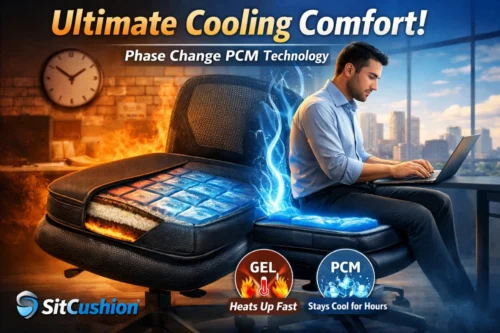
A non-slip base and a removable, washable, breathable cover matter more than most spec sheets suggest. Smooth leather or vinyl chairs let a cushion drift, and a cushion that shifts leaves your tailbone unprotected. A breathable cover helps if you run warm during long sessions. For a closer look at cooling options, see our comparison of PCM and gel seat cushions.
Your Type of Chair
Cushions work best on firm, flat seats, so the type of chair you own affects what will suit you. A standard office chair is the easiest fit. A chair with a deeply contoured or bucket-style seat, as in many gaming chairs, may not hold a flat cushion in place, so check the shape before you buy. If your chair has a worn-out or very soft seat pad, a cushion over it may sink along with you. And if your chair has little or no back support, OSHA suggests a rolled towel or a removable back support as a temporary fix, which is a different product from a seat cushion.
| What to measure | How to check it | Why it matters |
|---|---|---|
| Seat width and depth | Measure edge to edge with a tape measure | A cushion should cover the seat without overhanging |
| Feet after adding a cushion | Sit with the cushion in place and check that your feet are flat | Thickness changes your seat height |
| Gap behind your knees | Slide two to three fingers between the seat edge and your knee | Prevents pressure behind the knees |
| Keyboard and mouse reach | Check that your forearms stay level with your keyboard | A raised seat can lift your arms off the desk |
Office Chair Cushion for Leg Pain and Tailbone Pain
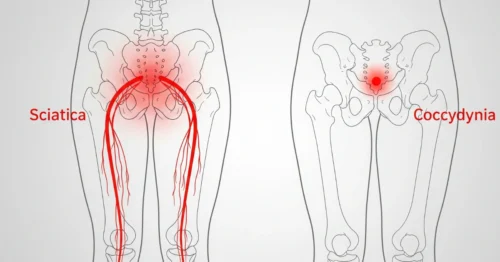
A cushion can ease pressure under your tailbone and thighs, but it cannot treat the nerve problem behind leg pain that starts in your back. Which of the two you are dealing with decides what a cushion can realistically do for you.
Leg Pain When You Sit
Leg discomfort at a desk comes from two very different sources, a chair that does not fit you or irritation of the sciatic nerve, and only the first is something a cushion can help directly. OSHA’s chair guidance notes that a seat pan that is too long presses on the area behind the knees, and that prolonged use can restrict blood flow to the legs and cause irritation and pain. In that case, a cushion that shortens the effective seat depth, spreads your weight over the thighs and keeps your feet flat can make a real difference.
Sciatica is different. Mayo Clinic describes it as pain that travels from the low back through the buttock and down the back of the thigh and calf, usually caused by a herniated disk or bone spur pressing on a nerve root, and notes that it can feel worse when you sit for a long time. A seat cushion can take pressure off the buttocks and tailbone while you sit, which may make sitting more tolerable, but it does not remove the cause. For a closer look at cushion designs for this kind of pain, read our guide to the best seat cushions for sciatica.
See a doctor promptly if your leg pain comes with sudden numbness or weakness, trouble controlling your bowels or bladder, or follows a violent injury. Mayo Clinic also advises getting checked if pain lasts longer than a week, is severe or keeps getting worse. No cushion should delay that.
Tailbone Pain When You Sit
For pain at the base of the spine that is worse when you sit and when you stand up, a cushion with a rear cutout is the most direct option, because it keeps the tailbone off the seat. The thighs and sit bones carry your weight instead, so the sensitive spot is not pressed against a hard surface. Two details matter more than the shape name. The cutout must be large enough for your body and sit at the back of your seat, and the foam must be firm enough not to collapse, because a cushion that bottoms out puts the tailbone back on the seat. Leaning slightly forward and standing up often also reduces the load on the area.
A cushion is a comfort tool and not a treatment. If tailbone pain began after a fall or injury, does not improve after a few weeks, or keeps getting worse, see a doctor. For the full picture on how cushions help with tailbone and sciatic pain, see our guide on whether a seat cushion helps with sciatica or tailbone pain.
Sitcushion Office Seat Cushion Specifications
| Feature | Details |
|---|---|
| Dimensions (length × width × height) | 17.5″ × 20″ × 5″ |
| Designed for | Unisex, all-day comfort and office sitting |
| Shape | U-shaped coccyx cutout |
| Core | Charcoal-infused memory foam |
| Cover | Removable, breathable and machine-washable |
| Base and extras | Non-slip base and carrying handle |
| Versions | With a spare cover in Grey, Black and Gray, Dark Green and Gray, or Original Black (two black covers), or with a single cover in Black or Cooling Black |
| Guarantee | Lifetime money-back guarantee |
This cushion is not the right choice for every desk. At about 5 inches thick, it raises your seat height, so it works best with an adjustable chair or a footrest. It is built for firm, flat seats and sinks on soft sofas, and it does not replace lumbar support for an ache in the lower back curve.
Our Pick for Office Chairs
Sitcushion Office Seat Cushion
U-shaped cutout, charcoal-infused memory foam, non-slip base and a washable cover. Lifetime money-back guarantee.

Frequently Asked Questions About Office Chair Cushions for Back Pain
What is the best seat cushion for sitting at a desk all day with lower back or tailbone pain?
The best choice is a firm cushion with a U-shaped rear cutout, a non-slip base and a size that fits your chair. The cutout keeps your tailbone off the seat, firm foam stops the cushion from collapsing, and the right thickness keeps your feet flat. If the ache sits higher in your lower back, add lumbar support as well.
Is a seat cushion or lumbar support better for office chair back pain?
It depends on where it hurts. A seat cushion sits under you and helps with pressure at the tailbone and sit bones, while lumbar support sits behind you and helps with an ache in the curve of your lower back. Many people need both, and an adjustable lumbar support on your chair is worth trying first.
Can an office chair cushion help with leg pain?
It can help when the cause is pressure from the seat, such as an edge pressing behind your knees or a hard surface under your thighs. It cannot treat sciatica, which starts at a nerve in your lower back. See a doctor for sudden numbness or weakness, or if leg pain lasts longer than a week or keeps getting worse.
What should I look for in a seat cushion to reduce tailbone pressure?
Look for a rear cutout large enough for your body, firm foam that does not bottom out, a non-slip base and a size that matches your seat. Then check the thickness. After you sit on it, your feet should still rest flat on the floor, or you may need to lower your chair or use a footrest.
How should I adjust my seat cushion if it makes my lower back ache?
First check that the cutout sits under your tailbone, that the cushion has not lifted you so high that your feet leave the floor, and that your lower back still touches the backrest. Lower your chair or add a footrest if needed. Give it a week or two to adjust, and stop using it and see a doctor if pain keeps getting worse.
Can an office chair cushion improve my posture or stop me slouching?
A cushion can change how your pelvis sits and make an upright position more comfortable, but it will not correct your posture on its own. Posture also depends on chair height, back support, screen position and how often you move. For more, see our guide to an ergonomic seat cushion for posture correction.
Is memory foam or gel better for an office chair cushion?
Neither is better for everyone. Memory foam molds to your shape and gives steady support, while gel-infused and cooling designs often feel cooler to the touch. If you run warm, look for a breathable or cooling cover, and see our comparison of PCM and gel seat cushions.
How thick should an office chair cushion be?
It should be thick enough to spread your weight and keep your tailbone off the seat, but not so thick that your feet leave the floor. Sit on it and check that your feet rest flat and your arms still reach your keyboard comfortably. If they do not, choose a thinner cushion or lower your chair.