






Short answer: yes, for most people who sit for extended periods, a seat cushion does help. In a six-month randomized controlled trial of high-risk office workers, those given a seat cushion developed new low-back pain at a rate of just 10%, compared to 59% in the group given a placebo cushion. A separate double-blind trial in occupational drivers with chronic low back pain found that both foam and gel cushions produced significant, measurable pain relief after regular use.
That said, the honest answer comes with conditions: a cushion is not a cure for back pain, it will not fully offset poor posture or a sedentary lifestyle, and different designs work through different mechanisms. Below is what the research actually shows — how a cushion helps, who benefits most, and where its real limits are.
Why This Makes Biomechanical Sense

The reason a cushion can help comes down to simple physics: when you sit on a flat, hard surface, your body weight concentrates on two small areas—the ischial tuberosities (the “sit bones”) and, depending on your posture, the coccyx (tailbone). Concentrated pressure on these points restricts local blood flow and irritates soft tissue and nerves, which is what produces that familiar ache after sitting too long.
A cushion works by spreading that same body weight across a wider surface area, or by removing pressure from one specific point entirely (as with a cutout design). Less pressure per square inch means less irritation over the course of a workday or a long drive. For a full breakdown of how Sitcushion’s specific cutout and foam designs apply this principle, see our seat cushion comparison guide.
What the Research Actually Shows
In the strongest evidence available, a 2024 six-month randomized controlled trial followed 133 office workers considered high-risk for back and neck pain. Half received a seat cushion designed to encourage regular postural shifts; the other half received a placebo cushion with no such design. By the end of the study, only 10% of the cushion group had developed new low-back pain, compared to 59% of the placebo group—and neck pain followed the same pattern (15% versus 65%).
For people who already have chronic pain, a separate double-blind trial of 75 occupational drivers with long-standing low back pain found that regular cushion use produced significant, measurable improvement in pain scores and disability scores after a period of daily use—with gel cushions outperforming standard foam, though both helped.
Which Cushion Design Fits Your Situation

Cushion design also matters for which specific problem you’re solving. A 2009 study published in the American Journal of Physical Medicine & Rehabilitation looked at coccydynia patients who had tried both donut-style and wedge/cutout-style cushions. Among those with a clear preference, wedge/cutout designs were chosen almost five times more often than donut cushions—though a large share of patients said neither fully solved their discomfort, a reminder that no cushion works identically for everyone.
In practice, this lines up with a simple rule: match the cushion type to what you’re actually treating.
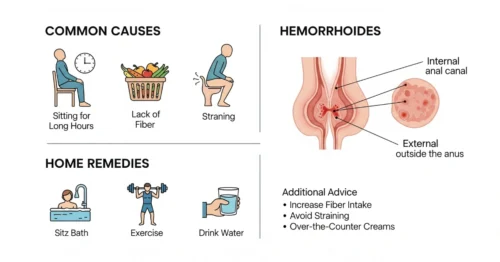
Dealing with hemorrhoids, postpartum recovery, or prostate pressure?
An open-center donut cushion is built for this specific problem—it relieves pressure on the perineal area itself, not just the tailbone.
Sitting all day at a desk, or dealing with general tailbone and lower back discomfort?
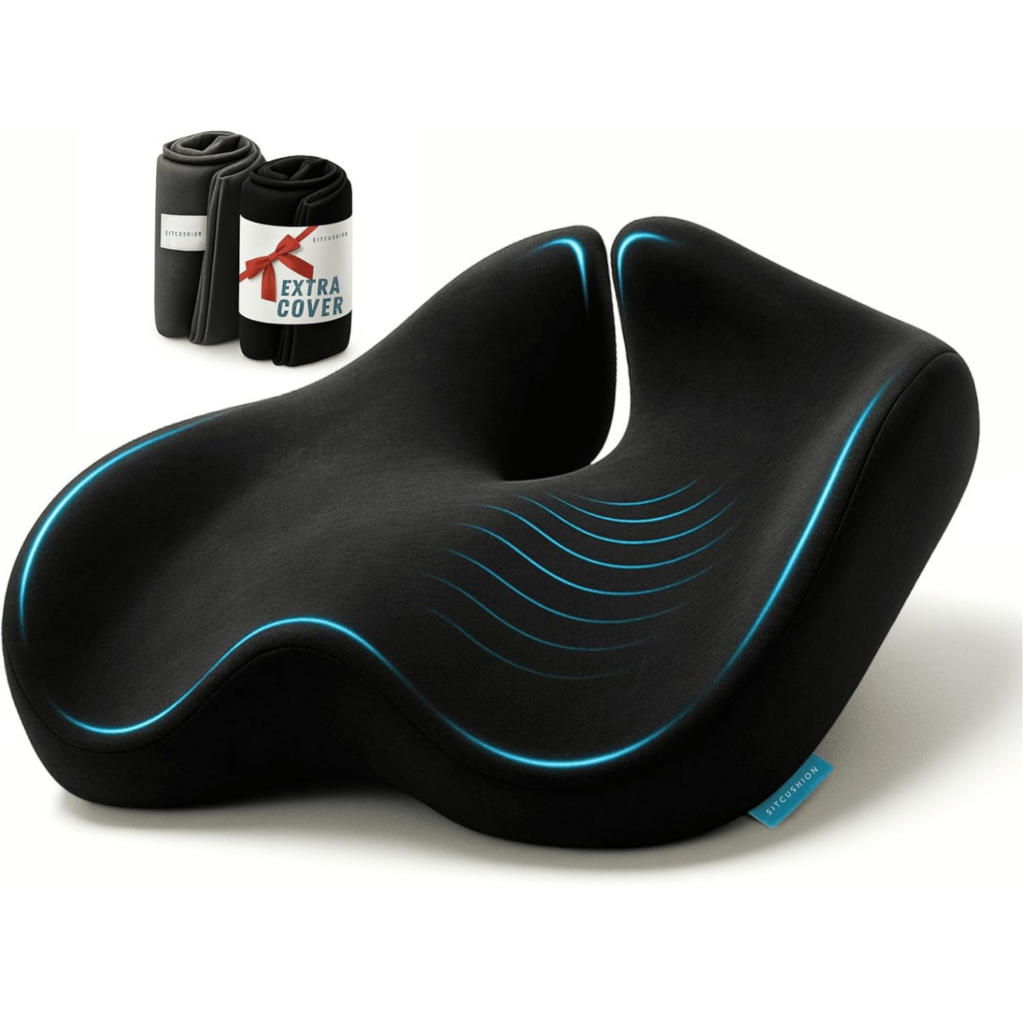
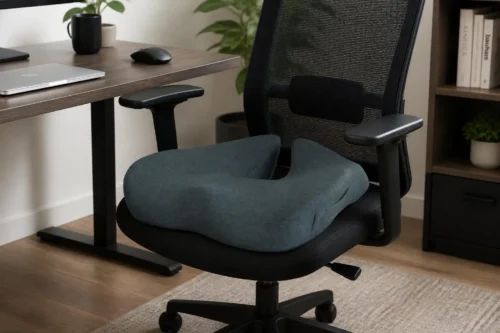
A U-shaped cutout cushion is the design most often preferred for everyday tailbone relief—ideal for long workdays or daily driving.
Who It Helps Most — and Its Real Limits
The evidence above points to a clear pattern: cushions help most when the problem is pressure-related—the ache from sitting on a hard or unsupportive surface for hours at a time. That’s why office workers, drivers, and people recovering from childbirth, hemorrhoids, or minor tailbone injuries tend to see the clearest benefit. It’s also worth knowing that most people need a short adjustment period, typically one to two weeks, before a new cushion feels fully comfortable.
What a cushion won’t do is fix the underlying causes of back pain on its own. Research on prolonged sitting consistently points to a second factor that matters just as much as the seat itself: how often you get up and move. A cushion reduces pressure while you’re sitting, but it can’t undo the effects of sitting still for six or eight hours straight. Pairing it with regular movement breaks—standing up every 30 to 60 minutes—is what turns a good cushion into an effective one.
It’s also not a substitute for addressing poor posture, a chair that doesn’t fit your body, or a medical condition that needs professional attention. Back pain is usually caused by more than one factor at once, so the honest expectation is that a cushion is one meaningful piece of the solution, not a single fix for everything.
Frequently Asked Questions
Does a seat cushion prevent back pain, or does it only treat pain you already have?
Both, but through different mechanisms. The strongest evidence for prevention comes from a study where people without existing back pain used a cushion designed to encourage postural shifts, cutting their six-month risk of developing new low-back pain from 59% down to 10%. Separately, research on people who already had chronic pain found that daily cushion use significantly improved their pain and disability scores. In short: starting early may prevent problems, but a cushion can still help meaningfully if pain has already set in.
How much difference does a cushion actually make compared to sitting without one?
In the six-month trial mentioned above, cushion users were roughly six times less likely to develop new low-back pain than the placebo group (10% versus 59%), and about four times less likely to develop neck pain (15% versus 65%). Individual results vary, but the gap in these controlled studies was large, not marginal.
Does the material—gel versus memory foam—actually matter, or is that just marketing?
It can matter, though both perform reasonably well. In a controlled trial comparing gel and foam cushions in drivers with chronic low back pain, both groups improved significantly, but the gel cushion group showed a greater reduction in pain intensity than the foam group. Foam is still a solid, well-supported choice—gel simply has a slight edge in that specific comparison.
Will a seat cushion work on a soft couch or recliner, or only on firm chairs?
It works best on a firm, flat surface. On a soft sofa or deep recliner, the cushion sinks into the existing padding along with your body, which cancels out the pressure-redistribution effect it’s designed to provide. For the intended benefit, use it on office chairs, car seats, dining chairs, or any seat with a firm base.
Does body weight affect how well a seat cushion works?
Yes, to some degree. Cushions are built around a specific foam density and cutout depth, so they’re generally most effective for the weight range they’re designed for—for example, Sitcushion’s donut cushions are best suited to users 160 lb and above, since lighter users may not compress the foam enough to engage the cutout properly. If you’re outside a product’s stated weight range, check its listing before buying, since a mismatch can reduce how well it performs.
Is the evidence for seat cushions solid, or is this mostly marketing hype?
The evidence is real, but it’s specific, not universal. Peer-reviewed, randomized trials support cushions for reducing pressure-related back and neck pain from prolonged sitting—that’s a genuinely researched effect, not just a sales claim. What isn’t supported is the idea that a cushion cures back pain on its own or works identically for every cause of pain. The honest claim is: strong evidence for pressure relief during sitting, no evidence that it replaces movement, posture correction, or medical care when those are actually needed.
The Bottom Line
The short answer holds up under real scrutiny: yes, a seat cushion helps most people who spend long stretches sitting, and that conclusion is backed by controlled research, not just marketing copy. The honest caveat is just as important—results vary by design, by body type, and by what’s actually causing your discomfort, and no cushion replaces regular movement or medical care when either is genuinely needed.
If you’re ready to find the right fit, our seat cushion comparison guide breaks down which design matches your specific situation—whether that’s a desk job, long drives, or targeted relief.