






Part I: The Durability Crisis – Why Your Cushion Flattened Fast
Introduction: What Actually Determines a Cushion’s Durability
Seat cushion durability is what separates a cushion that keeps supporting you for years from one that turns into a flat pad within months. The modern ergonomic seat cushion has become an essential tool for people who spend long hours sitting, whether in an office, a vehicle, or at home — designed to maintain posture, provide comfort, and distribute pressure evenly, and to ease issues such as lower back pain, tight hips, and coccyx soreness.
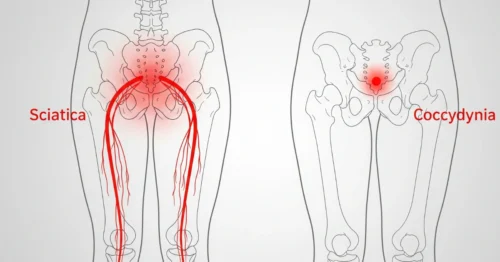
Struggling with lower back or coccyx pain from a flattening cushion?
The most common disappointment is a cushion that sags, flattens, or collapses within months of purchase, well before the buyer expected it to wear out. Real durability goes beyond the cover: it comes down to whether the core material keeps its shape and springs back under repeated, everyday pressure over years, not weeks. A cushion that can no longer do that stops being an ergonomic tool and becomes something you have to work around.
This guide walks through seven practical factors — the foam core, recovery, cover construction, non-slip base, warranty terms, environmental care, and maintenance — that together predict how long a cushion will actually hold up, so you can tell a well-built cushion from one that will flatten fast.
1.1. The Anatomy of Failure: Why cheap cushions flatten fast (and what to look for in a quality core)
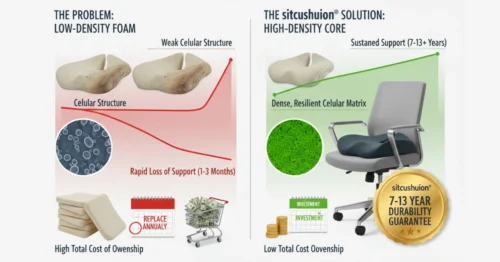
The primary reason many cushions fail prematurely lies in the foam core. Foam density — how much material is packed into a given volume, measured in pounds per cubic foot (lbs/ft³) — is one of the strongest predictors of how long a cushion holds its shape. The Polyurethane Foam Association notes that density affects durability and support: higher-density foam generally retains its original properties longer than lower-density foam under the same use.
Density is not the same as firmness. A soft-feeling cushion can be high-density, and a firm-feeling one can be low-density — firmness is measured separately, as Indentation Force Deflection (IFD). This matters at the point of purchase: softness or plushness in the store tells you little about how the cushion will hold up after months of daily use. Flexible polyurethane foam is manufactured across a wide density range, from under 1 lb/ft³ to 6 lb/ft³ or more, so a listing that only says “high-density” without a number gives you little to go on.
Mechanically, low density means fewer structural connections in the foam’s cellular matrix. Under the repeated, all-day compression of seating, that weaker matrix rebounds less effectively over time, softening and developing permanent depressions — the start of what eventually becomes cushion collapse.
With everyday use, a reasonable expectation for a well-made memory foam cushion is roughly 2 to 5 years of useful support before it starts to bottom out — thinner, portable cushions that take more direct, concentrated weight tend to wear faster than large furniture cushions. This is a practical range, not an expiration date — published estimates vary with the cushion’s construction and how it’s used, and the signs of wear matter more than the calendar. The practical takeaway when comparing cushions: ask for a stated density figure and foam type rather than relying on how firm or soft it feels on first sit.
1.2. Warning Signals: How to spot the warning signs that your ergonomic cushion is losing support
The clearest sign that a cushion is failing is visible wear: sagging, ripples in the fabric, or seams starting to pull apart.
The more critical sign is what’s commonly called “bottoming out” — also described as cushion collapse. This happens when the foam can no longer rebound and distribute pressure evenly, so you can feel the hard surface of the chair through it. It usually shows up as concentrated pressure on the ischial tuberosities (the “sit bones”) rather than the cushion’s weight spread evenly under you.
Feeling sharp tailbone or sciatica pressure when your cushion bottoms out?
Once a cushion bottoms out, it’s no longer doing the job it was designed for — the concentrated pressure points can add to, rather than relieve, tailbone and lower back discomfort. At that point, cushion collapse isn’t just a comfort issue; it’s a sign the cushion should be replaced, regardless of how long you’ve owned it.
Part II: The 7 Expert Factors for Longevity and Performance
2.0. The Checklist: What Actually Defines a Durable Cushion
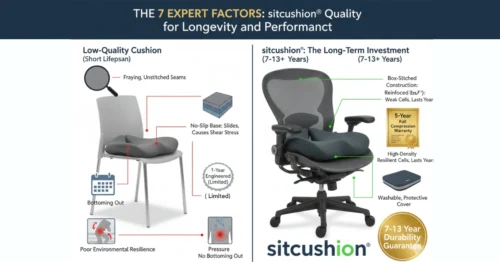
Judging a cushion’s durability comes down to seven checkable factors — covering the foam core, its construction, and how it’s backed and cared for. Table 1 is a quick-reference checklist; each factor is covered in more detail in the sections that follow.
Table 1: Seat Cushion Durability Checklist
| Factor | What to look for | Red flag |
|---|---|---|
| 1. Foam density & type | A stated density figure (lb/ft³) and foam type | “High-density” with no number given |
| 2. Recovery | Foam that springs back after firm pressure, no lasting dip | A dip that doesn’t fill back in |
| 3. Cover & stitching | Even, reinforced seams that hold the cushion’s shape | Puckering, loose threads, shifting foam |
| 4. Non-slip base | A base that grips the seat and stays put | Cushion sliding or twisting under you |
| 5. Warranty terms | Clear coverage for foam compression, not just the cover | Vague “lifetime” wording with no specifics |
| 6. Moisture, heat & light | A removable cover and clear care guidance | No care instructions at all |
| 7. Care routine | Spot cleaning, full air-drying, no submerging the foam | Washing or soaking the foam core |
2.1. Factor 1: Foam Density — the Starting Point
As covered above, foam density is the clearest starting signal for durability: it’s the amount of material packed into the foam, and it’s a separate property from firmness (IFD). Higher-density foam tends to hold its shape longer under repeated compression, and a listing that gives a specific number is more trustworthy than one that just says “high-density.”
One additional signal worth checking is CertiPUR-US certification. It’s a voluntary, independent testing program for flexible polyurethane foam that verifies content, emissions, and physical performance — including how the foam holds up under compression over time — rather than relying on a manufacturer’s own claims. Certification applies to the foam itself, not the finished cushion as a whole, so it’s worth checking whether the specific foam used is certified, not just the brand in general.
Not sure which high-density cushion is actually worth the investment?
Best Seat Cushions for Pain Relief and Comfort – 2025 Buyer’s Guide
2.2. Factor 2: Material Resilience — Does a High-Density Memory Foam Cushion Really Last Two or More Years?
Resilience is the foam’s ability to spring back to its original shape after pressure is released, and it’s what separates a cushion that holds up from one that develops a permanent dent.
So does a high-density memory foam cushion really last two or more years? With regular daily use, that’s a realistic expectation — a well-made cushion typically holds up for around 2 to 5 years of everyday use, and resilience is the main reason why. Foam that rebounds quickly after each sitting session resists forming permanent impressions, which is what keeps it distributing pressure evenly session after session. Foam with poor resilience, by contrast, develops lasting body impressions much sooner, which is usually the first visible sign that a cushion is heading toward collapse.
Transform Your Office Comfort
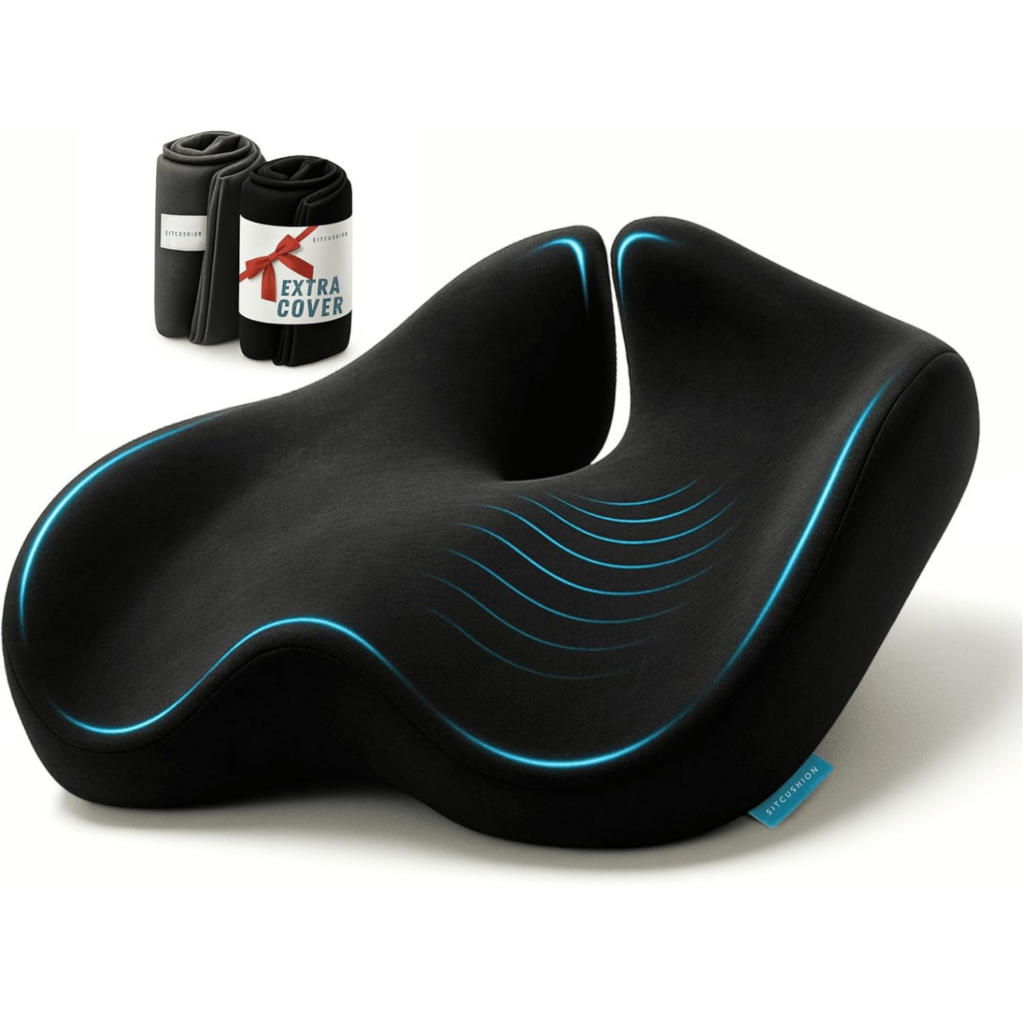
Sit longer, focus better, and relieve pressure with the SitCushion Office Seat Cushion —
engineered to support your posture and reduce fatigue during long hours at your desk.
2.3. Factor 3: Cover Construction — How the Stitching Affects Cushion Longevity
The cover’s construction matters almost as much as the foam inside it, because a poorly made cover lets the foam shift, bulge, or lose its shape well before the foam itself would otherwise wear out.
A few signs point to a well-made cover, regardless of the specific stitching style used: seams that are even and reinforced rather than single-pass stitching, fabric that fits the foam’s shape snugly without straining at the seams, and a zipper or closure that runs smoothly without gaps. This matters more for ergonomic cushions than flat ones, since shapes like a coccyx cutout rely on the cover holding that cutout in place rather than letting it collapse inward under weight.
A cover that’s too loose lets the foam shift inside it and wear unevenly; one that’s too tight can distort the foam’s shape over time. Either way, the cover’s fit and seam quality are worth a close look, since they’re often easier to inspect before buying than the foam itself.
Need a cushion engineered for stable posture alignment and all-day support?
2.4. Factor 4: Non-Slip Engineering – What makes a seat cushion non-slip bottom essential for longevity?
A frequently overlooked factor in durability is stability. The primary answer lies in mitigating shear stress — the lateral movement between the cushion and the chair surface caused by minor fidgeting, shifting, or standing. Cushions that slide, particularly those relying solely on tie-ons, wear out prematurely because the foam is continually being twisted and stretched horizontally instead of compressing straight down.
The Role of Anti-Slip Materials in Maximizing Support
High-quality non-slip materials provide the friction needed to keep the cushion securely in place. Common and effective anti-slip technologies include:
- Rubberized Coatings — thin layers that offer strong grip on most chair surfaces
- Silicone Dot or Grid Patterns — raised shapes that enhance grip and breathability
- Textured Fabrics — materials that use natural texture to resist sliding
This stabilization ensures that when a user sits down or shifts position, the foam only compresses and rebounds vertically, as it was designed to. By reducing lateral stress, a non-slip base helps extend the physical lifespan of the foam core. A sliding cushion also undermines its own purpose: if a coccyx cutout moves out of alignment, the user has to keep readjusting posture, working against the reason the cushion was designed that way.
2.5. Factor 5: Warranty Decoding – Is a 1-year warranty standard for a durable seat cushion?
When purchasing a premium seat cushion, the warranty serves as the manufacturer’s declaration of confidence in the product’s lifespan. The question, “Is a 1-year warranty standard for a durable seat cushion?”, reveals the low bar set by the budget sector. Warranty length alone varies widely across the industry, so a longer stated term isn’t automatically a reliable signal on its own — what matters more is exactly what the warranty covers.
Consumers are often drawn to broad claims like “Limited Lifetime” warranties. The important question isn’t how long the warranty runs, but what it actually covers: many guarantees apply only to non-wear components, such as a chair’s steel frame, while the wear components — the foam and fabric — are explicitly excluded or covered for a much shorter period. The most useful thing to check is whether the warranty specifically covers permanent loss of shape or compression of the foam core, not just the cover or the structural frame.
Furthermore, many warranties do not cover the costs of labor or shipping required for replacement parts. This can add unexpected expenses to an otherwise valid warranty claim. Consumers should look for comprehensive coverage that minimizes or eliminates these hidden costs.
Table 2: Key Warranty Components for Ergonomic Seat Cushions
| Component | Typical Coverage Term | Critical Fine Print | Impact on Investment |
|---|---|---|---|
| Foam/Padding Core | 1–5 Years | May be explicitly excluded from “Lifetime” structure coverage. | Most critical factor for longevity — check exactly what’s covered, not just the term length. |
| Structural Frame/Base | 5 Years to Lifetime | Applies only to the hard structure, not compression of the foam. | Indicates manufacturer confidence in the core design and non-wear parts. |
| Labor and Shipping | Usually Excluded | Customer often bears the cost of transport for replacements. | Increases the effective cost of a warranty claim. |
2.6. Factor 6: Environmental and Usage Specifications
The cushion’s environment and care requirements dramatically affect its lifespan. Durability expectations must be matched to the intended use. Memory foam is particularly vulnerable to environmental factors, especially moisture and temperature fluctuations. Trapped dampness, whether from spills or high humidity, directly compromises the material structure, leading to breakdown and potential mold growth.
Another threat is UV degradation. While briefly airing foam in the sun can help with deodorizing, prolonged sun exposure must be limited. Extended ultraviolet radiation causes the foam structure to become brittle and degrade over time.
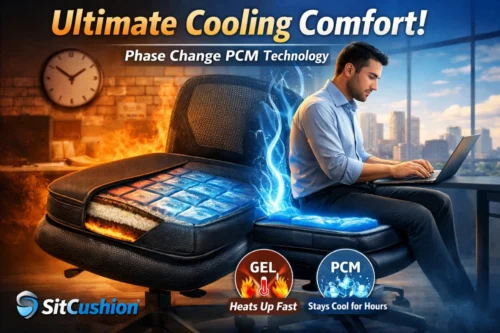
Since the foam core is susceptible to moisture and solvents, the quality of the cushion’s cover is a critical durability shield. Sitcushion cushions feature covers that can be easily removed and washed, which lets you clean the surface without exposing the foam core itself to liquids and harsh detergents — one of the fastest ways to compromise foam integrity.
2.7. Factor 7: Proactive Maintenance and Care Protocols – How to clean and maintain your seat cushion for maximum lifespan
Even the most robust, high-density foam can fail prematurely without proper care — seat cushion durability is a partnership between the manufacturer’s quality and the user’s diligence.
The golden rule for minor spills is Blot, Don’t Rub. Immediate blotting with a clean, dry cloth absorbs liquid before it can migrate deep into the foam cells. When cleaning is required, only mild, gentle detergents should be used; harsh chemicals or bleach must be strictly avoided, as they chemically degrade the foam structure.
The single most crucial step is Drying Discipline. Any foam that becomes damp must be allowed to air dry completely before being re-covered or used. Trapped moisture is one of the quickest ways to compromise integrity and invite microbial growth. For deep cleaning and deodorizing, non-liquid methods are preferred: regular vacuuming with an upholstery attachment removes dust and allergens, and sprinkling a light layer of baking soda over the surface, letting it sit overnight, then vacuuming thoroughly helps absorb odors naturally.
Proper, proactive maintenance is what lets a cushion actually reach the upper end of its realistic lifespan rather than falling short of it.
Want to keep your cushion fresh and extend its lifespan?
Part III: The Lifespan Equation and Final Transactional Guidance
3.1. Replacement Cycles: How Often Should You Replace a Seat Cushion, and Why?
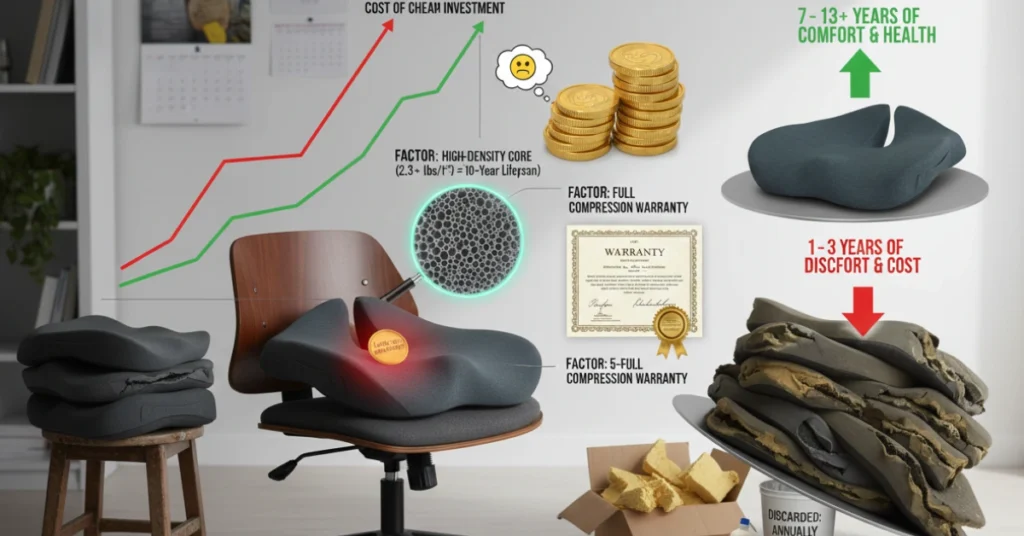
Cushions made with lower-density, budget foam typically need replacing within 1 to 3 years. Cushions built with higher-density, high-resilience memory foam generally hold up for 2 to 5 years of everyday use, sometimes longer with lighter use and proper care.
The real replacement trigger, however, is functional failure, not the calendar. Replace a cushion once it bottoms out or you notice persistent, localized discomfort that wasn’t there when it was new — at that point it’s no longer doing its job, regardless of age. Consistent support is what matters for sustained comfort, not hitting a specific year mark.
3.2. What to Look For: The Sitcushion Approach to Durability
The seven factors above give a practical framework for judging any seat cushion, including Sitcushion’s own. Table 3 summarizes the durability-related features across the current Sitcushion lineup.
Table 3: Durability-Related Features by Product
| Feature | Office Seat Cushion | Car Seat Cushion | Donut Cushion (Men/Women) |
|---|---|---|---|
| Foam core | Charcoal-infused memory foam | Charcoal-infused memory foam with adaptive top layer | Firm, high-density orthopedic memory foam |
| Shape | U-shaped coccyx cutout | U-shaped coccyx cutout, angled wedge profile | U-shaped (Men) / V-shaped (Women) contoured front |
| Base | Non-slip base | Anti-slip rubber base, no straps | Non-slip bottom |
| Cover | Removable, washable, breathable | Removable zippered cotton cover, machine washable | Removable, machine-washable 4D mesh cover |
| Guarantee | Lifetime money-back guarantee | Not specified | Not specified |
If you’re comparing these against the checklist in Table 1, the practical next step is the same one this guide recommends for any cushion: check the specifics that matter — cover fit and seam quality, whether the base actually stays put on your chair, and what a warranty or return policy really covers — rather than relying on marketing language alone.
3.3. Conclusion
Judging seat cushion durability comes down to verifiable specifics, not price or marketing claims: a stated foam density and type, resilience that resists permanent impressions, solid cover construction, a base that actually stays put, warranty terms that name what’s covered, and how the cushion is cared for day to day.
Use the checklist in Table 1 the next time you’re comparing cushions, and don’t wait for a fixed number of years to pass — replace a cushion when it stops giving you real support, whatever its age. To learn more, explore our Knowledge Center or browse our complete range of seat cushions.
Part IV: Frequently Asked Questions (FAQ)
Is cushion collapse a real thing?
Yes. Cushion collapse is what happens when the foam core loses its ability to rebound and can no longer absorb your weight, so you feel the hard seat surface underneath instead of even support. It’s the same thing as “bottoming out,” and it’s a sign the cushion needs replacing regardless of how old it is.
How can I test my seat cushion’s durability myself?
Press down firmly on the cushion for about 10 seconds, then release and watch how quickly it springs back — foam that recovers slowly or leaves a lasting dip is already wearing out. You can also sit normally for a minute and press your fingers under your sit bones to check for bottoming out, and check the cushion’s edge or surface for uneven compression on one side.
What is the main indicator that my seat cushion needs replacing?
The clearest sign is bottoming out — feeling the hard chair surface beneath you. Other signs include a permanent dip where you sit, ripples or wrinkles in the fabric, and pressure under your sit bones or tailbone that wasn’t there when the cushion was new.
How does an ergonomic cushion compare to a standard cushion for long-term use?
Durability comes down to the foam’s quality and construction, not whether a cushion is ergonomically shaped. A standard flat cushion and an ergonomic cushion with a coccyx cutout can use the exact same foam and last the same amount of time — the ergonomic shape changes how pressure is distributed while you sit, not how long the foam itself holds up. Where ergonomic cushions do carry extra risk is at the cutout or contour itself: a poorly reinforced cover can let that shape collapse inward faster than a flat cushion would wear.
How do cushion materials affect long-term comfort and durability?
Different foam types age differently. Memory foam (viscoelastic foam) conforms closely to the body and, at higher densities, resists permanent impressions well. Standard polyurethane foam is generally less expensive and firmer, with durability that depends heavily on its density. Gel-infused foam adds cooling on top of a foam base, but the gel layer itself doesn’t necessarily add durability — the base foam still determines how long it lasts. Springs or hybrid cushions resist bottoming out differently than foam, but can develop squeaks or lose tension over years of use. In every case, a stated density or material spec is more useful than the material name alone.
Does a higher price guarantee better seat cushion durability?
Not necessarily. Price should be weighed against actual specifications — a stated foam density, cover and seam quality, and warranty terms that clearly cover foam compression, not just the outer fabric. A cushion that’s expensive but discloses none of these gives you little to judge it by.
How long should I expect a high-quality memory foam cushion to last?
With everyday use, a well-made, high-density memory foam cushion typically holds up for 2 to 5 years before it starts to bottom out. Lighter use can stretch that further; heavy all-day use can shorten it. This is a practical range, not a fixed expiration date — the signs of wear matter more than the calendar.
How does a non-slip bottom affect the lifespan of my cushion?
A non-slip base prevents the cushion from sliding and twisting under you, which reduces the sideways strain (shear stress) that weakens seams and wears down the foam faster. It also keeps a cutout or contoured shape properly aligned so you’re not constantly readjusting your position.
How should I clean my memory foam cushion to maximize its lifespan?
Keep the foam core dry, since moisture is its biggest threat. Use a removable, washable cover for routine cleaning, and for the foam itself, only spot-clean minor spills by blotting, not rubbing, with a mild detergent on a damp (not wet) cloth. Always let the foam air dry completely before replacing the cover or using the cushion again; baking soda and vacuuming work well for deodorizing.