
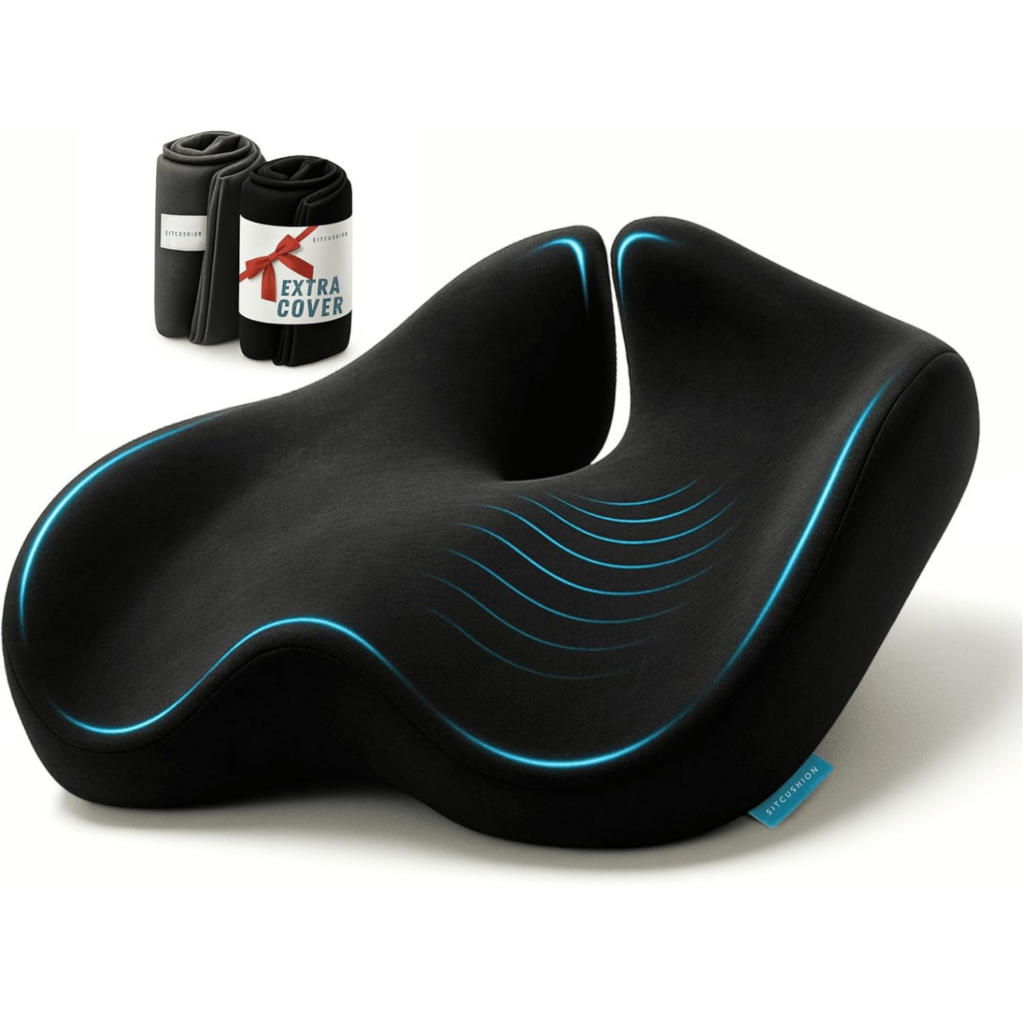



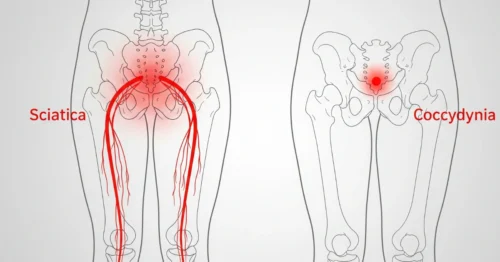




The best car seat cushion for lower back pain is a firm, high-density memory foam cushion with a U-shaped tailbone cutout, a non-slip base, and a thickness that suits your seat. It spreads pressure away from your tailbone and hips without lifting you too high behind the wheel. For long distance driving, three things matter most: how well the cushion relieves pressure, whether it stays in place, and whether it fits your car.
A seat cushion works on the pressure under your hips and tailbone. If your pain sits higher, in the curve of your lower back, you may also need lumbar support, and this guide explains the difference so you can pick the right one.
Quick answer
- Tailbone, hip or sciatic pressure on long drives — choose a memory foam cushion with a U-shaped cutout.
- Short drivers or deep, sloping seats — look for a wedge shape, but check the added height first, because a cushion that is too thick can change your view and pedal reach.
- Pickup, large SUV or bench-style seats — measure your seat before buying, since many car cushions are designed for standard bucket seats.
- Pain that is new, severe, or comes with numbness, leg weakness or bladder changes — see a doctor before relying on any cushion.
In this guide you will learn how a car seat cushion helps with back pain, how to choose one, how to check the fit in a sedan, SUV or pickup, and which driving habits make a cushion work better.
Does a Car Seat Cushion Really Help With Back Pain While Driving

Yes, for the right kind of pain. A car seat cushion can help when your discomfort comes from pressure on the tailbone, hips and thighs, or from a seat that tilts you backward, because it spreads your weight over a larger area and can change the angle of your pelvis. It is not a treatment for a back condition, and research on cushions specifically is limited, so it is best to think of it as a pressure and comfort tool.
Driving puts strain on your back in two main ways. Your body stays in one position for a long time, and the seat passes small road vibrations into your spine. A CDC-hosted study on professional bus and truck drivers describes whole-body vibration and prolonged static sitting as factors that raise the risk of low back and sciatic pain. The same mechanisms are likely to play a role on a long road trip or a daily commute, only to a smaller degree.
A good cushion can:
- Reduce pressure under the tailbone and sit bones, especially with a U-shaped cutout
- Spread weight across your hips and thighs so no single spot carries the load
- Tilt the pelvis slightly forward when it has a wedge profile
- Raise a short driver’s seating position for a better view of the road
A cushion cannot:
- Fix a poorly adjusted seat or steering wheel
- Replace regular breaks to stand, walk and stretch
- Treat sciatica, a disc problem or any other medical condition
- Add support to the curve of your lower back
Car Seat Cushion vs Lumbar Support, What Is the Difference
A car seat cushion sits under you and works on the base of your pelvis, meaning the tailbone, sit bones and thighs. Lumbar support sits behind you and fills the natural curve of the lower back, so your spine is not left to slump against a flat backrest. Many people who search for back pain relief while driving need one of the two, and some need both.
| Where it hurts | What usually helps | Why |
|---|---|---|
| Tailbone or sit bone pressure, numb or sore buttocks | Seat cushion with a tailbone cutout | Lifts pressure off the bony areas |
| Hip or thigh soreness on long drives | Seat cushion | Spreads your weight over a wider area |
| Ache in the curve of the lower back, slouching | Lumbar support | Supports the natural curve of the spine |
| Pain that travels down the leg | Seat cushion plus a good seat setup, and a doctor visit if it keeps coming back | See our guide on seat cushions for sciatica and tailbone pain |
| Hard to see over the dashboard | Wedge cushion, checking the added height first | Raises your seating position |
If you use a cushion and a lumbar pillow together, make sure the cushion’s extra height does not push your back away from the backrest. If it does, lower the seat slightly or recline it a little so the lumbar support still touches your lower back.
Some vehicle manuals warn against placing a cushion between your back and the seat-back because it can interfere with seat belt or airbag operation, so check your owner’s manual before using a lumbar pillow.
How to Choose a Car Seat Cushion for Back Pain
Most cushions look alike in photos, but a few details decide whether one helps or gets in your way. Check these six things before you buy.
Shape
A U-shaped cutout (also called a coccyx cutout) lifts pressure off the tailbone, which makes it the usual choice for tailbone and sit bone pain. A wedge profile tilts the pelvis slightly forward and can help in seats that slope backward. A plain flat cushion is more general and less targeted.
Thickness and Added Height
Many driving cushions add around 2 to 3 inches of seated height, and some add more. That can improve your view of the road if you are short, but it can also reduce headroom, change how far you reach the pedals, and move you closer to the steering wheel. Safety guidance, including AAA’s seat belt and airbag tips, recommends staying at least 10 inches from the steering wheel, so always recheck your driving position after adding a cushion. If you end up too high or too close, lower the seat or choose a thinner cushion.
Firmness and Foam Quality
High-density memory foam holds its shape under body weight, while soft foam can flatten and stop supporting you after a few weeks. Expect a short break-in period, and remember that memory foam feels firmer in cold weather, so a cushion left in a cold car may need a few minutes to soften.
Non-Slip Base
A cushion that slides forces you to keep readjusting, and that is distracting behind the wheel. Look for a non-slip rubber base or straps that keep the cushion in place through turns and sudden stops.
Size and Fit for Your Seat
Measure the flat part of your seat before buying. A cushion wider or deeper than that area can bunch up or slide, especially on deep bucket seats, sport seats and bench-style seats. Standard sedans, hatchbacks and compact SUVs usually suit car cushions best, while drivers of large SUVs and pickups should check the height carefully.
Cover and Care
A removable, machine-washable cover keeps the cushion fresh, and a breathable fabric helps on hot days when you sit for hours. Since foam needs a few days to settle, buy from a seller with a clear return policy so you can test the fit in your own car.
Will It Fit Your Car
A cushion only helps if it fits the seat you actually drive. Use this table as a starting point, then check the real-world test below it.
| Your vehicle | How cushions usually fit | What to check |
|---|---|---|
| Sedan, hatchback or compact SUV | Usually the best match for standard car cushions | Headroom if you are tall |
| Large SUV or full-size pickup | Often workable, but the added height matters more | Lower the seat before you judge the fit |
| Deep bucket or sport seats | The cushion may not sit flat in the seat’s contour | Whether it slides or tilts to one side |
| Bench seats and truck seats | Many car cushions are not designed for them | Measure the flat area and confirm the manufacturer’s guidance |
| Heated or ventilated seats | A cushion can reduce the heating or cooling effect | Whether comfort matters more than seat temperature |
The Four-Point Fit Test
Sit on the cushion with your seat in its normal position and check four things. Your head should not touch the roof or headliner, your feet should reach the pedals without stretching, you should still sit at least 10 inches from the steering wheel, and your view over the dashboard should stay clear. If any of these fails, lower the seat, recline slightly, or try a thinner cushion.
Pickup Trucks and Large SUVs
If you drive a pickup or a large SUV, the extra height is the main thing to manage. Lower the seat to its lowest position before you decide the cushion is too high, and avoid cushions that were not designed for bench-style seats if yours is one. Professional truck drivers in rigs with air-ride seats should also check compatibility with their seat, because those seats already damp some road vibration.
Car Seat Cushion Types Compared
| Type | Best for | Watch out for |
|---|---|---|
| Memory foam with U-shaped cutout | Tailbone, sit bone and hip pressure on long drives | Added height, and a few days of break-in |
| Wedge cushion | Seats that slope backward, and drivers who want a more upright pelvis | Can feel tilted if the seat is already angled |
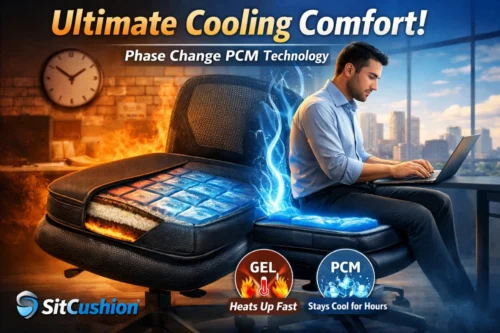
| Gel-infused or gel layer | Drivers who run warm | Often heavier and pricier, and heat can still build over long trips |
| Air-filled cushion | Adjustable firmness and vibration damping | Needs pressure adjustments and can feel unstable |
| Lumbar support pillow | Aching in the curve of the lower back | Does not relieve pressure under the tailbone or hips |
| Massage cushion | Relaxation with vibration or heat | Does not offload the tailbone the way a cutout does |
If heat is your main complaint on long drives, our guide on PCM vs gel seat cushions explains which cooling technology actually holds up.
Where the Sitcushion Car Seat Cushion Fits
The Sitcushion Car Seat Cushion is built for drivers who sit for long stretches and want tailbone, hip and lower back pressure relief. It has a U-shaped coccyx cutout, a firm high-density memory foam base with a softer adaptive top layer, and an angled wedge profile that tilts the pelvis slightly forward. It is about 3 inches thick and adds roughly 2 to 3 inches of seated height.
It stays in place with a non-slip rubber base, so there are no straps to adjust. The removable cotton cover is machine washable and one cover is included, and there is a built-in carrying handle for moving it between vehicles. Like most quality memory foam, it needs about 5 to 7 days to break in. Every Sitcushion cushion is also covered by a lifetime money-back guarantee.
It suits standard sedans, hatchbacks and compact SUVs best. It is not designed for extra-deep bucket seats or bench-style truck seats, and if you drive a large SUV, a pickup, or you are tall with a long torso, lower your seat before judging the fit. Some customers find it sits higher than they expected, which is why the four-point fit test above is worth doing on day one.
Our Pick for Long Drives
Sitcushion Car Seat Cushion
U-shaped cutout, high-density memory foam, angled wedge profile, non-slip base and a washable cover. Lifetime money-back guarantee.
How to Set Up Your Seat and Drive Smarter With a Cushion
A cushion works best when the rest of your driving position supports it. Adjust things in this order, and do it with the cushion already in place.
Set Your Seat With the Cushion On
Place the cushion so it sits fully back against the seat-back, with no gap behind it, and then sit down with your entire back against the backrest. Adjust the seat height and distance so you can reach the pedals without stretching and see the road without leaning forward. A good starting point is to keep your hips level with or slightly higher than your knees, and to leave a small gap between the front edge of the seat and the backs of your knees so the seat does not press into them.
Next, adjust the steering wheel, the headrest and your mirrors. If your car has built-in lumbar support, adjust its depth until it comfortably fills the arch of your lower back, as Main Line Spine Health recommends. Finally, recheck that you are still at least 10 inches from the steering wheel, since a cushion changes your seating height.
Take Breaks and Change Position Often
Even the best cushion cannot make a fixed position comfortable forever. The same spine clinic suggests a break of at least 15 minutes for every 2 hours of driving, and says people who are prone to back pain may want to stop more often, such as every 30 to 60 minutes. At a minimum, it advises adjusting your seat and shifting your position slightly every 15 to 20 minutes while you drive. Use each stop to walk around and stretch your hips, hamstrings and lower back.
Small Habits That Make a Difference
- Take a thick wallet or phone out of your back pocket before you drive, so your hips sit level on the cushion.
- If your car has heated seats, a little warmth can help loosen tight muscles, though a cushion can reduce how much heat you feel.
- Give a new cushion about a week. Memory foam needs a short break-in period, so use it on shorter trips at first and judge the comfort after a few days, not on day one.
- Keep your shoulders relaxed and your head back against the headrest rather than leaning forward toward the windshield.
Frequently Asked Questions About Car Seat Cushions for Back Pain
What is the best car seat cushion for lower back pain?
The best car seat cushion for lower back pain is a firm, high-density memory foam cushion with a U-shaped tailbone cutout, a non-slip base and a thickness that suits your seat. It relieves pressure under the tailbone and hips. If your pain sits in the curve of the lower back, add lumbar support as well, because a seat cushion alone does not support that area.
What is the best car seat cushion for long distance driving?
For long distance driving, choose a cushion that does not flatten over time, stays in place without straps, and has a breathable, washable cover. Check that the added height still lets you reach the pedals and see the road comfortably. Even the best cushion works better when you stop for a short walk about every two hours.
Can car seat cushions help relieve discomfort during long drives?
Yes, they can help when your discomfort comes from pressure on the tailbone, hips or thighs, because a good cushion spreads your weight over a wider area. They are a comfort tool, not a treatment, and they do not replace a well-adjusted seat or regular breaks.
What should I look for when choosing a car seat cushion for back pain?
Look at six things before you buy: the shape (U-shaped cutout or wedge), the thickness and added height, the firmness and foam quality, a non-slip base, the fit for your seat, and a removable, machine-washable cover. Buying from a seller with a clear return policy also lets you test the fit in your own car.
Can a car seat cushion help with sciatica pain while driving?
It can reduce pressure on the buttocks, tailbone and the back of the thighs, which is where many people with sciatica feel pain during long drives. A cushion with a coccyx cutout and a wedge profile is a common choice. It does not treat sciatica itself, so if your leg pain, numbness or weakness keeps coming back, speak with a doctor. You can read more in our guide to seat cushions for sciatica and tailbone pain.
Do massage car seat cushions help reduce back discomfort?
Many people find the heat and gentle vibration of a massage cushion relaxing, but the effect is usually temporary, and research on these products is limited. A massage cushion does not lift pressure off the tailbone or hips the way a cutout cushion does, so it works best as an extra rather than a replacement.
Is a car seat cushion or lumbar support better for lower back pain?
It depends on where it hurts. A car seat cushion is better for pressure under the tailbone, sit bones and hips, while lumbar support is better for an ache in the curve of the lower back. Some drivers need both, as long as the cushion’s extra height does not push the back away from the backrest.
Will a car seat cushion fit in my truck or SUV?
It usually fits standard sedans, hatchbacks and compact SUVs best. In large SUVs and pickups the added height matters more, so lower the seat before judging the fit. Many car cushions are not designed for extra-deep bucket seats or bench-style truck seats, so measure the flat area of your seat before buying.
When to See a Doctor About Back Pain From Driving
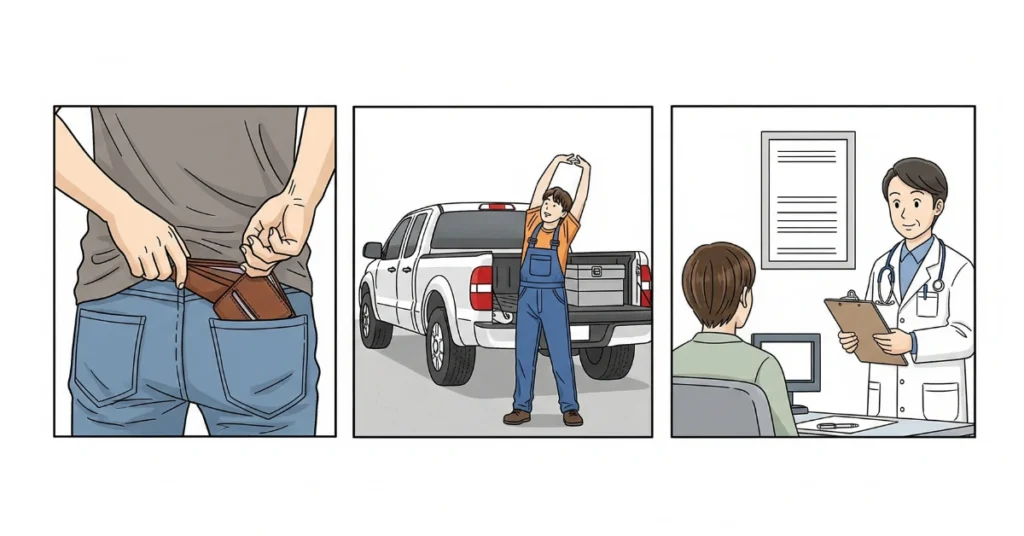
A cushion can make sitting more comfortable, but it cannot tell you why your back hurts. According to Mayo Clinic, most back pain improves within a few weeks, but some symptoms need medical attention.
Seek emergency medical care if your back pain:
- Starts after trauma, such as a car crash, a bad fall or a sports injury
- Comes with new bowel or bladder control problems
- Occurs with a fever
Schedule a doctor’s visit if your back pain:
- Has not improved after a week of home treatment
- Is constant or intense, especially at night or when lying down
- Spreads down one or both legs, especially below the knee
- Causes weakness, numbness or tingling in one or both legs
- Comes with unintended weight loss
- Comes with swelling or a change in skin color on your back
If you notice leg numbness or weakness while driving, pull over safely and rest before you continue.
Final Thoughts on Choosing a Car Seat Cushion for Back Pain
The right car seat cushion can make long distance driving more comfortable by easing pressure under your tailbone, hips and thighs, but it works best as part of a complete setup. Match the cushion to where it hurts, check the fit and the added height in your own car, adjust your seat with the cushion already in place, and break up long trips with short walks. If your pain sits higher, in the curve of your lower back, consider lumbar support alongside a seat cushion.
For drivers of standard sedans, hatchbacks and compact SUVs who deal with tailbone, hip or sciatic pressure, the Sitcushion Car Seat Cushion described above is built for exactly that situation.
This guide is for general information and is not medical advice. Sitcushion products are designed for comfort and ergonomic support and are not medical devices.