





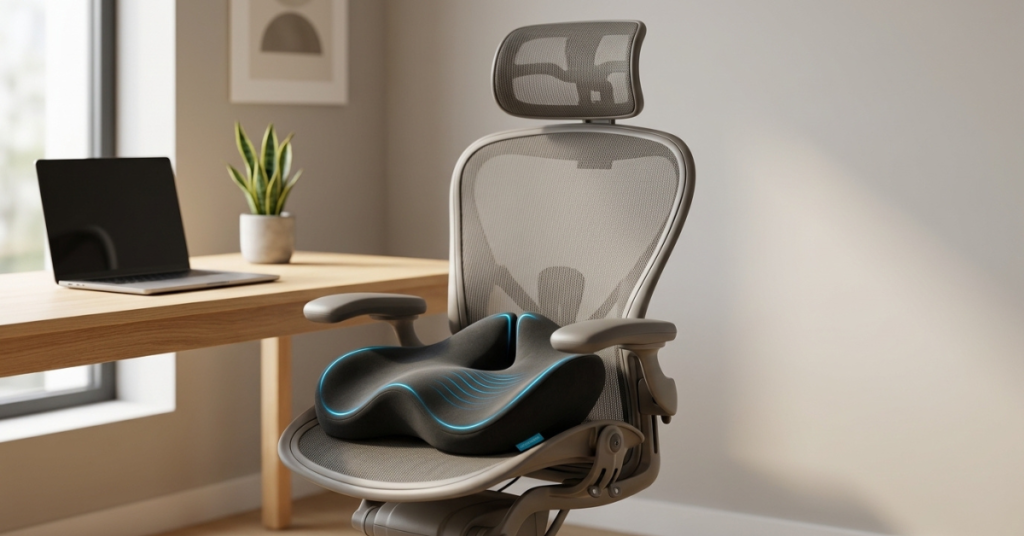
If your office chair feels lower than it used to, you’re not imagining it. Most chairs lose height over time — sometimes because the pneumatic cylinder is drifting, sometimes because the seat foam has compressed, and sometimes just because the chair was never quite tall enough for your desk. Before you spend money on a full chair replacement, it’s worth understanding why your seat feels low and which fix actually matches the cause.
This guide walks through how to tell your chair is too low, why it happens, and the practical ways to raise it — from free adjustments you can try today to when a seat cushion, new casters, or a cylinder swap makes sense.
Signs Your Chair Is Sitting Too Low
A chair that’s lower than it should be usually shows up in a few common ways:
- Your knees sit level with or higher than your hips when seated
- You find yourself sliding toward the front edge of the seat during the day
- Your feet are flat, but your thighs feel wedged upward against the desk
- You notice lower back or tailbone discomfort after sitting for an hour or more
- The seat cushion looks visibly flatter at the front edge than the back
None of these on their own is a diagnosis — but if a few apply together, it’s a reasonable sign that your seat height (not just your posture) is the actual problem.
Why Does an Office Chair Get Lower Over Time?
Gas lift drift. The pneumatic cylinder that raises and lowers most office chairs can lose pressure gradually with years of use, especially with repeated full-weight drops into the seat. This is a mechanical wear issue, not something a cushion fixes on its own.
Foam compression. Standard seat foam softens and compresses with regular use, especially in the front third of the seat where more weight concentrates. A chair that felt right a year ago can measurably lose height as the foam breaks down — this is one of the most common (and cheapest to fix) causes of a “shrinking” chair.
Desk-to-chair mismatch. Sometimes the chair hasn’t changed at all — a new desk, keyboard tray, or work-from-home setup just sits higher than your old one, making the same chair feel too short by comparison.
Chair not adjusted to its full range. It sounds obvious, but many people never re-check their chair’s height lever after the first setup. If you’ve changed shoes, added a desk mat, or the chair has settled on carpet vs. hard flooring, your original height setting may no longer be optimal.
What a Reasonable Seated Height Looks Like

Widely used workplace ergonomics guidelines (the kind referenced by OSHA’s computer workstation checklists and most physical therapists) generally point to the same few benchmarks:
- Feet flat on the floor or a footrest
- Knees at roughly a 90–110° angle
- Hips at or slightly above knee level
- Forearms roughly parallel to the desk surface
These are general guidelines, not a diagnosis — if you have an existing back or joint condition, it’s worth checking with a physical therapist or doctor rather than relying on general advice alone.
Fixes, in Order of What to Try First
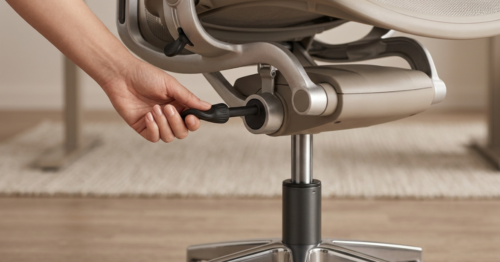
1. Check the chair’s own adjustment range first
Before buying anything, fully extend the pneumatic lever and confirm the chair is actually at its maximum height. This sounds basic, but it’s the most commonly skipped step — and it’s free.
2. Add a seat cushion for extra height
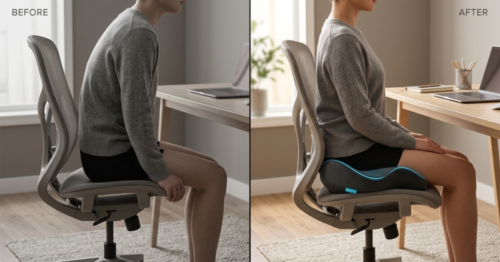
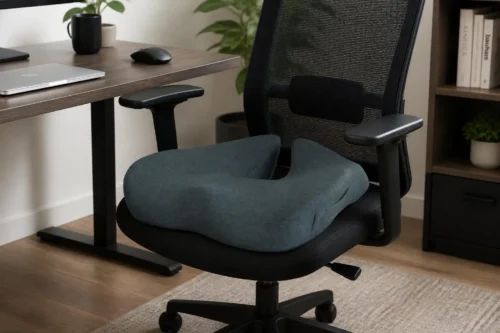
A firm, higher-density seat cushion is usually the simplest way to add 1–3 inches of usable height without touching the chair’s mechanism. A few practical things matter more than marketing claims here:
- Density matters more than thickness alone. A thick but soft cushion will compress under your weight within weeks and lose most of its added height. A firmer, higher-density foam holds its shape longer under daily use.
- Look for a contoured or cut-out design if you also want to reduce pressure on the tailbone — this is a separate benefit from height, not a substitute for it.
- Check how the manufacturer describes durability, not just initial thickness — a cushion that’s 3 inches on day one but compresses fast will disappoint you within a season.
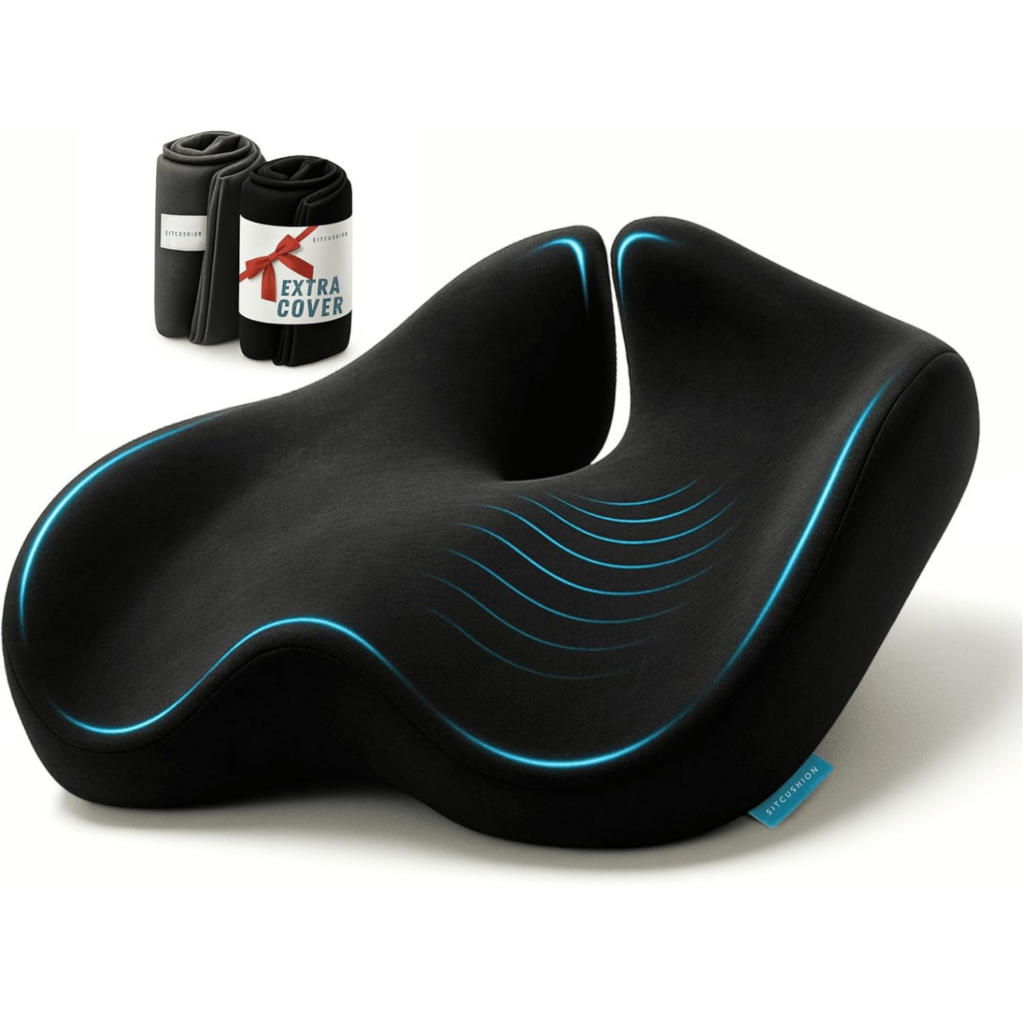
This is the option most people reach for first because it’s affordable, doesn’t require tools, and can be added or removed easily. Sitcushion’s ergonomic seat cushions are built with this kind of firmer, higher-density foam specifically so the added height holds up over months of daily use — worth a look if this is the route you’re considering.
If your main issue is lower back pain rather than chair height specifically, our dedicated guide to seat cushions for back pain goes deeper on that side of things.
3. Upgrade the casters
Standard casters typically add very little height, but taller or larger-diameter caster sets can add roughly half an inch to an inch. This is a minor fix on its own but can be a useful add-on if you’re an inch short after other changes.
4. Add a locking collar or cylinder stabilizer
If your chair is sinking during the day rather than just being generally low, the pneumatic cylinder itself may be failing. A cylinder-lock collar (a low-cost part) can hold the chair at a fixed height and stop further sinking — though it won’t add height beyond what the chair currently offers.
5. Replace the gas cylinder
If the cylinder has failed completely, most standard chairs use a universal-size cylinder that can be replaced for a fraction of the cost of a new chair. This is more involved (it usually requires removing the seat and base) but is a legitimate fix when the mechanism itself is the problem rather than the cushion or posture.
6. Reconsider the desk instead of the chair
If your chair is at maximum height and still feels low relative to your desk, an adjustable-height desk (or desk risers) may be solving the actual mismatch more directly than anything done to the chair.
Quick Comparison
| Fix | Typical height added | Cost | Effort |
|---|---|---|---|
| Re-adjust existing lever | Varies (often already available) | Free | None |
| Seat cushion | 1–3 inches | Low | Very low |
| Taller casters | 0.5–1 inch | Low | Low |
| Cylinder lock collar | None (prevents further sinking) | Low | Low |
| New gas cylinder | Restores original height | Moderate | Moderate |
| Adjustable desk/riser | N/A (adjusts desk instead) | Higher | Moderate |
Frequently Asked Questions
Can a seat cushion really add a couple of inches of height?
Yes, a firmer, higher-density cushion can reasonably add 1–3 inches, though the exact amount depends on the cushion’s construction and how much it compresses under your specific weight and sitting habits.
Is it better to replace the seat foam or just add a cushion on top?
Replacing the internal foam is a more permanent fix but requires disassembling the seat pan, which most people aren’t set up to do at home. Adding a cushion on top is the simpler, reversible option and is usually the better starting point.
Will raising my chair height help with back pain?
Sitting with your hips too low relative to your knees can contribute to slouching and lower back strain over a workday, so correcting chair height is a reasonable first step — but persistent back pain has many possible causes, and it’s worth talking to a healthcare provider if it continues.
How do I know if it’s the chair or the desk that’s the problem?
Sit at your normal height with your feet flat and knees near 90°. If your forearms are noticeably below the desk surface, the desk is likely too high for the chair rather than the chair being too low on its own.
Bottom Line
A chair that feels too low is rarely one single problem — it’s usually some mix of foam wear, a drifting gas lift, or a desk that’s changed since you first set things up. Start with the free fix (re-check your adjustment lever), move to a cushion if you need extra height without extra cost or effort, and only consider a cylinder replacement or new chair if the mechanism itself has actually failed.