


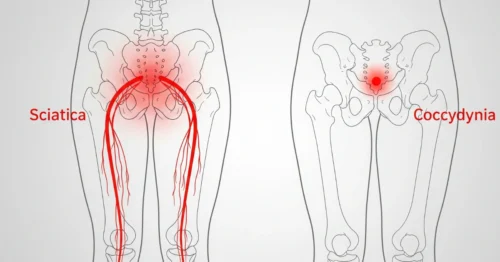

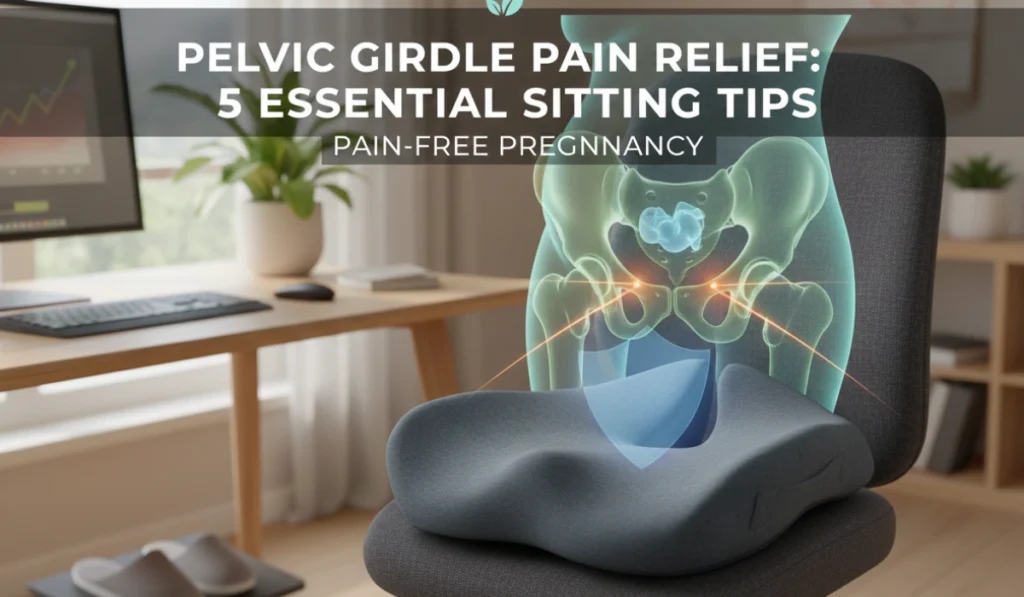
Ergonomic sitting is a widely recommended, non-invasive approach for managing the effects of Pelvic Girdle Pain (PGP), a condition that affects an estimated 20% to 70% of pregnant women, depending on how it’s assessed. PGP, which is often linked to Symphysis Pubis Dysfunction (SPD), occurs when the ligaments that keep your pelvic bones aligned become too relaxed due to the hormones relaxin and progesterone. This instability can lead to a “wonky” feeling in the hips and sharp pain during movement. By adjusting your workstation and daily sitting habits — and using supportive tools like the Sitcushion ergonomic seat cushion — you can help ease pressure on the pelvis and sit more comfortably throughout your pregnancy. This guide walks through five practical, evidence-informed tips for stabilizing your pelvis and staying active and comfortable on your journey to motherhood.
1. Finding the Neutral “Halfway” Position for PGP/SPD Relief
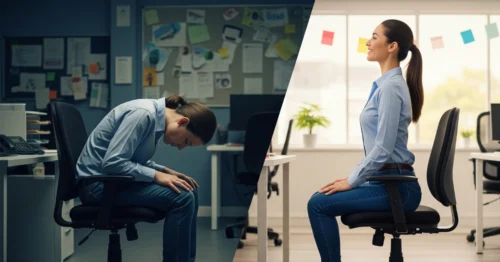
Understanding pelvic alignment is the first step in managing PGP. Most women either slouch (posterior tilt) or over-correct by arching their back too much (anterior tilt), both of which increase the shearing forces on the pubic symphysis.
How to Sit in the “Halfway” Position
To protect your pelvis, aim for the “halfway” position — the neutral point where your weight is balanced evenly on your sit bones, rather than tipped forward or back. A widely used ergonomic guideline is to keep your hips slightly higher than your knees, creating an open hip angle of roughly 100° to 110°. This encourages the spine into its natural S-curve and helps reduce the load of the growing uterus on the pelvic floor. Using a specialized support like Sitcushion can help you maintain this elevation more easily throughout the day.
Avoid Crossing Your Legs
Crossing your legs is a common trigger for PGP flare-ups, since it forces the pelvis into a rotated, asymmetrical position and places extra strain on the sacroiliac joints and pubic bone. NHS physiotherapy guidance for pregnancy-related pelvic pain recommends keeping your weight evenly distributed and both feet flat on the floor or on a footrest. This bilateral stability helps prevent the uneven loading that can trigger or worsen PGP symptoms.
2. Choosing the Right Seat Cushion Material to Prevent Slouching During Pregnancy
By the third trimester, standard chair padding often isn’t enough to support the extra 25 to 40 pounds of gestational weight. At this stage, the material of your seat cushion becomes an important factor in preventing pain.
Why Memory Foam Helps with PGP Relief
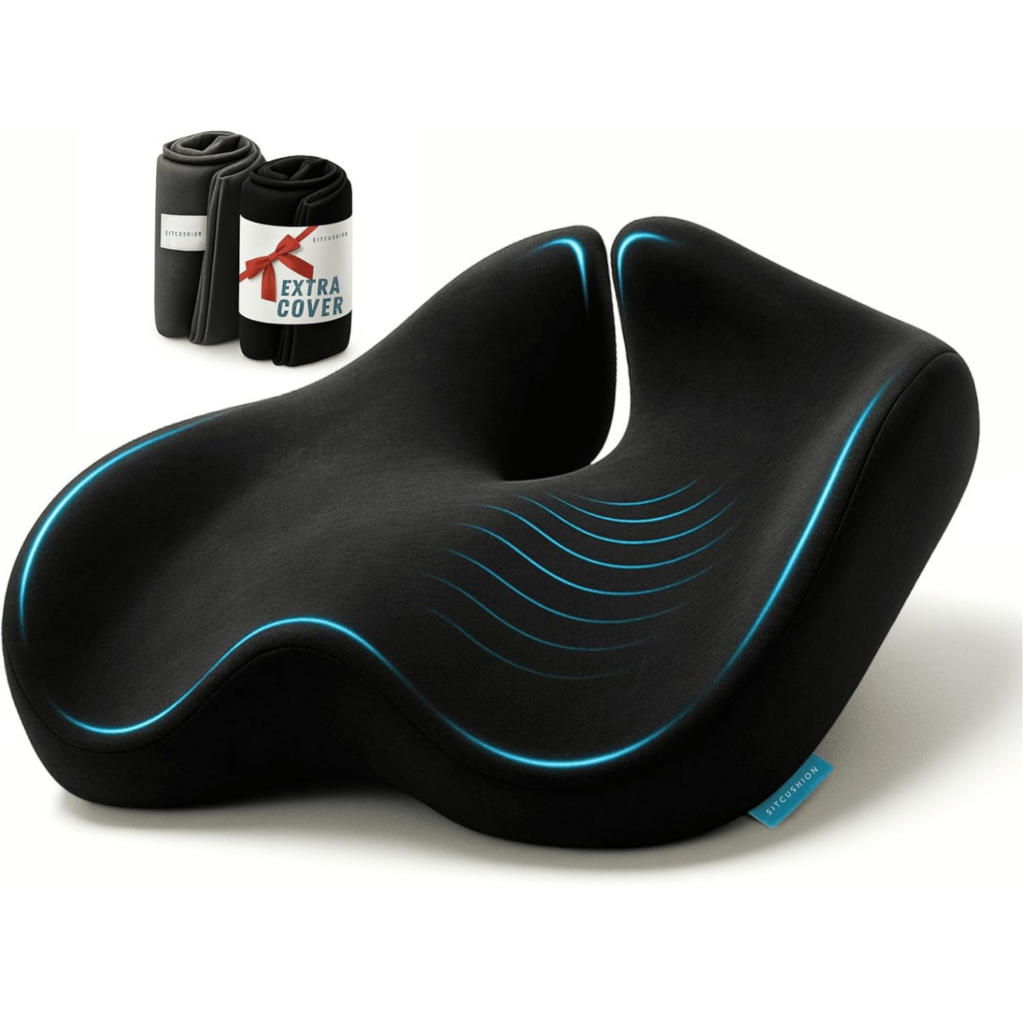
Sitcushion is made from high-density, visco-elastic memory foam — a material whose origins trace back to a 1966 NASA-funded project to improve the safety and comfort of aircraft seating. For a pregnant body, this type of foam helps by distributing weight evenly across a larger surface area, reducing the concentrated pressure that can aggravate PGP.
- U-Shaped Relief Zone: The patented cut-out is designed to suspend the coccyx (tailbone), keeping it from pressing against the hard surface of the chair — which helps prevent the nerve irritation that can radiate into the lower back and thighs.
- Contoured Support: Instead of pushing back against tender areas like a flat cushion would, Sitcushion contours to your body, spreading weight across a wider surface to reduce pressure points.
- Non-Slip Base: With looser joints during pregnancy, a stable base matters. The non-slip bottom helps keep you securely positioned, reducing the micro-shifts that can contribute to joint misalignment.
Air-Filled Cushions vs. Memory Foam: Which Is Better for PGP?
While air-filled cushions are often marketed for pressure relief, many users report a “wobble” effect that may not suit a pelvis that already feels unstable. A firmer, evenly-supportive base — like high-density memory foam — can allow the pelvic floor and surrounding muscles to relax, rather than working to balance against constant movement.
3. How to Adjust Your Office Chair for PGP Relief
Working from home or in an office while pregnant requires more than just a good chair — it requires a customized ergonomic environment to prevent the postural collapse that leads to chronic pain.
Step-by-Step Office Ergonomics for PGP
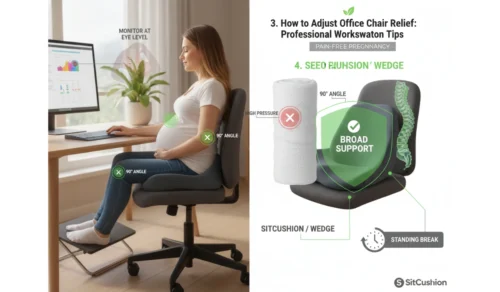
- Monitor Leveling: Your computer screen should sit at eye level, roughly 20 to 30 inches from your face. If the screen is too low, you’ll tend to lean forward, which increases the strain on your pubic bone and lower back.
- Keyboard Proximity: Bring your keyboard and mouse close to your body. Your elbows should form a 90° angle, allowing your shoulders to stay relaxed and your back to remain in contact with your Sitcushion lumbar support.
- The “Under the Desk” Rule: Make sure your chair is pulled far enough under the desk that you don’t have to reach. Reaching creates a forward tilt in the pelvis that can aggravate SPD symptoms.
Your Legal Rights at Work (UK & US)
If you’re struggling with PGP at work, you have legal protections. In the UK, the Management of Health and Safety at Work Regulations 1999 require employers to carry out an individual risk assessment for pregnant employees. In the US, the Pregnant Workers Fairness Act (PWFA) — which took effect in 2023 and applies to employers with 15 or more employees — requires reasonable accommodations, and the EEOC’s own guidance specifically lists a supportive chair or stool as an example. These adjustments aren’t just “perks” — they’re your right as a pregnant employee.
4. Wedge Pillow vs. Rolled Towel: Which Lumbar Support Actually Works?
Many women are told to use a rolled-up towel for lumbar support, but this DIY method often falls short of the consistent, even support a pregnant body needs.
Why a Rolled Towel Falls Short
A rolled towel offers a high-pressure, low-surface-area kind of support. It tends to create a single “hot spot” of pressure on the spine and loses its shape within minutes. For a body going through the structural changes of pregnancy, this kind of inconsistent support may contribute to lower back fatigue and discomfort over time.
The Benefits of a Dedicated Lumbar Wedge
A dedicated wedge pillow — or the integrated lumbar support built into Sitcushion — provides a broad, consistent base of support. It gently encourages the pelvis toward a neutral position while supporting the natural curve of the lumbar spine. This reduces the effort your muscles have to make to stay upright, helping you sit comfortably for longer without the stiff, “locking” sensation that can happen when you finally stand up.
| Feature | Rolled Towel | Sitcushion / Wedge |
|---|---|---|
| Support Area | Narrow & Localized | Broad & Contoured |
| Material Density | Low (Compresses Quickly) | High (Maintains Shape) |
| Pelvic Support | Minimal | Designed for Neutral Alignment |
| Guarantee | None | Lifetime Money-Back Guarantee |
5. Why Regular Movement Matters: The 20–30 Minute Rule
Even with the most well-designed ergonomic sitting setup, the human body isn’t built for static positions. Prolonged sitting causes blood to pool in the pelvic region and muscles to stiffen.
How Often Should You Change Sitting Position?
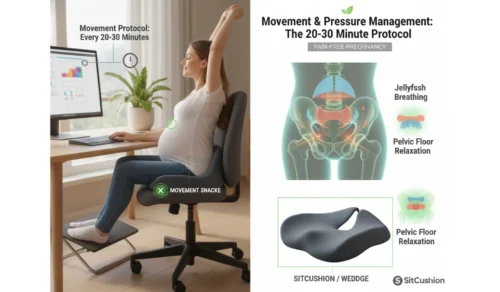
The Royal College of Obstetricians and Gynaecologists (RCOG) recommends that women with PGP change position frequently and avoid sitting for more than 30 minutes at a time. This “movement snack” helps prevent the sacroiliac joints from becoming stiff and supports healthy circulation. If you’re in a meeting, simply standing for 60 seconds or doing seated pelvic tilts on your Sitcushion can help reset your alignment.
Use Diaphragmatic Breathing to Ease Pelvic Floor Pressure
When seated, try diaphragmatic breathing — inhaling slowly and deeply so your belly expands, allowing the pelvic floor to release rather than stay braced. This counters the natural tendency to “clench” in response to pain. Pairing this breathing technique with the pressure-relief zone of your Sitcushion can help you manage pelvic floor pressure more comfortably throughout the day.
Conclusion: Reclaiming Comfort and Mobility During Pregnancy
Ergonomic sitting is one of the most effective non-invasive ways to manage the effects of Pelvic Girdle Pain. By combining the five strategies in this guide — neutral pelvic alignment, supportive high-density memory foam, a properly adjusted workstation, avoiding asymmetrical positions, and frequent movement breaks — you can help manage PGP symptoms and support your comfort throughout pregnancy.
At Sitcushion, we’re committed to helping you find the support you need during this stage of your pregnancy. For more practical guidance, see our guide on managing back pain during pregnancy or explore our full Knowledge Center. If you’re ready to try a dedicated ergonomic support, take a look at our Seat Cushion collection. Comfort during pregnancy starts with the right support — and small, consistent adjustments can make a real difference.
Frequently Asked Questions (FAQ)
How should you sit if you have pelvic girdle pain?
Aim for the “halfway” position — hips slightly higher than your knees, weight evenly balanced on both sit bones. Keep both feet flat on the floor or a footrest, and avoid crossing your legs or leaning to one side. A supportive cushion like Sitcushion can help you maintain this position more easily.
Is crossing your legs bad for pelvic girdle pain?
Yes. Crossing your legs is a common trigger for PGP flare-ups, since it rotates the pelvis into an asymmetrical position and adds strain to the sacroiliac joints and pubic bone. Keeping your weight even on both hips is one of the simplest ways to reduce symptoms.
How often should I change my sitting position during pregnancy?
If you have PGP, RCOG guidance recommends avoiding sitting for more than 30 minutes at a time. Standing briefly, walking a few steps, or doing a seated pelvic tilt every 20–30 minutes can help prevent stiffness and discomfort.
Does pelvic girdle pain go away after birth?
For most women, PGP symptoms improve within weeks to a few months postpartum. About 1 in 10 continue to experience symptoms for longer and may benefit from ongoing physiotherapy.
Can pelvic girdle pain harm my baby?
No. PGP does not harm your baby, and most women with PGP are still able to have a normal vaginal delivery. The condition affects your comfort and mobility, not your baby’s development.
Can a seat cushion actually help with pelvic girdle pain?
A cushion can’t cure PGP, but a well-designed one — with a coccyx cutout and even weight distribution — can meaningfully reduce the pressure and asymmetrical loading that make symptoms worse while sitting. Sitcushion‘s U-shaped design and firm memory foam are built around this principle.
Is it safe to use an ergonomic seat cushion all day during pregnancy?
Yes, a supportive cushion is generally fine to use throughout the day. That said, it’s not a substitute for movement — pair it with regular position changes every 20–30 minutes for the best results.
Can I use a pregnancy seat cushion in the car?
Yes. Sitcushion is portable and fits most standard car seats, which can help during commutes, where road vibration often makes PGP discomfort worse.