





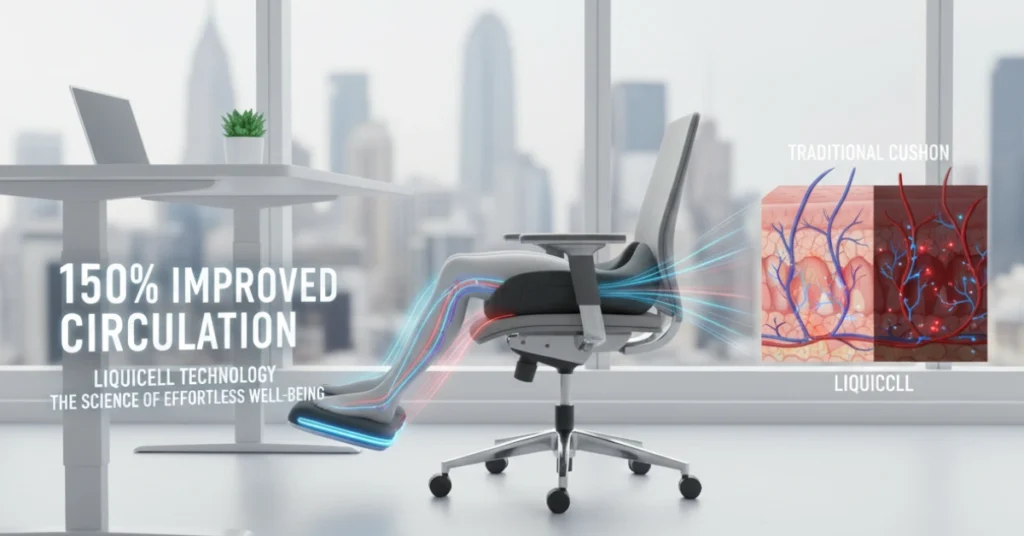
I. The Sedentary Crisis: Understanding the Pathophysiology of Restricted Blood Flow
Sitting and compromised circulation is now recognized as one of the most significant health challenges in the modern workplace, contributing to a host of preventable vascular and neurological issues.
The Silent Pandemic: Impact of Prolonged Sitting on Vein Health and Pressure
Prolonged uninterrupted sitting is scientifically defined as a form of sedentary behavior (SB) and poses an independent risk factor for major preventable diseases, including cardiovascular issues and stroke. The dangers associated with extended periods of immobility are systemic, affecting crucial bodily functions, especially circulation.
The immediate physiological consequence of prolonged sitting is the drastic slowing of blood flow in the legs, a condition known as venous stasis. The lower body’s return of blood to the heart relies heavily on the “muscle pump” in the calves. When an individual sits for hours, the calf muscles remain inactive, and this essential pumping mechanism ceases to function, severely restricting blood circulation.
This resulting venous stasis causes blood to pool in the lower legs, dramatically increasing pressure within the veins (venous hypertension). This consistent elevation in pressure weakens the delicate one-way valves designed to prevent backflow. Over time, this deterioration leads to Chronic Venous Insufficiency (CVI), resulting in symptoms like aching, heaviness, swelling, and the progression toward visible Varicose Veins. High rates of venous disease are disproportionately seen in occupations that demand long hours of immobility, underscoring the severity of this occupational hazard related to prolonged sitting.
Furthermore, the negative effects of prolonged sitting extend to cerebrovascular health. Research shows that prolonged uninterrupted sitting in otherwise healthy desk workers reduces cerebral blood flow (CBF), which is essential for normal brain function. While frequent, short-duration walking breaks can help, the acute detriment to vascular health remains a severe concern.
Prolonged sitting is often likened to “the new smoking” due to its wide-ranging negative effects, which also include slowed digestion and the weakening of critical muscle groups like the glutes and abdominal muscles. This muscle deterioration affects body stability and stride, further exacerbating the negative loop created by poor sitting posture and compromised circulation. Therefore, active strategies and highly advanced ergonomic support are necessary to prevent these cerebrovascular detriments and protect overall health during extended sitting.
Driving 10+ hours a day and feeling the toll on your body and focus?
Fatigue Management Strategies for Over-the-Road Truck Drivers
Recognizing Distress Signals: Signs of Poor Leg Circulation from Sitting Too Long
Inadequate blood flow and poor circulation caused by prolonged sitting leads to a deprivation of oxygen and nutrients to tissues and nerves. When nerves are starved, they transmit “distress signals,” resulting in physical symptoms that should never be ignored.
One of the most common warning signs is Paresthesia, typically manifesting as persistent numbness, tingling, or the “pins-and-needles” sensation in the feet and legs. For individuals already managing nerve pain, the lack of nutrient delivery from restricted circulation can escalate symptoms. If this tingling recurs or persists for longer than a few minutes without a clear cause, it strongly suggests restricted blood flow that compromises nerve health and requires a solution to improve circulation. This loss of nutrient supply to the peripheral nerves makes existing neuropathy symptoms worse.
Another critical indicator of poor circulation is changes in the temperature and color of the extremities. Consistent, chronically cold hands or feet often signal inadequate circulation, as strong arterial flow is necessary to maintain warmth. When blood vessels are narrowed or compressed, less blood reaches the extremities, causing the skin to potentially turn pale, bluish, or purple.
The skin on the legs may also appear red, shiny, or tight due to accumulating pressure and compromised tissue health. Beyond these circulatory indicators, poor posture and lack of movement during sitting causes muscle loss and fatigue. Prolonged sitting weakens the glutes and abdominal muscles, contributing to muscle fatigue and soreness in the lower back. This muscular weakening combined with nerve compression (such as pinched sciatic nerves) further contributes to a cycle of discomfort and poor mobility.
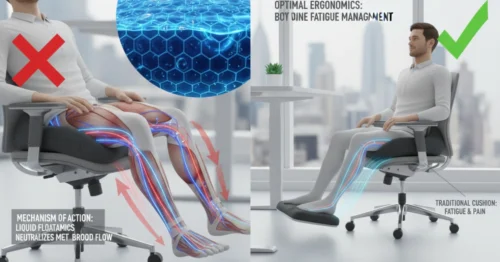
II. Understanding Liquicell Technology: Mechanism of Action for Circulation
The fundamental limitation of conventional cushions is their inability to address all components of sitting discomfort and circulatory restriction. While materials like gel and foam attempt to distribute vertical pressure, they fail to mitigate the harmful effects of friction and shear stress. Shear stress—the tangential force created when tissue shifts relative to the sitting surface—is scientifically proven to cause pain and microcirculatory damage. This destructive force physically deforms tissue and capillaries, directly restricting blood flow.
Liquicell Technology Mechanism of Action for Circulation
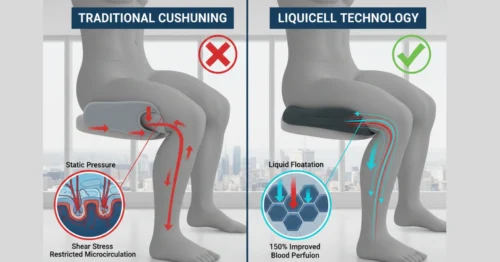
Liquicell technology is explicitly designed to resolve the shear stress problem that impedes circulation. Its mechanism of action is based on a biomimetic principle: the ultra-thin, liquid-filled cells are engineered to imitate the body’s natural membrane protection system, such as the bursa sac. This unique structure allows the user’s tissues to glide or “float” effortlessly over the contact surface, neutralizing friction and eliminating the destructive forces of shear stress.
Sitting for long hours and feeling pressure, numbness, or discomfort?
This principle of constant liquid floatation ensures that pressure is equalized across all contact points, including the tailbone, ischial tuberosities, and legs. By constantly adapting and allowing movement without friction, Liquicell promotes uniform weight distribution and maintains blood flow. The key differentiation lies in its ability to address horizontal forces (shear) alongside vertical forces (pressure). This two-pronged technological distinction—moving beyond static pressure distribution to active shear elimination—is the critical factor enabling Liquicell to sustain and stimulate optimal blood perfusion, dramatically improving circulation, even during prolonged sitting.
This liquid-floatation approach addresses the root cause of poor circulation by creating a seating surface that flows with the body, rather than resisting it.
Clinical Evidence: Liquicell 150% Circulation Improvement
The circulatory benefits of this unique liquid technology are not theoretical; they are validated by independent scientific study. In March 2006, the Delft University of Technology, under the direction of Goossens, conducted research comparing the effect of various cushioning materials on blood perfusion (flow) over time. The study’s methodology focused on monitoring tissue perfusion in a live setting as opposed to a laboratory, aiming to capture an accurate reflection of real-life conditions rather than laboratory approximations.
The results of the Delft University study provided conclusive evidence regarding the superior efficacy of the liquid floatation system. The research demonstrated that Liquicell actually improves blood perfusion by an impressive 150% starting from the initial point of contact. This finding is crucial because it confirms that the technology not only prevents circulation detriment from sitting but actively stimulates flow.
This clinical finding stands in sharp contrast to traditional cushioning solutions. The same study revealed that gel and foam cushions showed a measurable decrease in blood perfusion over the same period of time. This data validates the need for a solution that addresses shear stress, illustrating that while static materials may feel comfortable initially, they ultimately fail to support the critical microcirculatory function necessary for long-term vascular health during sedentary periods of sitting.
III. Comparative Advantage: Liquicell vs. Traditional Materials for Enhanced Circulation
Choosing the right tool to maintain healthy blood circulation while sitting is vital. The comparison below highlights why advanced liquid technology is the superior choice.
Liquicell vs Dynamic Air Cushion for Blood Flow
Air-filled cushions are known for providing excellent, dynamically adjustable pressure relief, particularly for high-risk users. They function by adjusting air distribution among connected cells to shift weight and reduce vertical pressure points. Clinical research supports their effectiveness in redistributing weight dynamically and providing superior skin protection.
However, air systems face challenges that limit their utility for general, prolonged sitting in a desk environment:
-
Shear Stress: They primarily focus on vertical weight redistribution and are less effective at neutralizing the horizontal forces of shear stress that Liquicell targets.
-
Maintenance: Air-filled cushions require ongoing user intervention and maintenance. They necessitate regular air pressure checks for optimal performance, and they carry the risk of puncture, which disrupts functionality and consistency.
Liquicell-based cushions offer key advantages over dynamic air systems for everyday sitting. This liquid-cell approach provides protection against shear stress through constant floatation, ensuring tissues glide effortlessly. Because it’s maintenance-free — it never flattens like foam or requires inflation checks like air cushions — this makes it an effortless option for daily circulation support.
Table 1: Comparison of Cushion Materials and Impact on Circulation
| Cushion Material | Primary Mechanism | Impact on Blood Perfusion Over Time | Longevity/Maintenance | Key Clinical Differentiation |
| Liquicell (Liquid-Cell Technology) | Shear/Friction Elimination | Improves by 150% | Never flattens, zero maintenance | Targets shear stress; sustains blood flow and circulation |
| Gel and Foam (Static) | Pressure Absorption/Distribution | Decreases blood perfusion | Flattens and degrades over time | Only addresses pressure; fails against friction/shear |
| Air-Filled Cushions (Dynamic) | Adjustable Weight Redistribution | Excellent static pressure relief | Requires regular inflation checks, risk of puncture | Does not specifically target shear; high maintenance for everyday sitting |
Seat Cushion Alternatives to Compression Stockings for Desk Work
For individuals suffering from the effects of poor circulation due to sedentary work, compression stockings are a commonly recommended intervention. These garments manage the symptoms of venous pooling and edema by applying external, graduated pressure to aid venous return. While effective for symptom management, compression stockings do not address the fundamental interface problem between the user and the chair during sitting.
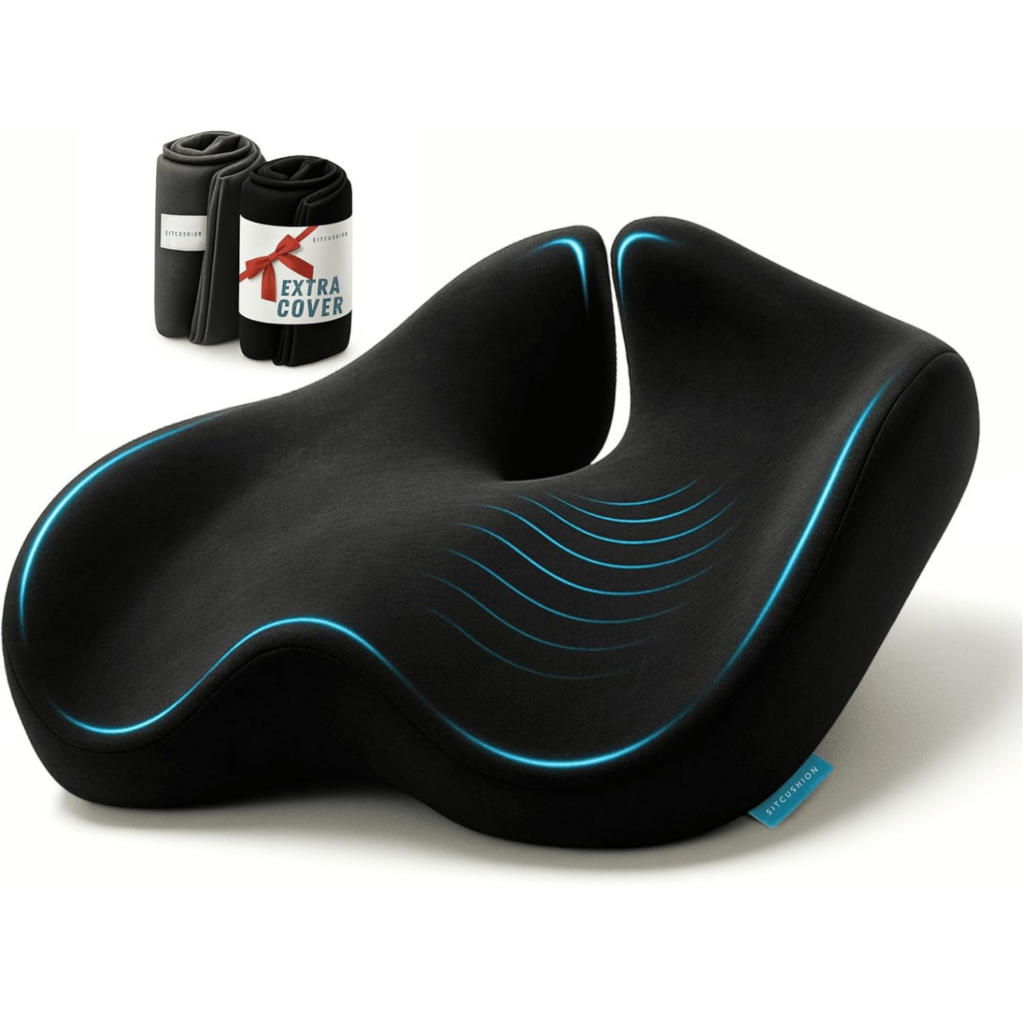
Ergonomic seat cushions, particularly the SitCushion incorporating advanced flow technology like Liquicell, provide a proactive, root-cause solution. Physical therapists and medical experts endorse seat cushions because they directly resolve the localized pressure points—such as the ischial tuberosity and the coccyx—that inhibit blood flow and cause inflammation. By optimizing the sitting surface, the cushion prevents the physiological mechanism that leads to compromised circulation and nerve distress.
This positioning suggests that the cushion is not merely an alternative to compression stockings, but rather a superior, primary ergonomic intervention for the sedentary workspace. By improving the posture and eliminating inhibitory pressure points at the source, this approach maximizes comfort and minimizes the need for external circulatory aids, ensuring healthy circulation during prolonged sitting. While compression stockings offer external support, liquid-cell cushioning offers a form of internal support by optimizing the physical interface between the body and the chair.
IV. Ergonomics and Active Prevention: DVT and Fatigue Management
Successfully mitigating the risks of Deep Vein Thrombosis (DVT) and chronic circulation issues requires integrating a therapeutic seating surface with adherence to strict ergonomic positioning and active movement protocols.
DVT Prevention Ergonomic Seating Position Guidelines
Optimal ergonomic positioning is essential to ensure that blood flow is not restricted by the chair itself, which is a common cause of poor circulation while sitting. The guidelines focus on supporting natural bodily angles and ensuring that pressure is distributed correctly. A checklist for proper chair setup includes:
-
Adjustability: The ergonomic chair must feature adjustable height, lumbar support, and armrests to customize the fit for maximum comfort and support.
-
Thigh Clearance and Seat Depth: Crucially, the seat must be deep enough to support the thighs fully, but not so deep that the front edge presses into the back of the knee. Maintaining a gap of approximately 2-3 fingers between the seat edge and the popliteal fossa (behind the knee) is necessary to avoid cutting off circulation.
-
The 90/90/90 Rule: Ideally, the body should maintain approximate 90-degree angles at the hips, knees, and ankles. Feet must remain flat on the floor or a stable footrest to prevent excessive pressure under the thighs and ensure optimal blood circulation.
The Geometry of Safety: Waterfall Cushion Design to Prevent Popliteal Pressure
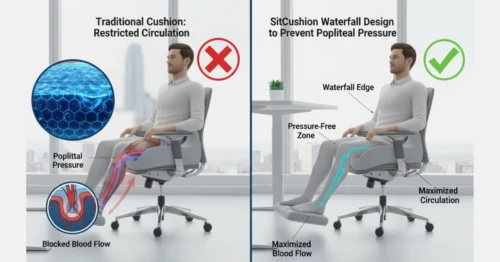
A critical detail in advanced seating design, particularly in the SitCushion, is the management of pressure behind the knee, known as the Popliteal Fossa. This area contains major blood vessels, and compression here can significantly impede blood flow to the lower leg, contributing directly to poor distal circulation and nerve symptoms.
Premium ergonomic cushions incorporate design features such as a “waterfall” edge or a contoured space (like the PopliZone) to actively prevent pressure in this sensitive area. The contoured front edge rolls off or drops down before reaching the popliteal fossa, ensuring that this vital region remains completely free of contact pressure. This adherence to best practices in pressure offloading distinguishes therapeutic seating, like the SitCushion, from standard padding and is a crucial safety component for healthy circulation during prolonged sitting. By providing comfortable support for the lower thigh while strategically eliminating pressure behind the knee, the design maximizes blood return from the lower leg.
Active Measures: How to Use Foot Exercises to Prevent DVT When Sitting
Even with the best ergonomic setup and advanced cushioning, prolonged immobility remains detrimental to vascular function and blood circulation. Therefore, breaking up sedentary time with short, frequent bouts of low-intensity activity is required to stimulate the body’s natural venous return mechanisms. The following exercises and stretches can be performed directly at the desk to engage the necessary muscles and mitigate DVT risk while sitting.
Table 2: At-Desk Exercises to Maintain Circulation
| Exercise | Action/Procedure | Target Frequency | Key Benefit for Circulation |
| Foot Pumps (Ankle Flexion/Extension) | Keep heels on the floor and lift toes high toward the shin. Then, keep the balls of the feet down and lift heels high. Alternate between the two actions. | 30 seconds continuously | Directly activates the calf muscle pump, essential for pushing pooled blood back up the leg and improving venous circulation. |
| Ankle Circles | Lift feet slightly off the floor and rotate the ankles slowly, drawing circles with your toes. Reverse the direction after 15 seconds. | 15 seconds in each direction | Helps maintain joint mobility and stimulates microcirculation in the extremities, aiding blood circulation. |
| Seated Knee Lifts | Lift one bent knee toward the chest, holding briefly to engage the thigh and hip flexors. Lower the leg slowly and repeat with the other leg. | 20-30 repetitions per leg | Engages the upper leg muscles, promoting circulation above the knee and reducing stiffness from prolonged sitting. |
| Leg Extensions | While sitting, fully extend one leg until it is straight, pointing the toes up. Slowly lower it back down. | 3 sets of 10 repetitions per leg | Strengthens thigh muscles and promotes large-vessel blood flow, combating the effects of long-term sitting. |
| Seated Hamstring Stretch | Extend one leg straight ahead, heel on the floor, flexing the foot. Lean forward slightly, keeping your back straight. | Hold for 30 seconds | Helps reduce tightness that can restrict blood flow and aids in overall mobility. |
V. Conclusion: Maximizing Well-being and Eliminating Muscle Fatigue
How Liquid-Cell Technology Reduces Muscle Fatigue and Soreness from Sitting
The benefits derived from Liquicell technology extend beyond validated circulation improvement to total musculoskeletal well-being. By utilizing the liquid floatation principle, this liquid-floatation principle eliminates localized pressure points—specifically on the coccyx and ischial bones—and minimizes the shear stress that contributes to inflammation and nerve distress. The ultra-thin liquid cells ensure that the microcirculation is protected at the source, preventing tissue breakdown and the resulting pain signals. The result is a substantial reduction in muscle fatigue, soreness, and tightness commonly associated with prolonged sitting posture.
Furthermore, liquid-cell cushions represent a significant long-term value proposition. Unlike conventional memory foam or gel materials that inevitably compress and flatten, leading to a loss of therapeutic support and an eventual recurrence of pressure points, Liquicell maintains its structure and circulatory efficacy indefinitely. Choosing a cushion based on this advanced liquid-floatation technology is an investment in consistent, maintenance-free, long-term health protection against the hazards of prolonged sitting. The technology ensures optimal weight distribution, leading to the sustained improvement of posture and seating comfort over years of use.
Invest in Your Vascular Health Today: The SitCushion Advantage
The convergence of ergonomic risks in the modern sedentary lifestyle demands an effective, scientifically validated solution that actively promotes healthy circulation. Liquicell technology provides one answer to this challenge, proven to overcome the primary failure points of traditional seating surfaces—vertical pressure, friction, and shear stress.
The clinical evidence demonstrating a 150% improvement in blood perfusion confirms the technology’s position as the leading circulatory aid available in the ergonomic seating market for combatting the high health risks associated with prolonged sitting. By integrating superior pressure offloading, essential ergonomic geometry (like waterfall edges), and scientifically proven stimulation of blood flow, a Liquicell-based memory foam seat cushion can transform passive sitting into a more actively supported state for vascular health for vascular health and superior circulation. This technology represents a crucial intervention for anyone committed to protecting their circulatory health during prolonged work periods or travel.
Comparing seat cushions for pain relief and long-hour sitting comfort?
Best Seat Cushions for Pain Relief and Comfort – 2025 Buyer’s Guide
Ready to transform your sitting experience?
-
Explore the SitCushion Liquicell Seat Cushion and Shop Now.
-
Visit our Knowledge Center for more insights on ergonomic sitting and vascular health.
Transform Your Office Comfort
Sit longer, focus better, and relieve pressure with the SitCushion Office Seat Cushion —
engineered to support your posture and reduce fatigue during long hours at your desk.
VI. Frequently Asked Questions (FAQ)
1. What does “150% Improved Circulation” mean?
The 150% improvement is a clinically proven metric derived from an independent university study comparing the Liquicell system to traditional cushioning materials like foam and gel. It means that the Liquicell technology not only prevents the typical decline in blood flow associated with prolonged sitting but actively stimulates and increases blood perfusion in the seated area by 150% from the initial point of contact. This active improvement in blood flow is key to preventing numbness, tingling, and deep vein issues.
2. How is Liquicell different from standard memory foam or gel cushions?
Standard memory foam and gel cushions primarily distribute vertical pressure, but they fail to eliminate shear stress (the horizontal friction between your body and the cushion surface). This friction is a major cause of restricted blood flow. Liquicell technology uses ultra-thin, liquid-filled cells that allow your tissues to “float” and glide, neutralizing shear stress and friction. This mechanism is what enables the cushion to achieve the validated 150% improvement in circulation, something static materials cannot match.
3. Can Liquicell-based cushions help prevent Deep Vein Thrombosis (DVT)?
Cushions using this technology are designed to address the primary contributing factor to DVT risk during sitting: venous stasis (slowed blood flow and pooling). By actively stimulating blood flow and reducing pressure points behind the knee, it reduces the likelihood of circulation compromise. However, a cushion is only one part of DVT prevention. It should be used in combination with regular movement breaks and active foot exercises (like the Foot Pumps described above) to maintain optimal vascular health.
4. Why is the Waterfall Cushion Design important for my legs?
The Waterfall Cushion Design refers to the contoured front edge of the cushion that slopes downward. This design is crucial because it ensuring the cushion does not press into the Popliteal Fossa (the area behind your knees). Compression in this area can restrict major blood vessels, directly cutting off circulation to the lower legs. By incorporating a waterfall edge, this design prevents Popliteal Pressure, safeguarding blood flow and nerve health during prolonged sitting.
5. Does Liquicell flatten out over time like other foam cushions?
No. Cushions built with this technology typically combine memory foam for foundational support with liquid-filled membranes for the core therapeutic function. Unlike standard foam or gel, which inevitably compress and degrade, the Liquicell technology remains active and consistent. This means the cushion will never lose its core circulatory and shear-eliminating efficacy, providing long-term, maintenance-free therapeutic support.
Liquicell Technology: The Science Behind 150% Improved Circulation While Sitting
Learn how Liquicell technology may help improve circulation, comfort, and support while sitting.
Instant access • PDF format