


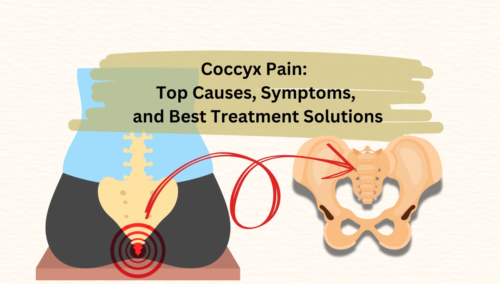



Treatment for coccyx pain (coccydynia) works in stages. Doctors start with simple, low-risk measures and move to more invasive options only if those do not help. That order matters, because most people improve long before they reach the later stages. This guide walks through each stage, what it involves, when doctors consider it and what recovery usually looks like.
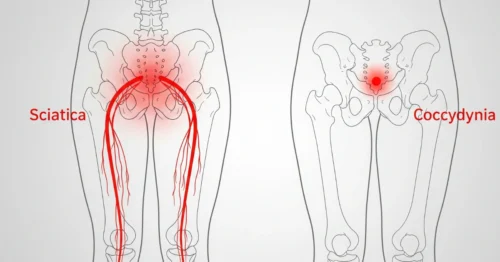
If you are not sure that your pain is coming from the coccyx, start with our guide to coccyx pain causes, symptoms and diagnosis, then come back here.
Coccyx Pain Treatment at a Glance
| Stage | What it involves | Usually considered when |
|---|---|---|
| Home care and activity changes | Taking pressure off the tailbone, pain relievers, changes to how you sit and exercise | Pain is recent, mild or moderate |
| Physical therapy | Pelvic floor therapy, stretching, posture work | Pain continues after a few weeks, or pelvic floor muscles are tight |
| Injections | Local anesthetic with or without a corticosteroid, guided by imaging | Pain persists despite conservative care |
| Nerve procedures | Blocking or ablating the nerves that carry the pain | Injections help only briefly, or pain has a nerve component |
| Surgery (coccygectomy) | Removing part or all of the coccyx | Severe pain that has not responded to months of other treatment |
Home Care and Activity Changes
The first goal is to stop irritating the coccyx while it settles. StatPearls cites a success rate of about 90% for conservative treatment, which is why almost everyone starts here.
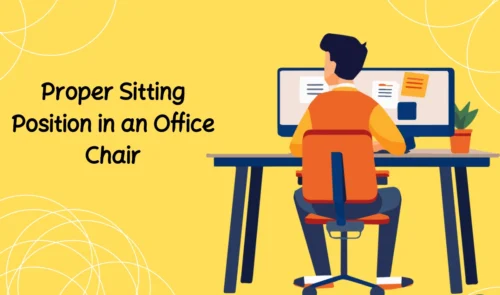
The core measures are simple. Avoid long, unbroken stretches of sitting and sit on your sitting bones instead of leaning back onto the tailbone. Stop or reduce activities that load the coccyx, such as cycling, rowing, horseback riding and sit-ups, until the pain settles. If you work at a desk and sitting is painful, a standing workstation gives the area a break. For people who are overweight, losing weight reduces the load on the tailbone over time.
For pain relief, doctors commonly suggest over-the-counter anti-inflammatory medicines such as ibuprofen, or other non-opioid pain relievers such as acetaminophen. Topical options such as diclofenac gel are also used. Follow the label, and check with a doctor or pharmacist if you take other medicines, have a stomach, kidney or heart condition, or need relief for more than a short period. These medicines ease pain but do not fix the cause, and they can have side effects.
Ice, heat, gentle stretching and sleeping positions are covered step by step in our guide to 8 expert-approved techniques to ease tailbone pain.
Physical Therapy and Manual Treatment
If the pain has not started to improve after a few weeks, or has lasted more than about eight weeks, a physical therapist is a sensible next step. NI Direct lists physiotherapy with exercises, massage and stretching among the treatments for pain that lasts longer than eight weeks.
A therapist can do several useful things:
- Assess your sitting posture and show you how to load your sitting bones instead of the coccyx.
- Treat tight pelvic floor muscles that pull on the tailbone, using manual techniques and guided exercises.
- Teach stretches for the muscles around the hips and pelvis.
- In some clinics, use methods such as kinesiotaping or shockwave therapy, which are described in medical references but have limited evidence.
Pelvic floor therapy is a specialty, so look for a therapist with that training. Avoid forceful stretching or manipulation on your own, because the area is already irritated.
Injections for Coccyx Pain
When pain continues despite conservative care, a pain specialist may recommend an injection. These are usually performed under fluoroscopy (live X-ray) so that the medicine reaches the right spot.
The options include:
- A local anesthetic injection, sometimes used first as a test. If it gives quick and clear relief, that confirms the coccyx area is the source of the pain.
- A corticosteroid injection, often combined with local anesthetic, to reduce inflammation. It may help most when the pain has lasted less than about six months, and it can be repeated if the pain returns.
- A ganglion impar block, an injection near a cluster of nerves in front of the coccyx. It can give some people sustained relief, particularly when part of the pain is nerve-driven.
Relief varies a lot from person to person. Some people feel better for a few weeks, and others get longer-lasting improvement. Because of that, injections work best as part of a plan that also includes better sitting habits and physical therapy.
Nerve Procedures and Other Options for Stubborn Pain
For pain that does not respond to injections, specialists have a few further options. Radiofrequency or chemical nerve ablation destroys the nerves thought to be driving the pain, and a diagnostic injection at the same site is done first to check that the person is a good candidate. Other approaches described in the medical literature include manipulation under anesthesia, TENS (a low-level electrical nerve stimulation) and, rarely, spinal cord stimulation. These are specialist treatments, and they are used after simpler measures have been tried.
Coccyx Surgery (Coccygectomy)
Surgery is the last step. Coccygectomy means removing part or all of the coccyx, and it is reserved for a small group of people whose pain is severe and has not improved after months of non-surgical treatment. A 2025 review of the surgical literature describes it as a crucial option for these refractory cases, while noting that surgical techniques vary widely.
Surgery is not risk-free. The most common complications are infection of the wound and persistent pain, and some people keep a degree of pain afterward. If pain continues after surgery, doctors may check with new imaging whether a bone fragment was left behind, and treat the remaining pain with medicines, cushions, injections or pelvic floor physical therapy. Before going ahead, ask a spine or pain specialist how many people with your type of pain improve, what recovery involves and what the alternatives are.
How Long Does Coccyx Pain Last
For most people, coccyx pain improves within weeks to months, with or without treatment. Cleveland Clinic says tailbone pain is rarely lifelong, and most people recover without any treatment beyond home care. Occasionally the pain lasts much longer and can interfere with daily activities.
Recovery time often depends on the cause:
- Bruising or strain after a fall or a period of long sitting often eases within a few weeks once pressure on the area is reduced.
- Pain after childbirth usually improves gradually, although it can take longer if the joint or ligaments were injured.
- Bone spurs and coccyx instability are more likely to become long-term, because the structural problem remains.
Medical references also note that long-lasting pain can turn into a chronic pain problem, which is one more reason to get help if simple measures are not working after a few weeks.
Choosing a Cushion While You Recover
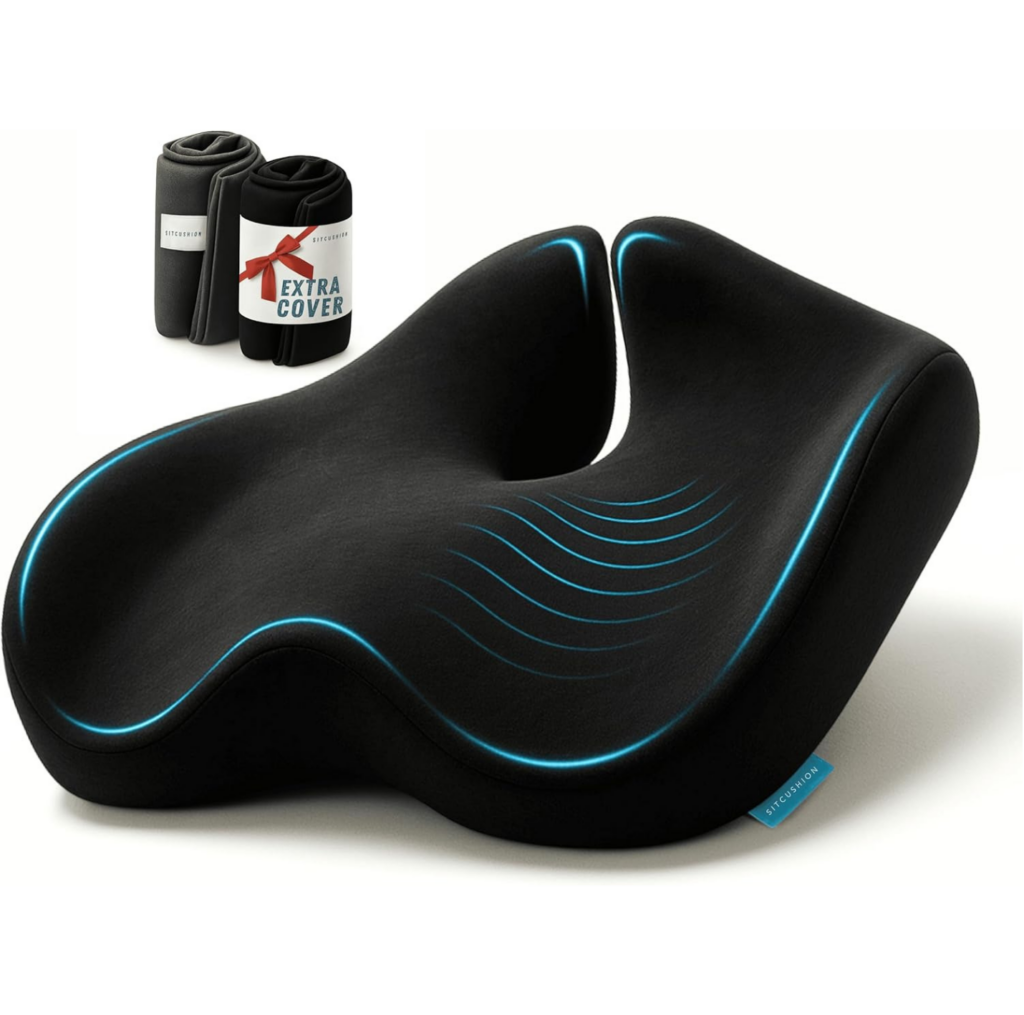
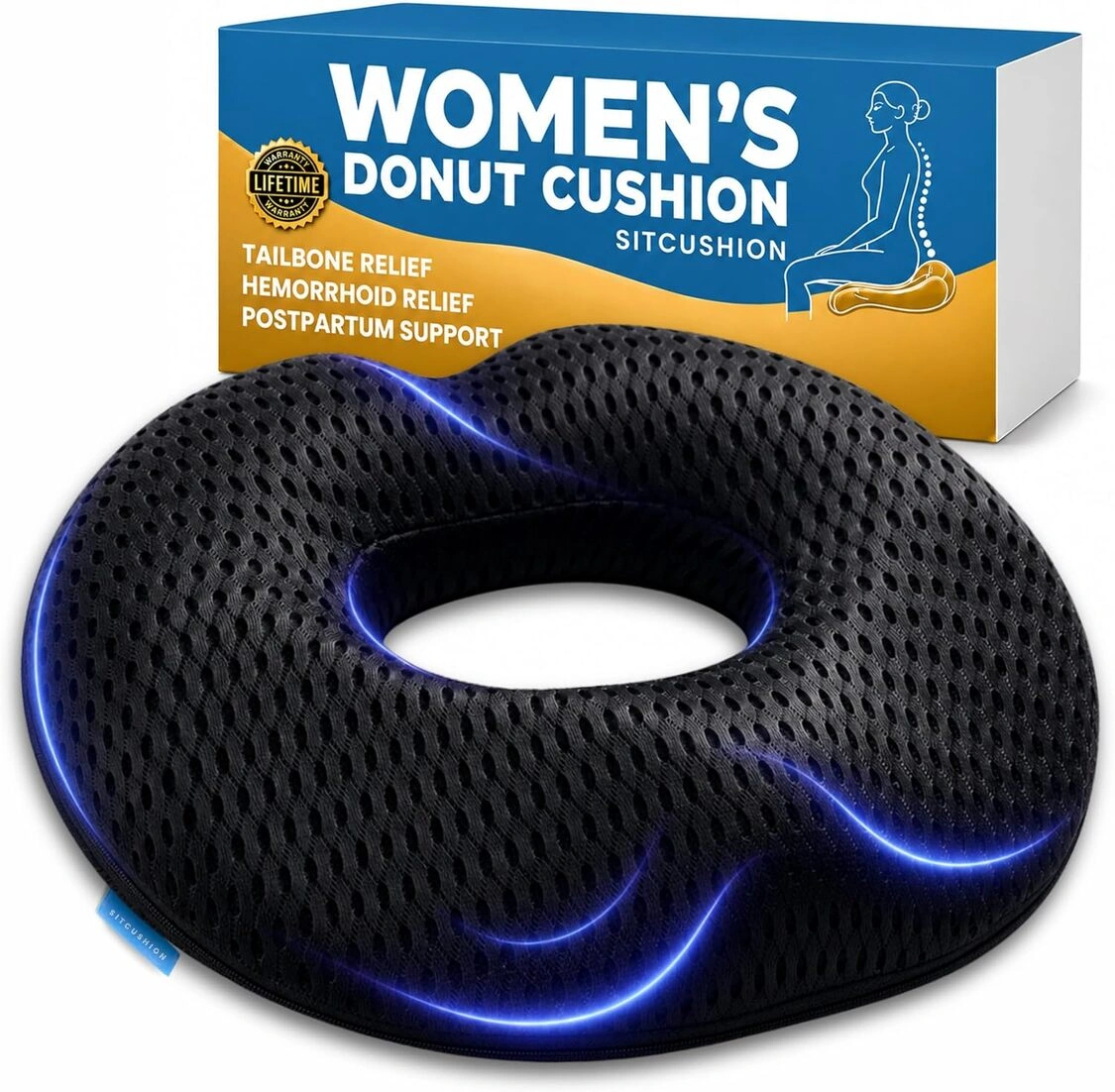
A cushion does not treat the cause, but it can make sitting easier while the tailbone heals. Medical references recommend a wedge-shaped or U-shaped cushion with a cut-out that lets you sit on your sitting bones while the coccyx stays unloaded, and they describe closed donut cushions as usually less helpful, because the ring can still press on the tailbone.
The sitcushion Office Seat Cushion has a U-shaped coccyx cut-out, firm charcoal-infused memory foam and a non-slip base. To learn how these cushions work and how to sit on one, read our guide to coccyx cushions for tailbone pain relief. Sitcushion products are designed for ergonomic support and comfort and are not medical devices.
Common Mistakes That Can Slow Recovery
- Leaning back onto the tailbone in a soft sofa or recliner, which loads the coccyx for hours.
- Pushing through cycling, rowing or long drives while the area is still inflamed.
- Relying on painkillers alone while sitting habits stay the same.
- Forceful stretching or “cracking” the tailbone at home.
- Waiting months to get checked when pain is not improving, which can let a short-term problem become a long-term one.
Questions to Ask Your Doctor
A short list makes a visit more useful. Consider asking:
- Do you think my pain comes from the coccyx, or could it be the lower back, the sacroiliac joint or the pelvic floor?
- Do I need an X-ray or MRI, and what would it change?
- Which pain medicines are safe for me, and for how long?
- Would physical therapy help, and can you refer me to a pelvic floor therapist?
- Am I a candidate for an injection, and what relief should I expect?
- How long should I try conservative treatment before we consider other options?
When to See a Doctor About Treatment
Get checked if your pain is not improving after a few weeks, if simple home care does not help, or if it is severe enough to stop you from sleeping, working or driving. Seek urgent care for fever, numbness or tingling in the groin or legs, trouble controlling urine or bowels, or a red, hot or draining swelling near the tailbone. The full list of warning signs is in our guide to coccyx pain causes, symptoms and diagnosis.
Frequently Asked Questions About Coccyx Pain Treatment
Do cortisone injections for tailbone pain work?
They help many people, but not everyone. A corticosteroid injection reduces inflammation around the coccyx, and it is usually combined with a local anesthetic so that you feel relief quickly. It tends to work best when pain has lasted less than about six months, and the effect can last from weeks to much longer. If pain returns, the injection can be repeated, and your doctor will decide how often that is appropriate. If injections give only brief relief, other options such as nerve procedures can be discussed.
When is surgery for coccyx pain recommended?
Surgery is considered only when pain is severe and has not improved after months of non-surgical treatment, which includes seating changes, physical therapy and injections. It is not a first-line treatment, and it carries risks such as infection and pain that continues afterward. A spine or pain specialist can tell you whether you are a good candidate.
Which doctor should I see for coccyx pain?
Start with your primary care doctor, who can examine you, rule out other causes and begin treatment. If the pain continues, you may be referred to an orthopedic spine specialist, a physical medicine and rehabilitation doctor or a pain specialist, who perform injections and nerve procedures. A pelvic floor physical therapist is often the right referral when tight muscles are part of the problem.
Can I take painkillers for tailbone pain every day?
Over-the-counter pain relievers can help during a flare-up, but they are meant for short-term use. Taking them daily for long periods can cause side effects, particularly with anti-inflammatory medicines such as ibuprofen, which can affect the stomach, kidneys and blood pressure. Follow the package directions, and ask a doctor or pharmacist if you need them for more than a few days or if you take other medicines. If you need daily pain relief, tell your doctor, because it means the underlying problem needs a better plan.
Can I still exercise with coccyx pain?
Yes, in most cases. Walking and other gentle activities are usually fine, and they take weight off the tailbone and keep you moving. Avoid activities that load the coccyx directly while it is sore, such as cycling, rowing, horseback riding and sit-ups. Once the pain settles, return to these gradually, and ask your doctor or physical therapist if you are unsure.
Will coccyx pain after childbirth go away?
In most women it improves gradually in the weeks and months after delivery. If it is still limiting your daily life, ask your doctor about a check and a referral to pelvic floor physical therapy, which is often helpful for this type of pain. Check with your healthcare provider before taking any pain medicine while pregnant or breastfeeding.
Final Thoughts on Coccyx Pain Treatment
Coccyx pain is treatable, and most people never need anything beyond home care and better sitting habits. If the pain lasts, physical therapy, injections and nerve procedures offer further steps, and surgery stays a last resort for a small group. The most useful things you can do are to take pressure off the tailbone early, give each stage a fair trial and get checked if you are not improving. For more guides on sitting comfort and pain-free living, visit the sitcushion Knowledge Center.