







Long-distance driving puts sustained pressure on the spine, and the numbers reflect it: a meta-analysis of drivers worldwide found that over half of professional drivers experience low back pain within a 12-month period. Whether you’re a long-haul commuter, a rideshare driver, or simply heading out on a road trip, hours behind the wheel can leave your lower back and tailbone sore long after you’ve parked. The good news: most driving-related back pain comes down to a handful of fixable factors — posture, seat setup, and how often you move. Below are 10 practical, easy-to-apply tips to help you prevent back pain on your next long drive.
1. Adjust Your Seat Correctly
Your seat position is the foundation of good driving posture. Start by adjusting the seat height so you can see clearly over the steering wheel without straining your neck or shoulders. Next, set the distance from the pedals: you should be able to press the pedals fully without stretching your legs, and your knees should stay slightly bent — never locked straight — when your foot is on the pedal. As a general rule, aim for about two fingers’ width between the edge of the seat and the back of your knees; this keeps circulation from being cut off during long stretches of driving. Sit all the way back so your thighs rest flat against the seat, rather than perching on the edge.
2. Fix Your Backrest Angle
A backrest that’s too upright or reclined too far both put extra strain on your lower back and spine. As a starting point, set your backrest to roughly a 100–110 degree angle — slightly reclined from perfectly vertical — so it supports the natural curve of your spine without forcing you to lean forward to reach the wheel. If your seat has adjustable lumbar support, use it to fill the gap between your lower back and the seat rather than relying on the backrest angle alone.
3. Add Lumbar Support — or a Dedicated Car Seat Cushion
Most factory car seats don’t offer enough lumbar support for long drives, which forces your lower back to round forward over time. A small lumbar roll or cushion placed against the small of your back can help maintain the natural curve of your spine.
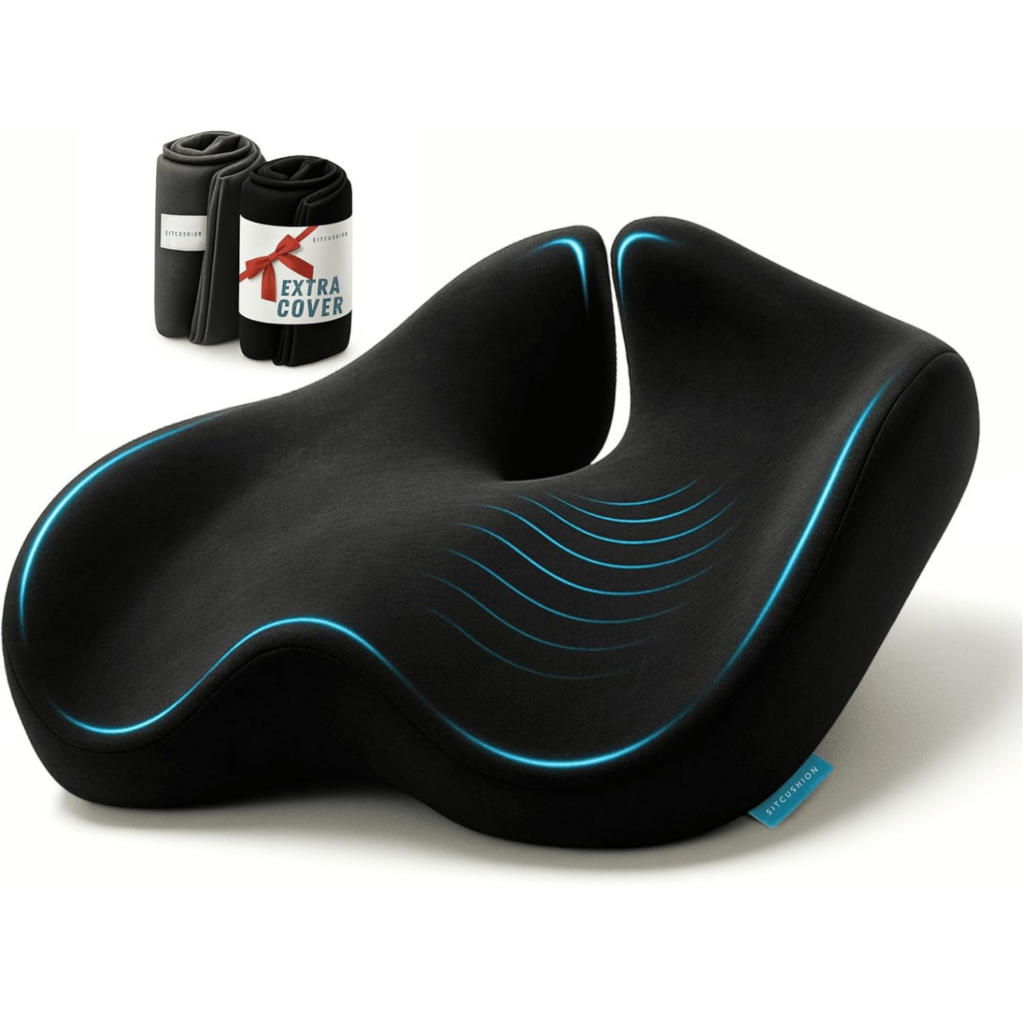
For more targeted relief, a seat cushion built specifically for driving goes a step further. The Sitcushion Car Seat Cushion, for example, uses a U-shaped cutout design that keeps your tailbone and sit bones from bearing direct pressure against the seat — instead of just adding softness, it redistributes your weight toward your thighs and hips. It’s made from high-density memory foam, sized extra-large to support the thighs fully, and has a non-slip base so it stays in place on leather, fabric, or vinyl car seats. It’s backed by Sitcushion’s lifetime money-back guarantee, so there’s no risk in trying it out on your next long drive.
4. Position the Steering Wheel Properly

Keep your hands at roughly the 9 o’clock and 3 o’clock positions on the wheel — this keeps your shoulders relaxed and evenly loaded, rather than twisted or hunched forward. Avoid driving with one hand resting on the wheel or your lap; over long distances, this causes your spine to twist slightly to one side, which can lead to uneven muscle tension and lower back discomfort. If your steering wheel is adjustable, tilt and extend it so you can hold this position without reaching or slouching.
5. Take Regular Breaks Every 60–90 Minutes
Sitting in the same position for hours—even in a perfectly adjusted seat—reduces blood flow and lets muscles stiffen. Aim to stop every 60 to 90 minutes on long drives to get out, walk for a few minutes, and let your spine decompress. Even a short 5-minute break is enough to reset your posture and reduce the cumulative strain that builds up over a multi-hour drive.
6. Do Simple Stretches During Stops

When you pull over for a break, take an extra minute for a few targeted stretches:
- Neck rolls — gently roll your head in a slow circle to release tension in your neck and upper shoulders.
- Shoulder shrugs — raise your shoulders toward your ears, hold for a second, then relax them down.
- Torso twists — while standing (or seated with your seatbelt off), gently twist your upper body side to side to loosen your lower back.
These take less than two minutes but help restore flexibility that stiffens up during long stretches of sitting.
7. Warm Up Your Muscles Before You Drive
Just like before a workout, a few minutes of light stretching before a long drive helps prepare your muscles for hours of static sitting — and reduces the stiffness that sets in when cold, tight muscles are held in one position for too long. Try these three stretches before you get behind the wheel:

Hamstring stretch: Stand tall, extend one leg slightly forward with the heel on the ground and toes up, then hinge gently at the hips and reach toward your toes. Keep a slight bend in the standing knee. Hold for 20–30 seconds per side.
Quadriceps stretch: Stand on one leg (holding onto something for balance if needed), bend the other knee, and pull that foot back toward your glutes until you feel a stretch along the front of your thigh. Hold for 20–30 seconds per side.
Calf raises: Stand with feet hip-width apart and slowly rise onto your toes, then lower back down with control. Repeat 10–15 times to get blood flowing to your lower legs before you sit for an extended period.
Doing this 5-minute routine before a long drive — and repeating the hamstring and quad stretches at your rest stops — keeps your hips and legs from tightening up, which in turn reduces the pull on your lower back.
8. Manage Vehicle Vibration
Back pain while driving isn’t only about posture — constant vibration from the road also takes a toll on your spine over long distances. A few maintenance habits can reduce it:
- Keep up with regular maintenance. A vehicle in good mechanical condition transmits noticeably less vibration than one that’s overdue for service.
- Check your tire balance. Unbalanced or unevenly worn tires are one of the most common causes of excess vibration.
- Have your suspension inspected periodically. Worn shocks or struts let more road impact reach the cabin — and your spine.
Addressing these factors won’t eliminate road vibration entirely, but it meaningfully reduces the cumulative strain on your back during long trips.
9. Use Cold or Heat Therapy When Needed

If discomfort builds up mid-trip, cold and heat therapy target two different problems — using the right one matters.
Reach for cold when pain is sudden or sharp — for example, right after lifting a heavy suitcase into the trunk or a sudden twinge from twisting to grab something from the back seat. Cold reduces inflammation and numbs acute pain. Apply for 10–15 minutes at a time, always with a cloth or towel between the pack and your skin.
Reach for heat when the pain is a dull, lingering ache — the kind that builds gradually from hours of sitting in the same position. Heat increases blood flow to tight muscles and helps them relax, making it more effective for stiffness than for a fresh injury.
For road trips, a compact, reusable gel pack that works both ways (chilled in a cooler, or heated in a microwave at a rest stop) is the most practical option — keep it in your center console so it’s within reach without digging through bags while you’re on the road.
10. Build Long-Term Resilience with Regular Exercise

The tips above help in the moment, but the strength and flexibility of the muscles supporting your spine determine how well your back holds up over years of driving. A consistent routine — even a modest one — makes a measurable difference:
Core strength protects your lower back by taking pressure off your spine and distributing it across your abdominal and back muscles instead. Simple, low-equipment moves like planks, bird-dogs, and glute bridges, done 2–3 times a week, are enough to build meaningful support.
Flexibility work — such as yoga or basic stretching routines — keeps your hips and hamstrings from tightening, which matters because tight hip flexors are one of the most common contributors to lower back strain in people who sit for long hours.
Aerobic activity, like brisk walking, swimming, or cycling, improves blood flow to spinal tissues and supports faster recovery after long drives. Even 20–30 minutes, a few times a week, is enough to see a difference over time.
None of this needs to be intense. The goal isn’t athletic performance — it’s giving your spine the support it needs to handle the demands of long hours behind the wheel, day after day.
| Symptom | Likely Cause | Solution |
|---|---|---|
| Dull ache in lower back | Backrest too upright or too reclined | Adjust backrest to 100–110° (Tip 2) |
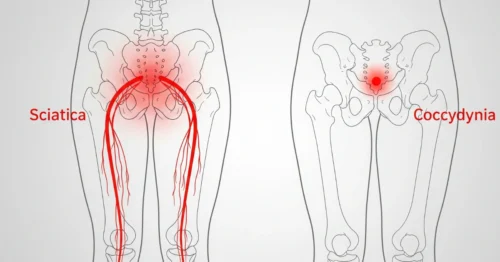
| Tailbone or sit-bone pain | Direct pressure on the coccyx from a flat seat | Add lumbar support or a cutout-design seat cushion (Tip 3) |
| Numbness or tingling in legs | Cutting off circulation behind the knees, or sitting too long without moving | Leave two fingers’ width behind the knees (Tip 1); take breaks every 60–90 min (Tip 5) |
| Shoulder or upper back tension | Overextending or gripping the wheel incorrectly | Reposition hands to 9 and 3 o’clock (Tip 4) |
| Stiffness that sets in right after a stop | Muscles cooling and tightening during prolonged sitting | Stretch during stops (Tip 6) and warm up beforehand (Tip 7) |
| Pain that builds gradually over a long drive | Constant road vibration | Check tire balance and suspension (Tip 8) |
| Sharp, sudden pain after lifting luggage | Acute strain or inflammation | Apply cold therapy for 10–15 min (Tip 9) |
| Pain that returns on every long drive despite adjustments | Underlying weak core or poor overall flexibility | Build core strength and flexibility long-term (Tip 10) |
Frequently Asked Questions
Should I sit upright or reclined while driving?
A slight recline — around 100 to 110 degrees — is better for your back than sitting perfectly upright at 90 degrees. A fully vertical backrest forces your lower spine into an unnatural position over time, while too much recline pulls you away from the wheel and causes you to hunch forward to compensate. The goal is a backrest angle that lets your spine keep its natural curve without effort.
Does driving a manual transmission car cause more back pain than an automatic?
It can. Repeatedly pressing the clutch pedal keeps your left leg and hip in near-constant motion, which places extra, uneven load on the lumbar spine compared to an automatic, where both feet can rest more often. This doesn’t mean manual cars cause back pain on their own — but if you already deal with lower back discomfort, an automatic (or using cruise control when safe, in either type) reduces one contributing factor.
When should back pain from driving be a concern for a doctor?
Most driving-related back pain improves with better posture, breaks, and support. See a doctor if pain radiates down one leg, causes numbness or tingling, wakes you up at night, or doesn’t improve after a few weeks of consistent posture and break adjustments — these can be signs of a herniated disc or nerve involvement rather than simple muscle strain.
How quickly can a seat cushion or lumbar support relieve back pain from driving?
Many drivers notice less pressure on the tailbone and lower back within the first few drives, since a cushion changes how weight is distributed immediately. That said, a cushion works best alongside — not instead of — proper seat adjustment and regular breaks; it’s one part of a complete fix, not a standalone cure.