
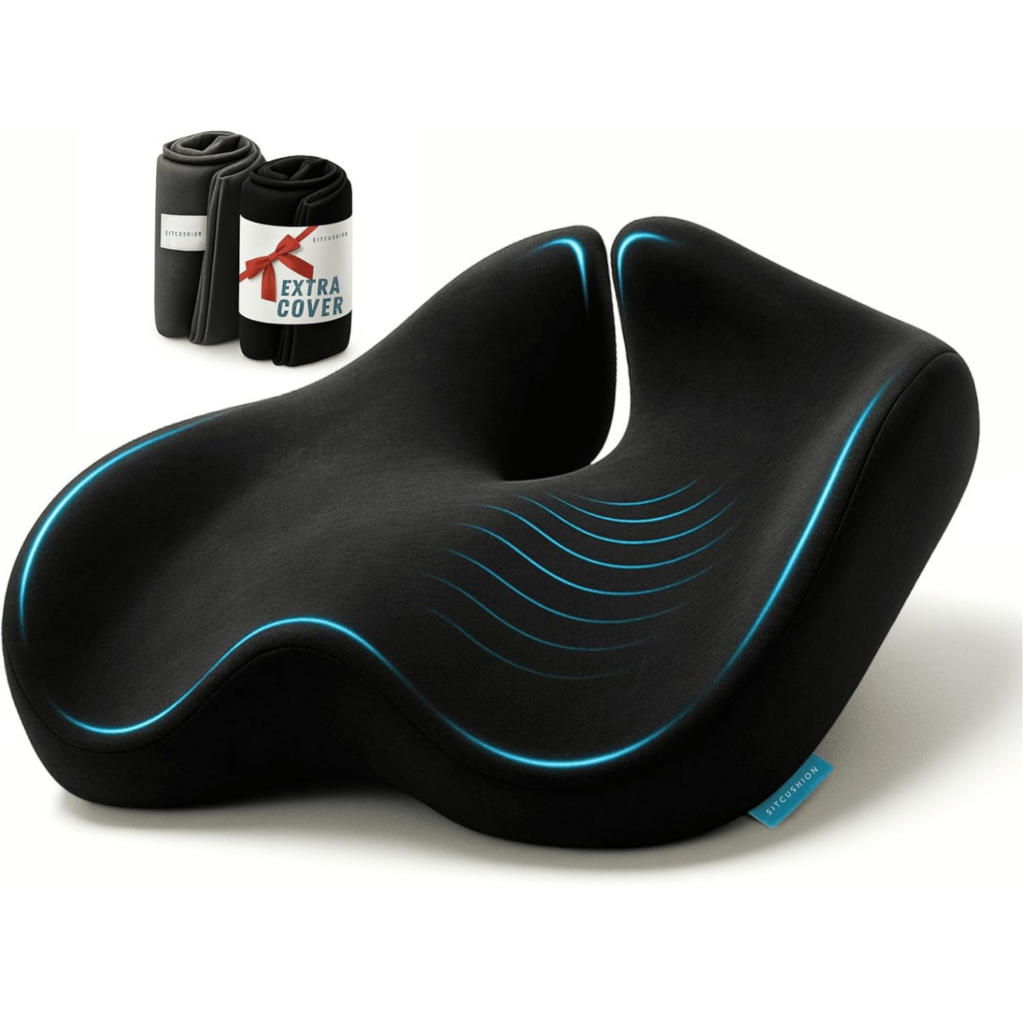



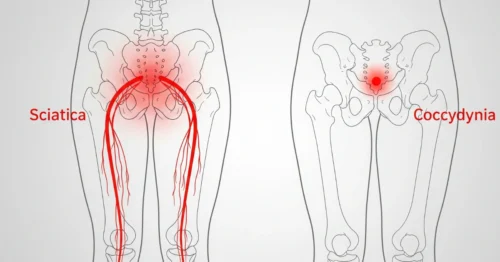





The best seat cushion for pregnancy is a supportive, high-density memory foam cushion with a tailbone cutout. It takes pressure off the coccyx and spreads your weight across your sit bones. For long hours at an office chair or in the car, a U-shaped cushion is a common choice. A donut-style cushion with a contoured front is often preferred when you feel pressure in the pelvic area, or when you want a low-profile option for sitting after birth.
Many people search for a “pregnancy pillow for office chair” or a “pregnancy chair cushion.” These usually mean the same thing: a seat cushion that sits on top of your chair, not a body pillow for sleeping.
In this guide, we explain what to look for, how to sit more comfortably through each trimester, and whether the Sitcushion Office Seat Cushion or the Sitcushion Women Donut Cushion fits your day better.
This guide is general information, not medical advice. Sitcushion products are ergonomic comfort products, not medical devices. If you have severe or sudden pain, swelling in one leg, or any pregnancy concern, talk to your doctor or midwife.
Quick Summary: Best Seat Cushion Features for Pregnancy
- Shape: U-shaped (open-back) or donut designs that reduce direct pressure on the tailbone (coccyx).
- Material: High-density memory foam that holds its shape under extra weight and contours to your body.
- Purpose: To help ease sitting pressure and discomfort in the tailbone, hips, and lower back, and to support a more comfortable posture.
- Versatility: Portable designs for office chairs, car seats, and home use. They work best on firm, flat seats.
Which Sitcushion Fits Your Situation?
| Your situation | Sitcushion option | Key specs |
|---|---|---|
| Long days at a desk or office chair | Office Seat Cushion | 17.5″ x 20″ x 5″, U-shaped coccyx cutout, carrying handle, non-slip base, removable washable cover |
| Pelvic-area pressure, or a low-profile option for pregnancy and postpartum sitting | Women Donut Cushion | 16.3″ x 17.1″ x 2.5″, contoured front, 4D mesh removable cover |
Why a Seat Cushion Can Help You Sit More Comfortably During Pregnancy
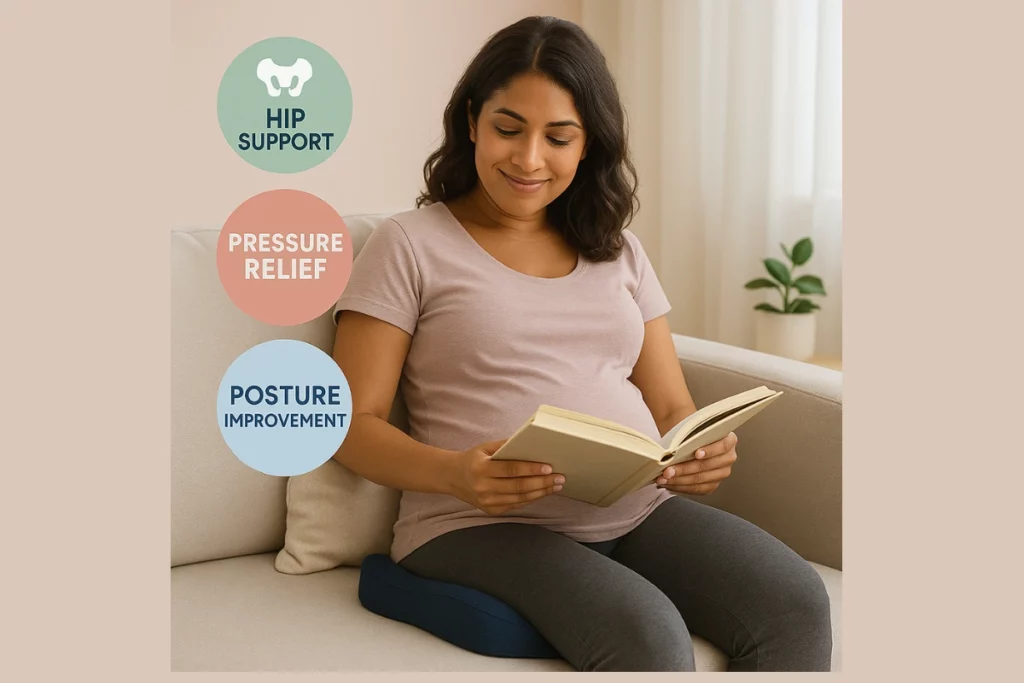
Sitting gets harder as pregnancy progresses. According to Mayo Clinic, as your baby grows your center of gravity shifts forward, and leaning back to compensate can strain the muscles in your lower back. Mayo Clinic also advises choosing a chair that supports your back. A pregnancy seat cushion cannot change what your body is going through, but it can make the surface you sit on more comfortable by reducing pressure on the tailbone and spreading your weight more evenly across your sit bones.
Pregnancy also affects the pelvis. Pelvic girdle pain (PGP), also called symphysis pubis dysfunction (SPD), is pain in the pelvic joints that becomes more common later in pregnancy. The NHS and the Royal College of Obstetricians and Gynaecologists (RCOG) link it mainly to the pelvic joints moving unevenly, and commonly cited estimates put it at about 1 in 5 pregnant women. Pregnancy hormones such as relaxin loosen ligaments, but research on how much hormones contribute to pelvic and back pain is mixed, and the exact cause of PGP is still not fully understood.
Common Pregnancy Sitting Discomforts a Seat Cushion Can Help With
- Tailbone (coccyx) soreness: Pressure and pain when sitting on hard or flat surfaces. A cushion with a tailbone cutout reduces direct pressure on that area.
- Pelvic pain (PGP/SPD): Discomfort in the pelvic joints that can feel worse after long periods of sitting. A cushion can add comfort and pressure relief, but it is not a treatment. Your midwife, doctor, or physiotherapist can advise on care such as exercises or a pelvic support belt.
- Sciatica-type pain: Pain that travels from the lower back or buttock down the leg. Long sitting can make it feel worse, and a cushion may help by taking pressure off the area while you sit. Sciatica should always be assessed by a healthcare provider.
- Lower back ache: Often linked to posture and long sitting. A cushion can help you sit more upright and supported, especially when paired with a chair that supports your lower back.
When to Talk to Your Doctor or Midwife
Talk to your doctor or midwife if back pain is severe or lasts more than two weeks. Mayo Clinic notes that back pain can sometimes be a sign of preterm labor or a urinary tract infection, so contact your care team right away if it comes with vaginal bleeding, fever, or burning during urination.
A seat cushion is a comfort tool, not a treatment. Use it together with regular movement breaks, supportive posture, and the advice of your healthcare team.
Best Seat Cushions for Pregnancy: The Third Trimester Guide
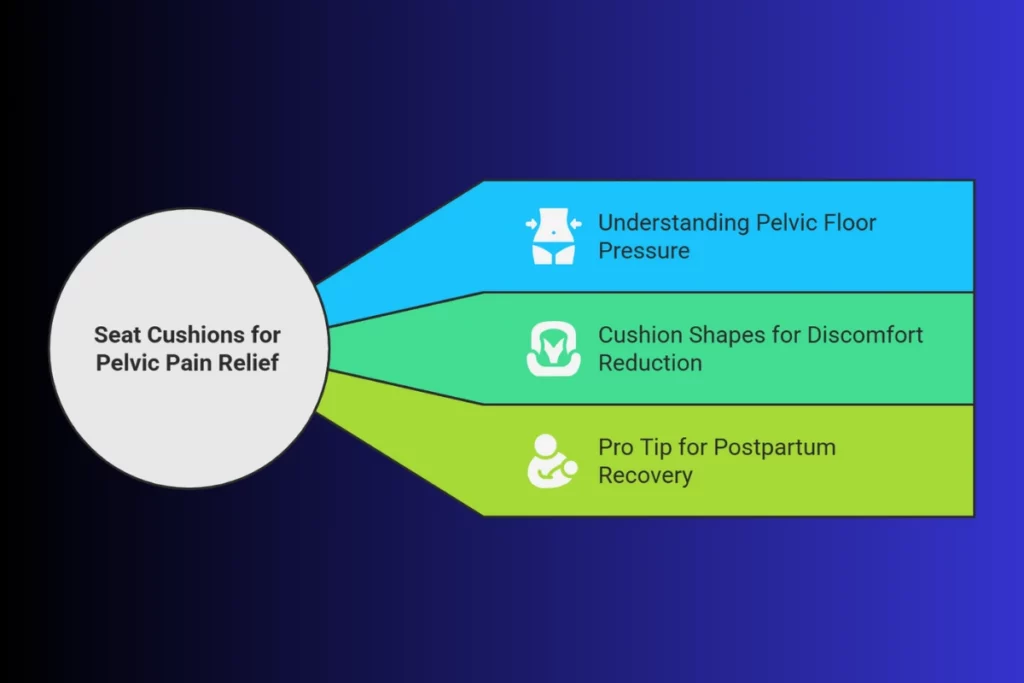
Short answer: In the third trimester, look for a supportive, high-density memory foam cushion with a tailbone cutout and a non-slip base. Late pregnancy is when sitting often feels hardest, because back pain tends to increase as pregnancy progresses, according to Johns Hopkins Medicine.
Why Sitting Gets Harder in Late Pregnancy
By the third trimester, your center of gravity has shifted forward and many people lean back to stay balanced. Johns Hopkins Medicine notes that this leaning increases back strain, and the RCOG says pelvic girdle pain is more common later in pregnancy.
A cushion cannot remove these changes, but a supportive seat can take pressure off the tailbone and make long stretches at a desk, at the dining table, or in the car more comfortable.
Critical Features of the Best Seat Cushions for Pregnancy
Whether you call it a pregnancy chair cushion, a maternity seat cushion, or a sitting pillow, check these three things:
- Tailbone cutout (U-shaped): The open back lets your tailbone hover instead of pressing against the chair. The Sitcushion Office Seat Cushion has a U-shaped coccyx cutout.
- High-density memory foam: Dense foam holds its shape under sustained pressure, while very soft foam can flatten out (“bottom out”) and stop supporting you.
- Non-slip base: A cushion that slides makes it harder to sit and stand steadily. A non-slip base keeps it in place on office chairs and car seats.
If you prefer a low-profile option, the Sitcushion Women Donut Cushion has a contoured front and a slim design.
Quick check: Place your current cushion on a hard chair and sit for about 15 minutes. If you feel the foam fully compress or notice new pressure points, it may be too soft or too thin for you. If pain is severe or does not improve, talk to your doctor or midwife.
Can a Seat Cushion Help With Lower Back Pain During Pregnancy?
Short answer: A seat cushion can help you sit more comfortably, but it is only one part of the picture. For lower back pain, posture, lumbar (lower back) support, and regular movement matter just as much.
How Posture Affects Pregnancy Back Pain
Back pain is very common in pregnancy, affecting an estimated 50 to 80 percent of pregnant women, and for about 10 percent it becomes severe enough to interfere with daily activities. As your belly grows, leaning back to stay balanced can strain your lower back muscles.
Sitting posture plays a role too. Johns Hopkins Medicine says correct posture is especially important if you work at a desk, and advises keeping your body aligned and avoiding slouching. Cedars-Sinai adds that sitting too long can make back pain worse. A good rule is to keep your ears over your shoulders and your shoulders over your hips.
How a Seat Cushion Fits In
A cushion helps with the seat, while your chair and a small support help with the back:
- Seat support: A cushion with a tailbone cutout reduces pressure on the tailbone, and a bit of added height can make it easier to keep your knees level with or slightly below your hips.
- Lower back support: Mayo Clinic suggests choosing a chair that supports your back or placing a small pillow behind your lower back.
- Movement: Stand up and walk for a minute or two regularly. No cushion replaces changing position.
If you work at a desk, see the office chair section below for what to look for in a pregnancy cushion for an office chair. You can also read our guide to Finding the Best Office Chair Seat Cushion for Back Pain.
Talk to your doctor or midwife if back pain is severe or lasts more than two weeks, especially if it comes with bleeding, fever, or burning during urination.
Best Pregnancy Cushion for Office Chair: Desk Comfort Guide
Short answer: The best pregnancy cushion for an office chair is a supportive memory foam seat cushion with a tailbone cutout and a non-slip base that stays put on a swivel chair. It is often searched as a “pregnancy pillow for office chair,” but it works best as one part of a setup that also includes lower back support and regular movement breaks.
Why Office Chairs Are Tough During Pregnancy
Most office chairs have a flat, firm seat designed for a short workday, not for a changing body. Johns Hopkins Medicine says correct posture is especially important when you work at a desk, and Cedars-Sinai notes that sitting too long can make back pain worse. Add pressure on the tailbone from hours of sitting, and the afternoon can get uncomfortable fast.
What to Look For in a Pregnancy Cushion for Your Office Chair
Whether you want pregnancy desk chair support or a comfortable cushion for your work chair, look for these features:
- Tailbone cutout: A U-shaped opening lets the tailbone hover instead of pressing against the seat.
- Supportive memory foam: Dense foam that does not fully compress keeps its support through a long workday.
- Non-slip base: Keeps the cushion from sliding when you sit down, stand up, or swivel.
- The right size: Measure your chair seat and choose a cushion that fits without hanging over the edges. The Sitcushion Office Seat Cushion measures 17.5″ x 20″ x 5″.
- Removable, washable cover: Easy to keep fresh through long office days.
- Easy to carry: A built-in handle makes it simple to move the cushion between your desk, car, and home.
A thick cushion raises your seat height, so check that your feet still rest flat on the floor (use a small footrest if not) and that your desk and keyboard are still at a comfortable height.
How to Set Up Your Desk Chair During Pregnancy
- Feet and knees: Keep your feet flat on the floor or a footrest, with your knees level with or slightly below your hips.
- Back support: Sit all the way back in the chair. Mayo Clinic suggests choosing a chair that supports your back or placing a small pillow behind your lower back.
- Posture: Keep your ears over your shoulders and your shoulders over your hips, and avoid slouching.
- Screen height: Place your monitor at eye level so you are not leaning forward over your belly.
- Movement: Stand up, walk, and stretch at regular intervals. No cushion replaces changing position.
If your desk setup still causes pain, talk to your doctor or midwife, and ask your employer about workstation adjustments.
For long days at your desk
Sitcushion Office Seat Cushion
A 17.5″ x 20″ x 5″ memory foam cushion with a U-shaped coccyx cutout, built-in carrying handle, non-slip base, and a removable, washable cover.
How Seat Cushions Help With Pelvic Pain During Pregnancy
Short answer: A seat cushion cannot treat pelvic girdle pain, but it can make sitting more comfortable by reducing pressure on the tailbone and pelvic area and spreading your weight across your sit bones. If you have pelvic pain, talk to your doctor, midwife, or a physiotherapist for an assessment.
Understanding Pelvic Girdle Pain (PGP)
Pelvic girdle pain (PGP), also called symphysis pubis dysfunction (SPD), is pain around the pelvic joints at the front or back of the pelvis. According to the RCOG, it is usually caused by the joints moving unevenly, which can make the pelvis less stable and painful, and it is more common later in pregnancy.
The NHS explains that physiotherapy can help with exercises to strengthen the pelvic floor, stomach, back, and hip muscles, and a physiotherapist may recommend a pelvic support belt or crutches. A seat cushion is a comfort tool that can sit alongside that care, not replace it.
Ergonomic Cushion Shapes for Pelvic Comfort
Different people find different shapes comfortable:
- U-shaped cutout: An open back lets the tailbone and back of the pelvis avoid direct contact with a hard seat. The Sitcushion Office Seat Cushion uses this design.
- Donut with a contoured front: A low-profile ring shape spreads weight toward the sit bones and away from the center of the seat. The Sitcushion Women Donut Cushion uses this design.
If one shape does not feel right, try the other, and ask your midwife or physiotherapist which is more comfortable for you.
Seat Cushions for Pregnancy and Postpartum Use
Short answer: After birth, sitting can be uncomfortable for a while, especially after a tear, episiotomy, or C-section. A postpartum seat cushion can help by reducing pressure on the area you sit on, and it can keep working for you at your desk, in the car, and while feeding your baby.
The “Fourth Trimester”: Sitting Comfort After Birth
Mayo Clinic says the wound from a tear or episiotomy may hurt for a few weeks, and larger tears can take longer to heal. Among its tips for easing soreness is to sit on a pillow, along with using an ice pack, a squirt bottle of warm water, and a warm bath. A supportive cushion serves the same purpose of taking pressure off the area when you sit.
Everyone heals differently. If a cushion makes the pain or pressure worse, stop using it and ask your healthcare provider. Tell your provider if you have intense pain, lasting pain, or pain that gets worse.
Cover Care and Everyday Use
- Removable, washable cover: A cover you can take off and wash regularly is easy to keep fresh through long days.
- Breathable mesh: A mesh cover allows airflow, which can make longer sitting more comfortable.
- Follow your provider’s hygiene advice: If you are healing from a tear or surgery, follow your care team’s instructions for keeping the area clean.
If you are breastfeeding or nursing, a cushion can make long sessions more comfortable, but sit with your back supported and shoulders relaxed. Your chair and back support matter just as much as the cushion.
For pregnancy and postpartum sitting
Sitcushion Women Donut Cushion
A low-profile 16.3″ x 17.1″ x 2.5″ donut cushion with a contoured front and a removable 4D mesh cover, made for sitting comfort during pregnancy and after birth.
Pregnancy Car Seat Cushions for Long Drives and Commuting
Short answer: The best pregnancy car seat cushion is a supportive memory foam cushion with a tailbone cutout and a non-slip base that fits your seat and does not change how your seat belt fits. Safety comes first: seat belt position and distance from the steering wheel matter more than any comfort feature.
Safety First: Seat Belt and Steering Wheel
According to NHTSA, the lap belt should sit below your belly, snug across your hips and pelvic bone, and the shoulder belt should run between your breasts and to the side of your belly. Never place the lap belt over your belly. CHOP adds that your breastbone should stay at least 10 inches from the steering wheel.
A cushion raises your seat height and can shift how you sit. After adding one, re-check your seat belt fit and steering wheel distance. If the cushion changes the belt position or puts you closer to the wheel, do not use it in that seat.
Why Long Drives Are Uncomfortable During Pregnancy
Car seats often have a dip that holds you in one position, and long commutes add hours of sitting still, which can leave your tailbone and lower back sore. According to Kaiser Permanente, you should talk to your doctor or midwife before a long car trip, and on long trips take short walks at least every 2 hours to keep blood moving in your legs.
What to Look For in a Pregnancy Car Seat Cushion
- Tailbone cutout: A U-shaped opening keeps pressure off the coccyx.
- Non-slip base: An anti-slip rubber base keeps the cushion in place when you brake or accelerate.
- The right fit for your seat: The Sitcushion Car Seat Cushion measures 18″ x 20″ x 4″ and is best suited to standard sedans, hatchbacks, and compact SUVs. It is not designed for extra-deep bucket seats or bench-style truck seats, and drivers of large SUVs or pickups, or tall drivers, may need to lower the seat.
- Angled wedge profile: Adds seat height, which can help shorter drivers, but remember to re-check your steering wheel distance.
- Removable, washable cover and carrying handle: Easy to keep fresh and to move between your car and your desk.
Memory foam can feel firmer at first and softens with a short break-in period.
Tips for Driving Comfortably While Pregnant
- Set your seat first, then add the cushion, then check your seat belt and steering wheel distance.
- Sit all the way back and consider a small pillow behind your lower back, as Mayo Clinic suggests for back comfort.
- Stop at least every 2 hours to walk, stretch, and use the restroom.
- If your pain is severe or gets worse on drives, talk to your doctor or midwife.
For long drives and commutes
Sitcushion Car Seat Cushion
An 18″ x 20″ x 4″ memory foam cushion with a U-shaped coccyx cutout, angled wedge profile, carrying handle, and anti-slip rubber base. Best suited to standard sedans, hatchbacks, and compact SUVs.
Seat Cushions to Reduce Pressure on Hips in Pregnancy
Short answer: A seat cushion can help by spreading your weight over a larger area and softening a hard seat, so your hips and sit bones take less concentrated pressure. It cannot fix joint pain, so if hip or pelvic pain keeps coming back, talk to your doctor or midwife.
Hip Alignment and Weight Distribution
As pregnancy progresses, your pelvis and the joints around it carry extra load, and the RCOG says pelvic joint pain is more common later in pregnancy. On a flat, hard chair, your upper-body weight tends to land on your sit bones (ischial tuberosities) and the area around your hips.
A contoured cushion spreads that weight across more of your buttocks and thighs, so no single spot takes all the pressure. Try to sit evenly on both sit bones rather than leaning to one side.
Choosing the Right Support: Density and Thickness
- Too soft: The foam can fully compress (“bottom out”), leaving your hips in contact with the hard chair.
- Too firm: It can create new pressure points instead of spreading weight.
- Just right: A supportive cushion with some contouring that still holds its shape after 15 minutes of sitting (see the quick check in the third trimester section above).
Thickness matters too. A thicker cushion raises your seat height, while a low-profile one changes your chair height less. The Sitcushion Office Seat Cushion is about 5 inches thick, and the Sitcushion Women Donut Cushion is a low-profile option at about 2.5 inches. Choose based on your chair and desk height.
How Seat Cushions May Help With Sciatica Pain During Pregnancy
Short answer: A cushion cannot treat sciatica, but a design with a tailbone cutout can reduce pressure on the lower back and buttock area while you sit, which some people find more comfortable. If you have shooting pain down your leg, get it checked by your doctor or midwife. This is the pain many people search for as a “pregnancy sciatica pillow.”
What Is Sciatica, and Is It Common in Pregnancy?
Sciatica is pain that travels from the lower back through the buttock and down the leg when the sciatic nerve is irritated. Medical News Today notes that it is one of the less common causes of back pain in pregnancy, and more likely in the later stages, when the growing uterus and baby can press on the nerve. Cleveland Clinic says it almost always goes away after pregnancy. Not all back or leg pain in pregnancy is sciatica, which is one more reason to get it assessed.
How a Cushion Fits In
- Tailbone cutout: Takes direct pressure off the tailbone and the back of the pelvis when you sit.
- Supportive base: Spreads your weight across your sit bones and thighs, which reduces hard spots under the buttocks.
- Limits: A cushion does not treat the nerve. Changing position, moving regularly, and any exercises your doctor or physiotherapist suggests do more.
If sitting on a cushion makes your pain worse, stop using it and ask your healthcare provider.
When to Talk to Your Doctor or Midwife
Cleveland Clinic advises talking to your doctor before trying any new treatments for sciatica, and notes that severe pain is not normal in pregnancy. Contact your doctor or midwife if your pain is severe or getting worse, or if your leg feels numb or weak.
Ergonomic Seat Cushions for Pregnant Mothers
Short answer: An ergonomic pregnancy seat cushion is designed to fit your body and support a comfortable sitting posture. Look for a contoured shape, a tailbone cutout, supportive foam, and a stable base. Comfort is personal, so use the quick checks in this guide to see what works for you.
What Makes a Pregnancy Cushion Ergonomic?
- Contoured shape: Spreads your weight across your sit bones and thighs instead of one spot.
- Tailbone cutout: Reduces direct pressure on the coccyx.
- Supportive foam: Holds its shape instead of fully flattening under sustained sitting.
- Stable, non-slip base: Keeps the cushion in place on your chair or car seat.
- Right size: Fits your seat without hanging over the edges.
Memory Foam vs. Gel Seat Cushions
Both materials are popular, and the right choice depends on how you like your seat to feel and whether you tend to run warm.
| Feature | Memory foam | Gel-infused or gel-layer cushions |
|---|---|---|
| Feel | Contours slowly to your body shape | Often a bouncier, cooler feel |
| Pressure spreading | Spreads weight around the shape of your body | Varies by design, so check how the gel is built in |
| Temperature | Can feel warmer, so a breathable cover helps | Designed to feel cooler to the touch |
| What to check | Density and cover quality | Build quality and how it holds up with daily use |
Sitcushion cushions use memory foam with a removable, washable cover, and some models come with a 4D mesh or Cooling Black option for people who run warm. Whichever you choose, use the 15-minute check from the third trimester section to see how it feels for you.
Tips for Sitting Comfortably During Pregnancy With a Seat Cushion
Short answer: Place the cushion on a firm, flat seat, sit all the way back, keep your feet supported and your knees level with or slightly below your hips, and change position regularly.
Posture Basics for Expecting Mothers
- Feet supported: Keep your feet flat on the floor, or use a small footstool if they do not reach.
- Knees and hips: Aim for your knees level with or slightly below your hips. A thicker cushion raises your seat, so adjust your chair height if needed.
- Back support: Sit all the way back and let the chair’s backrest support you. If your chair lacks lower back support, add a small pillow behind your lower back.
- Cushion position: Center yourself so the cutout or opening is under your tailbone.
- Seat type: Cushions work best on firm, flat seats and can sink into very soft sofas or deep recliners.
Move Often
A cushion makes sitting more comfortable, but it does not replace changing position. The University of British Columbia’s pregnancy ergonomics guidance recommends getting up and moving around periodically, taking micro-breaks, and alternating between sitting and standing when you can, because light movement helps keep your blood moving. A phone reminder every 30 to 45 minutes is an easy way to build the habit.
What to Look for in a Seat Cushion During Pregnancy: A 2026 Buyer’s Guide
Short answer: Choose a cushion by shape, foam support, breathability, and safety and portability, and make sure it fits your chair or car seat.
1. Ergonomic Shape: U-Shape vs. Donut
- U-Shaped (Coccyx Cut-out): A popular choice during pregnancy. The open rear lets the tailbone hover instead of pressing against the chair.
- Donut (O-Shaped): Often chosen when sitting puts pressure on the pelvic area, or when sitting is uncomfortable after a vaginal birth.
- The Sitcushion Options: Our Office Seat Cushion and Car Seat Cushion use a U-shaped coccyx cutout. Our Women Donut Cushion is built with a contoured front and a low profile, designed with pregnancy and postpartum sitting in mind.
2. Material Density and “Slow-Rebound” Memory Foam
High-density memory foam that holds its shape gives more consistent support, because very soft or thin foam can flatten (“bottom out”) during long sitting. It also responds to body heat to contour to your shape. Try the 15-minute check from the third trimester section to see how a cushion holds up for you.
3. Thermal Regulation and Breathability
If you tend to run warm, a breathable cover can make longer sitting more comfortable. Look for a mesh cover or a breathable cotton cover, and make sure it is removable and washable. Some Sitcushion models come with a 4D mesh option.
4. Safety and Portability
- Non-slip base: Essential on wooden chairs, leather seats, and car seats so the cushion stays put.
- Easy to carry: A built-in handle makes it simple to move the cushion between your office, car, and home.
- Right fit: Measure your seat before you buy so the cushion does not hang over the edges.
- In the car: Re-check your seat belt fit and steering wheel distance after adding a cushion (see the car section above).
Why Choose Sitcushion for Your Pregnancy Journey?
Sitcushion makes ergonomic seat cushions for different sitting situations, with honest guidance on what each one is best for:
- Options for your day: The Office Seat Cushion for long hours at a desk, the Car Seat Cushion for drives and commutes, and the Women Donut Cushion for a low-profile option for pregnancy and postpartum sitting.
- Tailbone-friendly shapes: A U-shaped coccyx cutout or a contoured donut design to reduce direct pressure when you sit.
- Memory foam with washable covers: Removable, washable covers keep the cushion easy to maintain, and some models offer 4D mesh or cooling options.
- Clear fit guidance: We tell you what each cushion is best for and where it is not, such as sedans versus very deep bucket seats, so you can choose with confidence.
Browse the full Sitcushion seat cushion collection to compare options.
Frequently Asked Questions About Pregnancy Seat Cushions
What is the best seat cushion for pregnancy?
The best seat cushion for pregnancy is a supportive, high-density memory foam cushion with a tailbone cutout and a non-slip base that fits your chair or car seat. A U-shaped design suits most desk and driving situations, while a low-profile donut is often chosen for pelvic-area pressure or sitting after birth.
Do I need a seat cushion during pregnancy?
You do not need one, but it can help if sitting becomes uncomfortable. Back pain is very common in pregnancy, and sitting too long can make it worse. A cushion can make a hard seat more comfortable, but it is not a treatment. Talk to your doctor or midwife about pain that is severe or lasts more than two weeks.
What is the best cushion for an office chair during pregnancy?
The best cushion for an office chair during pregnancy is a memory foam seat cushion with a U-shaped tailbone cutout, a non-slip base, and a size that fits your chair, such as the Sitcushion Office Seat Cushion (17.5″ x 20″ x 5″). A thick cushion raises your seat height, so keep your feet supported and check your desk height. Pair it with lower back support.
Is a pregnancy sitting pillow the same as a pregnancy body pillow?
No. A pregnancy pillow for an office chair (also called a chair pillow or sitting pillow) is a seat cushion that sits on top of your chair. A pregnancy body pillow is a long pillow for lying down and sleeping. For back comfort while sitting, Mayo Clinic also suggests a small pillow behind your lower back.
Is a U-shaped or donut cushion better for pregnancy?
It depends on where you feel pressure. A U-shaped cushion, like the Sitcushion Office Seat Cushion, is a popular choice for tailbone pressure during long desk or driving hours. A donut cushion with a contoured front, like the Sitcushion Women Donut Cushion, is often chosen for pelvic-area pressure or sitting after birth. If one does not feel right, try the other.
Is it safe to use a seat cushion in the car while pregnant?
It can be, as long as the cushion does not change your seat belt fit or steering wheel distance. NHTSA says the lap belt should sit below your belly across your hips, and CHOP says your breastbone should stay at least 10 inches from the wheel. Re-check both after adding a cushion, and do not use it if it changes either.
Can a seat cushion help with tailbone pain during pregnancy?
A seat cushion with a tailbone cutout can make sitting more comfortable by reducing direct pressure on the coccyx, especially on hard chairs. It does not treat the cause of the pain. If tailbone pain is severe, getting worse, or does not improve, talk to your doctor or midwife.
Can a seat cushion help with sciatica during pregnancy?
A seat cushion cannot treat sciatica, but a design with a tailbone cutout may reduce pressure on the lower back and buttock area while you sit, which some people find more comfortable. Cleveland Clinic advises talking to your doctor before trying new treatments, so get shooting leg pain checked.
How often should I take breaks from sitting during pregnancy?
Get up and move periodically. UBC’s pregnancy ergonomics guidance recommends micro-breaks and alternating sitting and standing when you can, because light movement helps keep your blood moving. A phone reminder every 30 to 45 minutes helps at a desk, and on long car trips Kaiser Permanente advises a short walk at least every 2 hours.
Can I use a seat cushion after giving birth?
Many people do. After a tear or episiotomy, sitting may be sore for a few weeks, and Mayo Clinic suggests sitting on a pillow to ease soreness. A supportive cushion, such as the Sitcushion Women Donut Cushion, can serve the same purpose by reducing pressure. If it makes pain worse, stop using it and tell your provider.
Final Thoughts: Sitting Comfortably Through Pregnancy
A pregnancy seat cushion will not remove back or pelvic pain, but it can make everyday sitting more comfortable. To choose well:
- Pick a supportive memory foam cushion with a tailbone cutout (U-shaped or donut) and a non-slip base.
- Match it to where you sit most: the Office Seat Cushion for your desk, the Car Seat Cushion for driving, or the Women Donut Cushion for a low-profile pregnancy and postpartum option.
- Combine it with good posture, lower back support, and regular movement breaks.
- Talk to your doctor or midwife about pain that is severe, getting worse, or comes with other symptoms.