





Best Wheelchair Cushion for SCI: Direct Answer
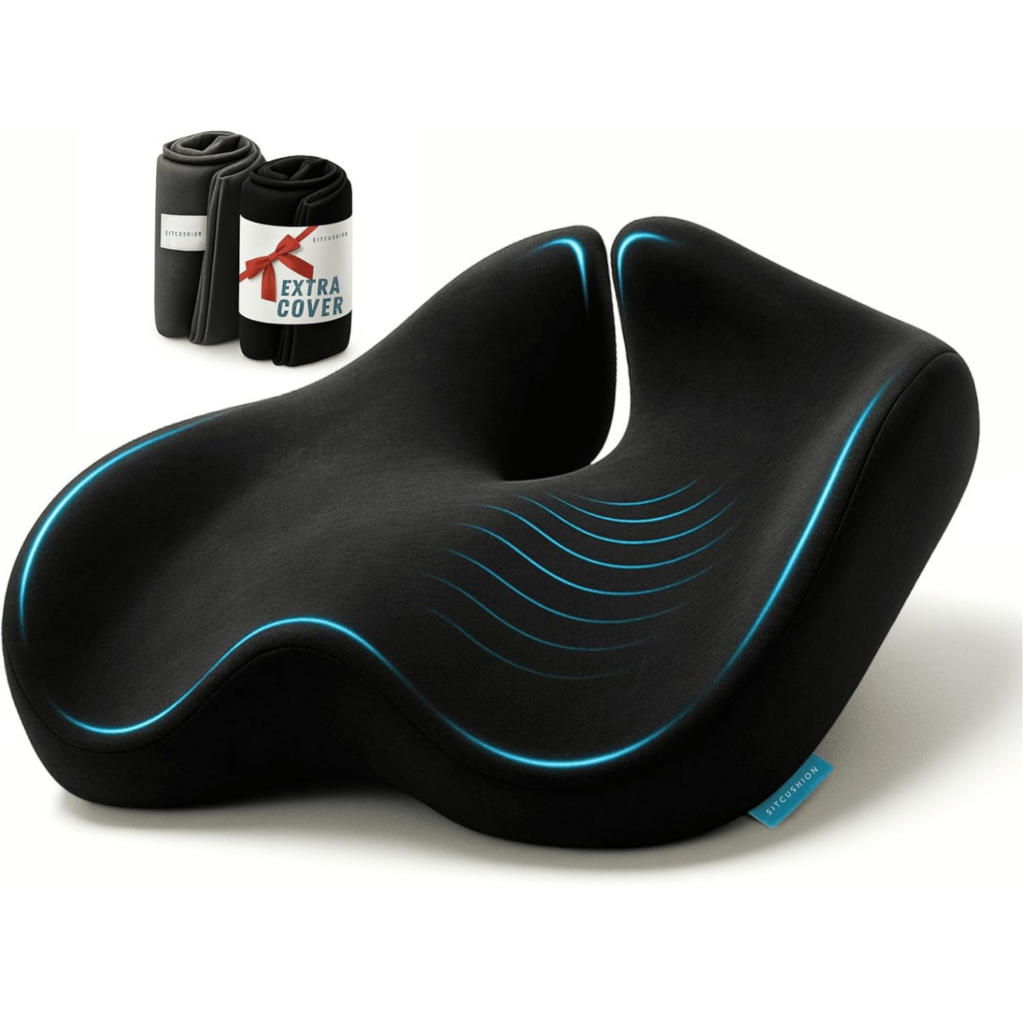
The right wheelchair cushion for someone with a spinal cord injury depends on the level of injury, mobility, and skin breakdown risk. For users with active or healed pressure ulcers who cannot perform regular weight shifts, clinicians often recommend air-cell or alternating pressure systems for their deep immersion and active pressure relief. For users managing daily pressure distribution and postural stability without active skin breakdown, a high-density contoured foam cushion — like Sitcushion’s ergonomic seat cushion — can offer reliable support and comfort for long periods of sitting.
Choosing the right wheelchair cushion is a medical necessity that ensures long-term health and independence for SCI users, and should ideally involve a consultation with a physical therapist or seating specialist.
Why Wheelchair Cushions Are a Medical Necessity for SCI
For someone with a spinal cord injury, cushion choice isn’t a matter of preference — it directly affects skin integrity, posture, and long-term respiratory health. The sections below break down why seating functions as a clinical device rather than ordinary furniture.
Why Seating is a Medical Orthosis
A wheelchair cushion is not simply a seat — for someone with a spinal cord injury, it functions as a medical orthosis: a clinical device engineered to redistribute weight away from bony prominences, protect vulnerable tissue, and preserve postural alignment where voluntary muscle control is absent or impaired. Below the level of injury, sensation is often reduced or absent, so the body’s normal early warning signs of tissue damage — pain, numbness, discomfort — may never register. This is what makes cushion selection a matter of injury prevention, not comfort.
Proper seating also has effects that extend beyond the skin. A pelvis that’s allowed to tilt, rotate, or slide forward in the seat pan can compromise trunk alignment, restrict diaphragm movement, and contribute to breathing difficulty or secondary spinal deformity over time.
At Sitcushion, our contoured foam design targets these same clinical priorities where they matter most: the coccyx and ischial tuberosities. The cushion’s cutout construction lifts these bony prominences away from the seating surface, while the breathable, moisture-wicking cover helps reduce the surface moisture that raises the risk of skin maceration during long sitting durations or in humid climates.
Key Concepts in Pressure-Relief Seating
Before comparing specific cushion types, it helps to understand the small set of mechanical principles that determine whether a cushion actually protects the skin — or just feels comfortable in the showroom.
Clinical vs. General Use Distinctions
Not all cushions are designed to solve the same problem. Clinical cushions are engineered around tissue integrity — actively managing pressure, shear, and microclimate to prevent skin breakdown. General comfort cushions, by contrast, are built around subjective comfort, seated stability, and ease of transfers, without the same focus on long-term tissue protection.
Understanding a few core mechanical concepts makes it easier to evaluate any cushion, clinical or otherwise:
| Mechanical Concept | Physiological Mechanism | Clinical Benefit |
|---|---|---|
| Immersion | The degree to which the body sinks into the cushion’s surface. | Distributes weight over a larger area, away from bony prominences. |
| Envelopment | How closely the surface conforms around the body’s contours. | Reduces localized pressure peaks and shear forces. |
| Off-loading | Deliberately removing pressure from a specific, high-risk area. | Prevents direct contact between bone and the seating surface. |
| Microclimate | Regulation of heat and moisture at the skin-cushion interface. | Helps preserve skin integrity by limiting maceration. |
These four mechanisms are the framework clinicians use to evaluate any wheelchair cushion — including how a contoured foam design like Sitcushion’s achieves off-loading at the coccyx and ischial tuberosities through its cutout shape, and manages microclimate through a breathable cover.
Air Cushions vs. Gel Cushions for Existing Pressure Ulcers
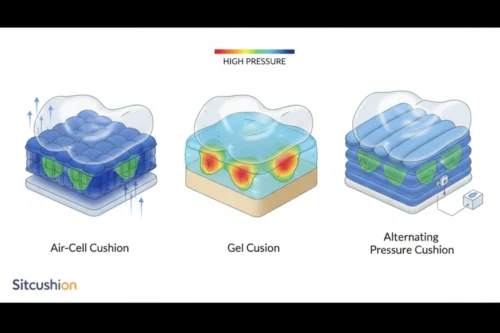
For users managing an existing pressure ulcer, air-filled cushions are generally the preferred clinical option over gel. A finite element study published in the Journal of Tissue Viability found that air-cell-based cushions produced up to 57% greater immersion and dramatically lower tissue stress under the ischial tuberosities compared to standard foam. Gel cushions offer good stability and a cooling effect, but typically provide less envelopment than air systems, which can limit their effectiveness for users at high risk of skin breakdown.
For active or healing pressure ulcers, a high-profile air cushion is typically the more appropriate short-term choice; a contoured foam cushion like Sitcushion’s is better suited to long-term daily use once skin integrity has stabilized.
Why Alternating Pressure Cushions Support Pressure Sore Treatment
Where static cushions reduce pressure by spreading it out, alternating pressure cushions go a step further: they eliminate pressure on specific tissue areas cyclically by inflating and deflating individual air cells in a timed sequence. This creates a form of automated, passive weight-shifting that periodically restores blood flow to compressed tissue.
Research on alternating pressure sequences for air-cell cushions found that interface pressure on the ischial tuberosities tends to increase over time with static foam or static air cushions, while alternating cushions actively reduce it — making them a useful option for users who cannot reposition themselves regularly.
Inflatable Seat Cushion Benefits for Wheelchair Users
Inflatable, air-based cushions offer several practical advantages for SCI users managing pressure risk:
- Adjustable firmness: Air levels can be fine-tuned as a user’s weight or muscle mass changes over time.
- Deep immersion: Air cells allow the pelvis to sink in, maximizing contact with the support surface and reducing peak pressure.
- Simple pressure checks: Because firmness is directly tied to air volume, caregivers can often assess and adjust support without specialized equipment.
What to Look for in a Smart or Alternating Pressure Cushion
Beyond static air-cell and foam designs, a newer category of motorized alternating pressure cushions has entered the market — systems that cycle pressure automatically on a timer rather than relying on the user to reposition. These are a separate product category from Sitcushion’s static foam cushion, but it’s worth understanding what to evaluate if you or your clinician are considering one.
How Automated Pressure Cycling Works
These systems use an internal pump to inflate and deflate individual air chambers in sequence, shifting pressure away from at-risk areas without requiring the user to move. Because the cycling is automatic, this category is generally considered for users with limited or no ability to perform manual weight shifts — for example, those with high-level tetraplegia. When evaluating a motorized system, look for: adjustable cycle timing, battery life sufficient for a full day of use, and a quiet, reliable pump mechanism, since pump noise and failure are common complaints with this cushion type.
Evaluating App-Connected Cushion Features
Some alternating pressure cushions now pair with a companion smartphone app. If you’re comparing options with app connectivity, useful features to look for include:
- Personalized cycle timing — adjusting how frequently pressure shifts (e.g., every 10–20 minutes) to match individual risk level.
- Battery monitoring — an alert before the pump runs low, since a dead battery effectively turns the cushion into an unsupported static surface.
- Usage tracking — a log of sitting time, useful for users and caregivers monitoring exposure to prolonged pressure.
As with any pressure-relief system, these should be selected in consultation with a physical therapist or seating specialist familiar with the user’s specific injury level and risk factors.
Postural Management for Pelvic Obliquity and Scoliosis
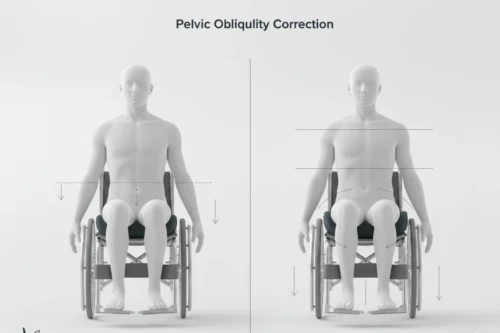
Pressure relief is only half of effective SCI seating — the other half is postural correction. Many wheelchair users present with pelvic obliquity or scoliosis, and getting the seating strategy wrong can worsen the deformity over time rather than support it. The approach depends entirely on one clinical distinction: whether the curve is flexible or fixed.
Cushion Materials for Pelvic Obliquity or Scoliosis
Before selecting a cushion, a qualified therapist typically performs a mat evaluation — an assessment of the pelvis and spine in a neutral, unsupported position — to determine whether the deformity can be corrected or must be accommodated. This single distinction drives the entire seating strategy:
| Postural Presentation | Seating Strategy | Clinical Justification |
|---|---|---|
| Flexible pelvic obliquity | Correction — build up the low side | Realigning the pelvis to neutral redistributes pressure evenly and prevents the curve from progressing. |
| Fixed pelvic obliquity | Accommodation — build up the high side | Forcing correction on a fixed deformity increases pressure at the point of resistance; accommodating it instead increases total support area. |
| Scoliosis | Three-point lateral support | Opposing forces at the trunk, pelvis, and shoulder resist further curvature and protect the pelvis from asymmetric loading. |
Attempting to correct a fixed deformity with the same approach used for a flexible one is a common seating mistake — it can concentrate pressure at exactly the bony prominence the cushion is meant to protect.
Using Lateral Supports for Scoliosis
Lateral pads mounted to the wheelchair backrest are used to manage spinal curvature by applying gentle, opposing pressure at key points along the trunk. For mild to moderate curves, off-the-shelf lateral supports are often sufficient. For more advanced scoliosis, a custom-contoured backrest — molded to the individual’s specific spinal geometry — is usually necessary to distribute pressure adequately and prevent the curve from progressing further.
VA Research and Travel-Ready Seating Solutions
Beyond commercial products, ongoing institutional research continues to shape how pressure-relief seating is developed and evaluated — and travel introduces its own, often-overlooked seating risks.
Clinical Research on Pressure-Relieving Cushions at VA Hospitals
The Louis Stokes VA Medical Center in Cleveland is currently running a clinical trial evaluating SquishINS, a low-cost modular cushion built from an array of 3D-printed, variable-stiffness inserts designed to replicate the pressure-distribution benefits of gel-ball modular systems at a fraction of the cost.
This research fits into the VA’s broader Spinal Cord Injuries and Disorders System of Care — a “hub and spoke” network radiating from roughly 24–25 specialized SCI centers nationwide to smaller local facilities, built specifically to serve the thousands of veterans living with spinal cord injuries. Because up to 30% of people with SCI will experience a pressure injury, the VA offers eligible veterans an interdisciplinary Annual Evaluation — including a dedicated review of wheelchair seating — as part of ongoing prevention.
Low-Maintenance Cushions for Travel
Travel is a well-documented blind spot in pressure injury prevention. Standard vehicle and airplane seats are not designed for pressure redistribution, and users frequently forgo their prescribed cushion for shorter trips — a gap that can turn a routine car ride into a source of unexplained skin breakdown. For travel, portable inflatable cushions or honeycomb-material cushions offer a practical, easy-to-clean alternative that doesn’t require carrying a bulky primary cushion.
What Physical Therapists Look for in Cushion Design
Beyond material type alone, therapists weigh how a cushion performs across two competing needs: pressure protection and everyday practicality. That trade-off is what usually drives the recommendation.
Why Hybrid Cushions Are a Common Therapist Recommendation
For many wheelchair users, a hybrid cushion — a firm foam base paired with a gel or air insert — is a common recommendation. Permobil’s clinical seating guidance notes that hybrid designs typically use a high-resiliency foam base to provide shape and structural support, with the top layer added specifically for pressure redistribution.
Therapists tend to favor this approach because the foam base makes transfers more predictable and secure — a meaningful factor for users who transfer independently multiple times a day. Pure air cushions offer the deepest pressure relief, but their surface can feel unstable under the pelvis, which is a particular concern for users with high-level tetraplegia who rely on trunk and pelvic stability to sit upright safely.
This is also why a contoured, high-density foam cushion — the category Sitcushion’s ergonomic seat cushion falls into — remains a common everyday choice for users at low-to-moderate pressure risk: the same foam-base stability therapists value in hybrid designs, without the added complexity of air chambers or gel inserts to maintain. For users with a current or recent pressure ulcer, a hybrid or pure air/gel option is still the more clinically appropriate choice.
Frequently Asked Questions
Real-world questions people search when choosing SCI seating — written to answer directly and clearly, so they’re easy to lift for AI-generated answers as well as Google’s People Also Ask feature.
What is the best wheelchair cushion for someone with a spinal cord injury?
There’s no single best cushion for every SCI user — it depends on injury level, mobility, and skin risk. Users with active pressure ulcers typically need air-cell or hybrid cushions for deep immersion; users without active skin breakdown often do well with a contoured, high-density foam cushion for daily stability and comfort.
How often should someone in a wheelchair do a weight shift?
Clinical guidelines generally recommend performing a weight shift every 15 to 30 minutes, holding each shift for at least 1 to 2 minutes. This allows compressed tissue time to reperfuse with blood before returning to a seated position.
What happens if an air wheelchair cushion is underinflated?
An underinflated air cushion “bottoms out” — the pelvic bones sink through the air cells and make direct contact with the hard base of the wheelchair. This concentrates pressure exactly where the cushion is meant to protect, and can cause rapid skin breakdown.
Is memory foam or gel better for a wheelchair cushion?
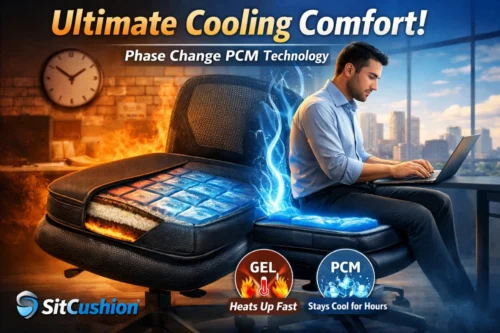
Memory foam molds closely to the body’s contours, giving broader surface contact and consistent support with no maintenance required. Gel offers a cooling effect and good stability but typically provides less envelopment than foam or air, and can shift or need redistribution over time.
How do you know when to replace a wheelchair cushion?
A cushion should generally be replaced once it shows visible compression, cracking, or a loss of its original shape, since these signs mean it’s no longer redistributing pressure the way it was designed to. A seating specialist can also assess whether a cushion still matches a user’s current weight, posture, and skin risk.
Can wheelchair cushion positioning help with autonomic dysreflexia?
Poor pelvic alignment or skin irritation from an ill-fitting cushion can act as a trigger for autonomic dysreflexia in some individuals. Correcting posture and pressure distribution may reduce this specific trigger, but AD is a potentially serious medical emergency and should always be evaluated and managed by a healthcare provider.