Skip to content
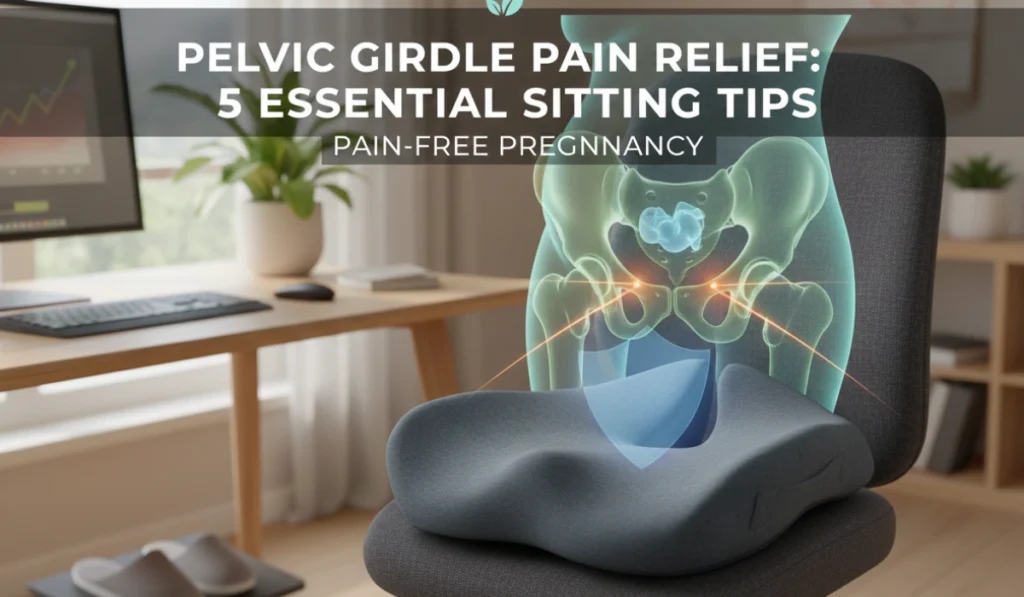
Ergonomic Sitting is the most effective non-invasive strategy for managing the debilitating effects of Pelvic Girdle Pain (PGP), a condition that impacts nearly 20% of expectant mothers worldwide. PGP, which is often linked to Symphysis Pubis Dysfunction (SPD), occurs when the ligaments that keep your pelvic bones aligned become too relaxed due to the hormones relaxin and progesterone. This instability leads to a “wonky” feeling in the hips and sharp pain during movement. However, by transforming your workstation and daily habits through clinical postural adjustments and professional tools like the SitCushion orthopedic seat cushion, you can significantly reduce nerve pressure and reclaim your comfort. This guide provides a clinical roadmap to stabilizing your pelvis and ensuring a healthy, active journey to motherhood.
1. PGP/SPD Sitting Posture Recommendations by Physiotherapists: Achieving the “Halfway” Position
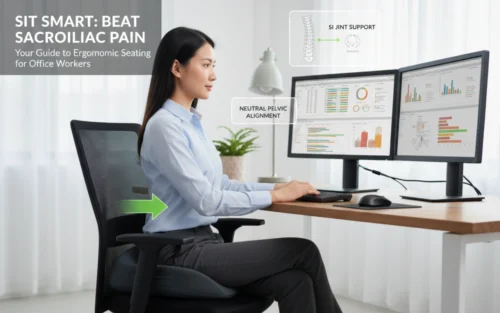
Clinical management of PGP starts with understanding pelvic alignment. Most women either slouch (posterior tilt) or over-correct by arching their back too much (anterior tilt), both of which increase the shearing forces on the pubic symphysis.
Clinical Management PGP Sitting to Prevent Asymmetry
To protect your pelvis, you must find the “halfway” position—the neutral point where your weight is perfectly balanced on your sit bones. Physiotherapy experts recommend sitting with your hips slightly higher than your knees. This creates an open hip angle of to , which naturally encourages the spine into its healthy S-curve and reduces the heavy load of the uterus on the pelvic floor. Using a specialized support like SitCushion ensures you maintain this elevation without straining your core muscles.
Poor posture can slow recovery and increase discomfort.
Why Crossing Legs Should Be Avoided with PGP/SPD
Crossing your legs is a primary trigger for acute PGP flares. When you cross your legs, you force the pelvis into a rotated and asymmetrical position, placing immense torque on the sacroiliac joints and the pubic bone. To maintain a successful Ergonomic Sitting routine, both feet must remain flat on the floor or a dedicated footrest. This bilateral stability ensures that weight is distributed evenly, preventing the inflammatory “grinding” sensation often associated with PGP.
Pelvic instability often starts with poor sitting habits.
2. Best Seat Cushion to Prevent Slouching During Pregnancy: The SitCushion Advantage
As your pregnancy progresses into the third trimester, standard chair padding is no longer sufficient to support the additional to pounds of gestational weight. This is where high-performance materials become essential for pain relief.
The Material Science of SitCushion: NASA-Grade Memory Foam
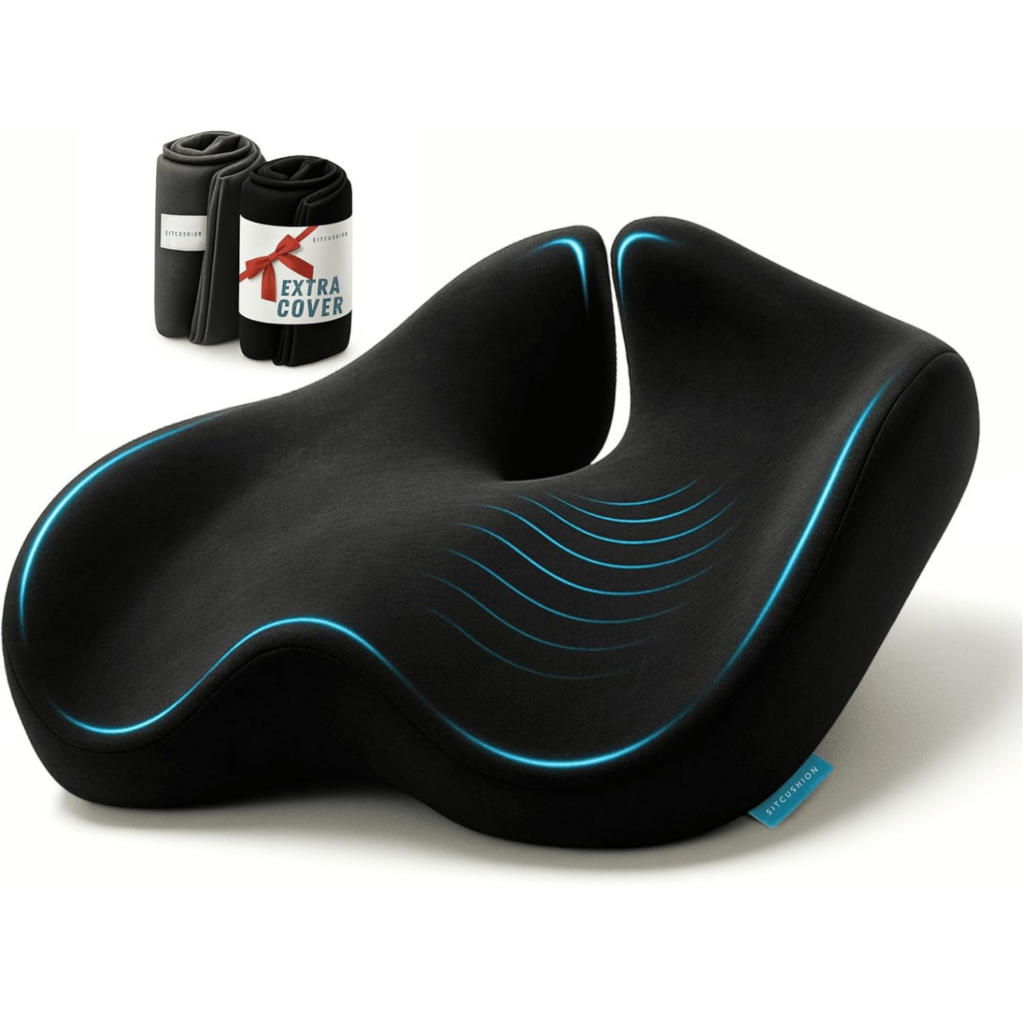
SitCushion is crafted from premium, high-density visco-elastic memory foam, originally engineered by NASA to protect pilots from extreme pressure. For a pregnant woman, this material provides “force closure”—it acts as an external ligament that stabilizes the pelvic ring.
-
U-Shaped Relief Zone: The patented U-shaped cut-out is designed to suspend the coccyx (tailbone), ensuring it never touches the hard surface of the chair. This is critical for preventing the nerve irritation that radiates into the lower back and thighs.
-
Contoured Support: Unlike flat cushions that push back against your tender areas, SitCushion contours to your anatomy, spreading your weight across a larger surface area to eliminate painful pressure points.
-
Non-Slip Base: Stability is paramount when your joints feel loose. The non-slip bottom of the SitCushion keeps you securely positioned, preventing the micro-shifts that can lead to joint misalignment.
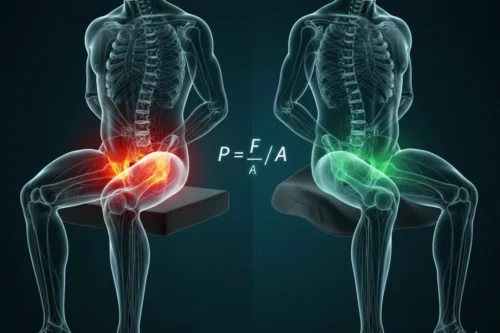
Tailbone pressure is a hidden cause of pelvic pain.
Air-Filled Cushion Benefits vs. Memory Foam for PGP Relief
While air-filled cushions are advertised for pressure relief, they often provide a “wobble” effect that is detrimental to PGP sufferers. A pelvis that is already unstable needs a firm, predictable base. Memory foam provides the static stability required to allow the pelvic floor muscles to relax, whereas air cushions force those muscles to work overtime to balance, often worsening the pain. For long-term Ergonomic Sitting, high-density foam remains the gold standard.
3. How to Adjust Office Chair for PGP Relief: Professional Workstation Setup
Working from home or in an office while pregnant requires more than just a good chair; it requires a customized ergonomic environment to prevent the postural collapse that leads to chronic pain.
Step-by-Step Office Ergonomics for PGP
-
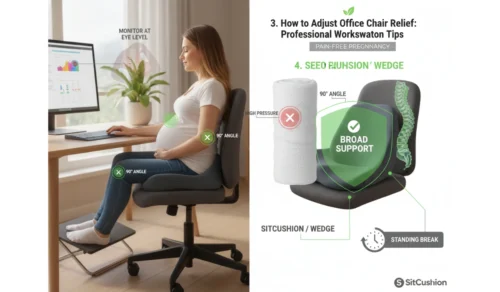
Monitor Leveling: Your computer screen should be exactly at eye level, roughly to inches from your face. If the screen is too low, you will lean forward, increasing the weight on your pubic bone by up to .
-
Keyboard Proximity: Bring your keyboard and mouse close to your body. Your elbows should form a angle, allowing your shoulders to remain relaxed and your back to stay in contact with your SitCushion lumbar support.
-
The “Under the Desk” Rule: Ensure your chair is pulled far enough under the desk so you don’t have to reach. Reaching creates a forward tilt in the pelvis that aggravates SPD symptoms.
Employer Risk Assessment Requirements (UK/US)
If you are struggling with PGP at work, remember that you have legal protections. In the UK, employers must perform an individual risk assessment under the Management of Health and Safety at Work Regulations 1999. In the US, the Pregnant Workers Fairness Act (PWFA) (2023) mandates that employers provide reasonable accommodations—such as a specialized chair or an ergonomic SitCushion—to help you continue working safely. These adjustments are not just “perks”; they are your right as a pregnant employee.
4. Wedge Pillow vs Rolled Towel for Lumbar Support: The Truth
Many women are told to use a rolled-up towel for lumbar support, but this DIY method often fails to provide the consistent pressure redistribution needed for a pregnant body.
Why a Rolled Towel Falls Short
A rolled towel is a high-pressure, low-surface-area solution. It creates a single “hot spot” of pressure on the spine and loses its shape within minutes. For a body experiencing the intense shifts of pregnancy, this lack of consistent support can actually lead to muscle spasms in the lower back.
The Benefits of an Ergonomic Wedge
A dedicated wedge pillow or the integrated support of a SitCushion provides a broad base of support. It gently tilts the pelvis forward into a neutral position while supporting the natural curve of the lumbar spine. This reduces the mechanical effort required for Ergonomic Sitting, allowing you to sit for longer periods without the “locking” sensation that often occurs when standing up.
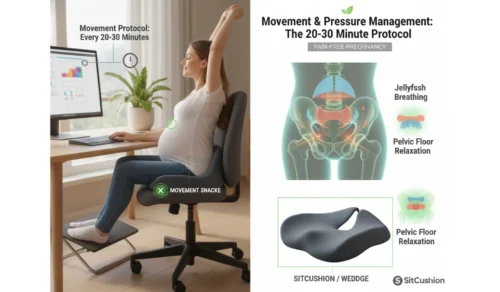
5. Movement and Pelvic Floor Pressure Management: The 20-30 Minute Protocol
Even with the most advanced Ergonomic Sitting setup, the human body is not designed for static positions. Prolonged sitting causes blood to pool in the pelvic region and muscles to stiffen.
How Often Should Pregnant Women Change Sitting Position?
Clinical consensus suggests that you should change your position every 20 to 30 minutes. This “movement snack” prevents the sacroiliac joints from becoming “stuck” and encourages healthy circulation to the fetus. If you are in a meeting, simply standing up for 60 seconds or performing seated pelvic tilts on your SitCushion can reset your alignment.
Sitting Position to Manage Pelvic Floor Pressure
When you are seated, focus on “jellyfish breathing”—inhaling deeply into your belly to allow the pelvic floor to expand and relax. This counteracts the tendency to “clench” in response to pain. By combining this breathing technique with the pressure-free zone of the SitCushion, you can manage pelvic floor pressure effectively throughout your workday.
Frequently Asked Questions (FAQ)
Q: Can SitCushion help with sciatica during pregnancy?
A: Yes. Sciatica is often caused by the baby’s position or a tight piriformis muscle. By redistributing weight and aligning the pelvis, SitCushion reduces the pressure on the sciatic nerve.
Q: How do I clean my SitCushion?
A: The SitCushion comes with a premium, breathable mesh cover that is fully machine-washable. Simply unzip, wash on a gentle cycle, and air dry to keep your sitting environment hygienic.
Q: Is it safe to use an ergonomic cushion for 8 hours a day?
A: Yes, it is highly recommended. Using an ergonomic support consistently is the best way to prevent the cumulative strain that leads to severe PGP flares.
Q: Can I use this cushion in my car?
A: Absolutely. SitCushion is portable and fits most standard car seats, providing much-needed stability during commutes where PGP pain is often at its worst due to the vibration of the vehicle.
Conclusion: Reclaiming Your Mobility with SitCushion
Mastering Ergonomic Sitting is the key to a more comfortable and mobile pregnancy. By integrating the five tips outlined in this guide—neutral pelvic alignment, using high-density memory foam, workstation optimization, symmetrical movement, and frequent position changes—you can effectively manage Pelvic Girdle Pain and protect your long-term spinal health.
At SitCushion, we are committed to providing the clinical-grade support you need during this transformative time. For more in-depth guides on maternal health and ergonomics, explore our Knowledge Center. If you are ready to experience instant relief and stabilize your pelvis, discover our doctor-recommended Seat Cushion collection today. Your journey to a pain-free pregnancy starts with the right support.