




Intro
Bad posture during pregnancy usually means everyday habits that load the lower back and pelvis for hours, such as slouching, crossing your legs and sitting too long without a break. Posture is not the only thing that shapes recovery, but correcting these wrong sitting positions early can ease pain now and make the weeks after birth more comfortable.
It matters because back pain does not always stop when pregnancy does. In a cross-sectional study of 100 postpartum women, more than half still had low back pain after birth, and a history of back pain before or during pregnancy was significantly associated with it. That is why catching small posture mistakes and early pain signals during pregnancy is worth the effort.
This guide covers the most common mistakes when sitting, standing, lifting and carrying, what to do instead, which problems can linger after birth, and when to call your doctor. For a full workstation setup, see our ergonomic sitting tips for pelvic girdle pain in pregnancy, and for pain relief, our guide to 12 ways to relieve back pain during pregnancy.
Pregnancy Posture Mistakes at a Glance
| Mistake | Why it causes trouble | What to do instead |
|---|---|---|
| Slouching in your chair | Tips the pelvis backward and rounds the lower back as the belly grows | Sit back so your hips touch the backrest and add small support behind your lower back |
| Sitting on the edge of the seat | Leaves the back unsupported, so muscles work harder | Slide back until the backrest carries your weight |
| Crossing your legs or sitting on one hip | Twists the pelvis and loads one side more than the other | Keep both feet flat on the floor or a footrest with weight even on both sit bones |
| Sitting too long without moving | Muscles and joints stiffen and discomfort builds | Stand or walk for a minute at least once an hour, and more often if you have pelvic pain |
| Standing with your pelvis pushed forward | Overloads the lower back and tires the core and pelvic floor | Feet under hips, knees unlocked, ribs stacked over hips |
| Lifting while holding your breath | Raises pressure on the core and pelvic floor | Exhale as you lift, bend your knees and keep the load close |
| Ignoring pain until after birth | Earlier back pain is linked to pain that lasts after birth | Tell your provider early and ask about physical therapy |
Why Your Posture Changes During Pregnancy

As your belly grows, your center of gravity moves forward, and many women lean back or deepen the curve of the lower back to balance the extra weight. At the same time, the hormone relaxin loosens ligaments around the pelvis, so your joints are less stable than usual.
None of this means you are doing something wrong, but it does mean small habits count for more than they used to. Ireland’s health service notes that being aware of your posture and trying to improve it can reduce your risk of back pain during pregnancy, which is why the next sections focus on the mistakes that are easiest to fix.
Slouching and Slumping in Your Chair
Slouching is the most common bad sitting position in pregnancy, and it feels natural for a reason. By the second half of pregnancy the belly pulls you forward, and slumping seems to take pressure off for a moment.
The cost shows up later. When you slump, your pelvis tips backward and your lower back rounds, which shifts load onto the spine and onto ligaments that pregnancy hormones have already softened. After an hour or two, that often feels like an ache across the lower back or tailbone.
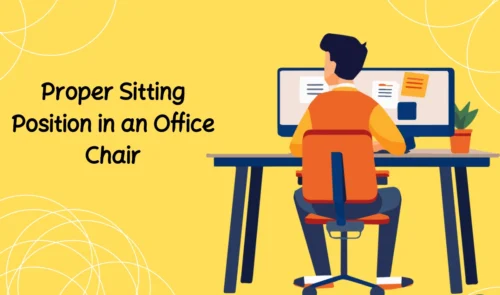
A better position is simple to set up. Slide all the way back so your hips touch the backrest, keep your hips slightly higher than your knees, rest both feet flat on the floor or on a footrest, and put a small support at the curve of your lower back. A rolled towel works in a pinch, and a well-shaped seat cushion helps if your chair is flat or too deep. Each time you stand up, reset your posture as you sit back down, because that is when most people slide into a slump again.
Sitting on the Edge of the Seat Without Back Support
Perching on the front edge of a chair is common at desks, dining tables and in waiting rooms, often because a growing belly makes sitting back feel cramped. The trade-off is that the backrest no longer carries any load, so the muscles along the spine must hold the trunk upright unaided and fatigue quickly. After an hour or more, this typically presents as a dull, tightening ache across the lower back.
The correction is to bring the chair to the task rather than leaning toward it. Sit with your hips against the backrest, pull the chair closer to the desk or table so you can reach without leaning forward, and place a small lumbar support at the hollow of your back. If your feet no longer reach the floor comfortably once you sit back, add a footrest instead of moving forward on the seat.
How you leave the chair matters as well. Slide to the front of the seat and rise by straightening your legs, rather than folding forward at the waist.
Crossing Your Legs or Sitting on One Hip
Crossing the legs, tucking a foot beneath you or leaning onto one hip often feels comfortable because it moves weight off a sore spot. The drawback is asymmetry. These positions rotate the pelvis and load one side of the lower back and sacroiliac joint more than the other, at a stage when pregnancy hormones have already made the pelvic ligaments more lax. Uneven loading is a commonly reported trigger of flare-ups in women with pelvic girdle pain, which our guide to ergonomic sitting tips for pelvic girdle pain covers in more detail.
A symmetrical sitting position is the safer default. Keep both feet flat on the floor or on a footrest, distribute your weight evenly across both sit bones, and keep your knees roughly hip-width apart. When a position becomes uncomfortable, change to another symmetrical posture, such as standing or walking briefly, instead of crossing your legs.
Sitting Too Long Without Moving
Even good sitting form becomes a problem when it is held for too long. Sustained posture loads the same muscles and joints continuously, stiffness accumulates, and discomfort tends to build through the second half of pregnancy. Cleveland Clinic’s posture guidance advises avoiding the same sitting position for more than 30 minutes and, if you already have back pain, keeping sitting periods short, around 10 to 15 minutes at a time.
In practice, a simple movement schedule works better than good intentions. Set a recurring timer, stand and walk for a minute or two at each interval, and tie the break to something you already do, such as refilling a water bottle or taking a phone call on your feet. If you work in a swivel chair, turn your whole body instead of twisting at the waist. For gentle exercises to use during these breaks, see our safe stretches for pregnancy back pain.
How a Seat Cushion Fits Into Better Sitting
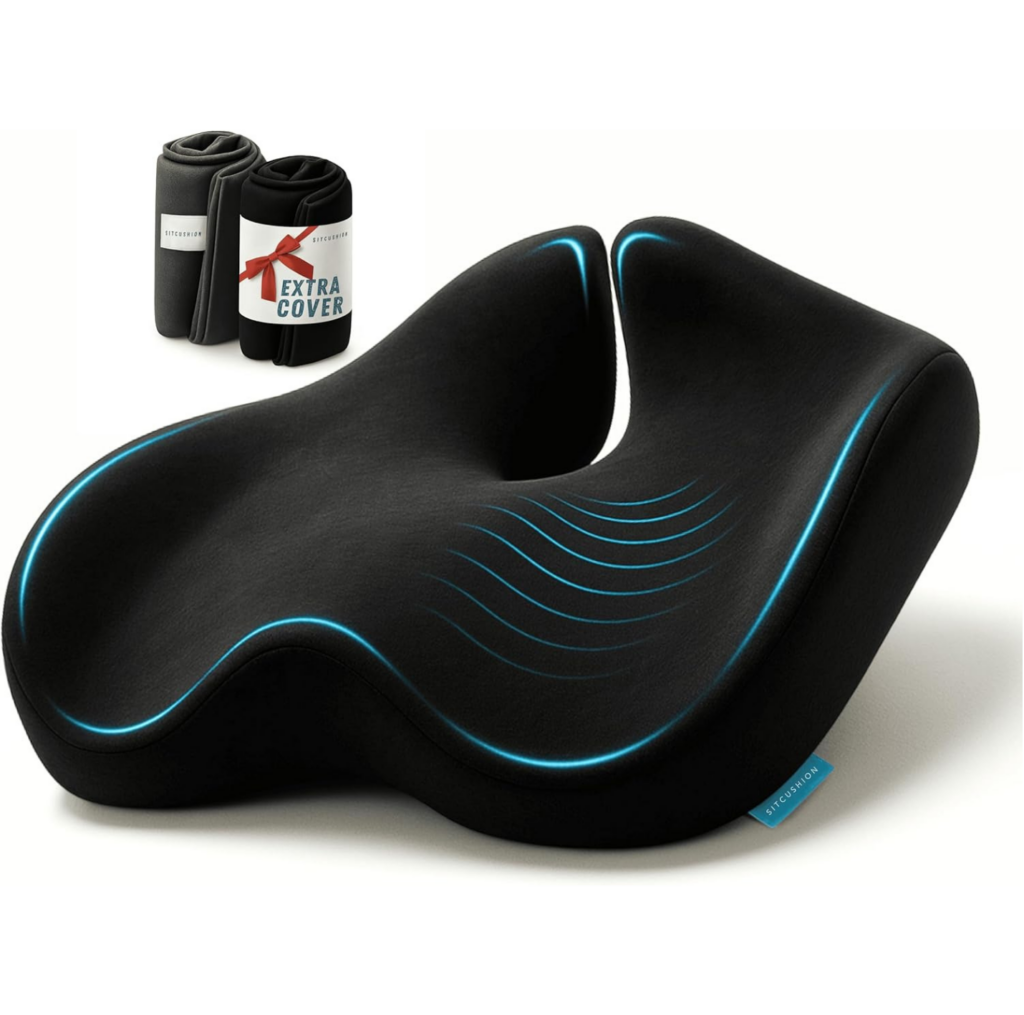
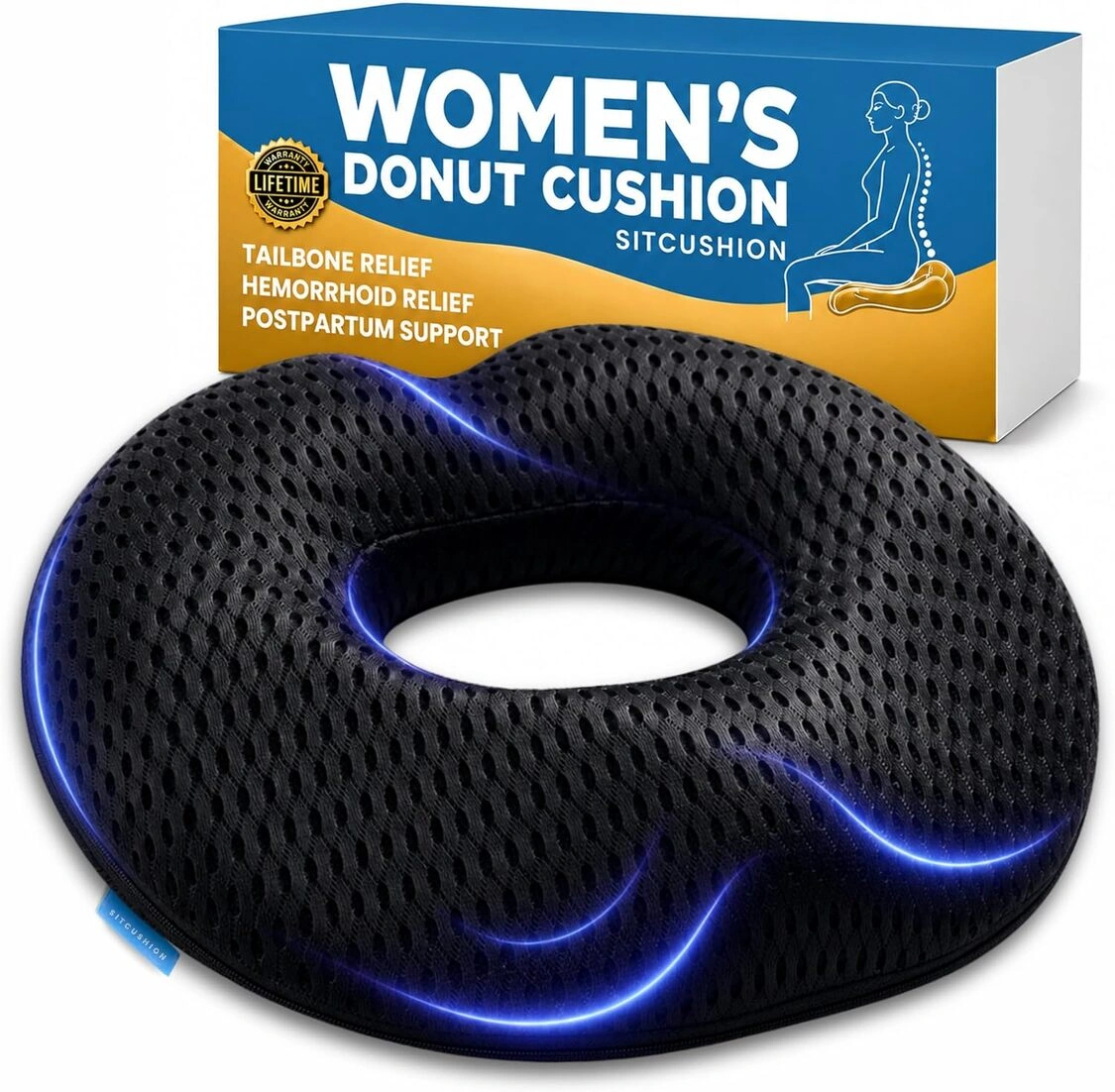
A seat cushion does not correct posture by itself, and it is not a substitute for movement breaks. Its role is narrower: it can make a good sitting position easier to hold for longer. The Office Seat Cushion from sitcushion measures 17.5 by 20 inches and pairs a memory foam base with a U-shaped coccyx cutout designed to ease pressure on the tailbone, while its non-slip base keeps it in place as you sit back and stand up. The Women Donut Cushion is a smaller, firmer option shaped for sitting comfort during pregnancy and after birth. Both carry a lifetime money-back guarantee, and both are comfort products rather than medical devices.
Standing With Your Pelvis Pushed Forward

As the abdomen enlarges, the body’s center of gravity shifts forward, and many women compensate by leaning backward and pushing the pelvis forward. This sway-back stance feels like it balances the weight, but it overloads the lower back muscles and leaves the abdominal and pelvic floor muscles less able to share the work. A tucked tailbone, the opposite extreme, creates a similar problem in the other direction. Cleveland Clinic’s guidance describes the target as a pelvis that is not tilted forward or backward.
A neutral standing posture can be set up in a few seconds. Place your feet roughly under your hips with your weight balanced evenly on both, unlock your knees, stack your ribs over your hips, relax your shoulders and draw the lower abdomen in gently. Avoid parking your weight on one leg and leaning to one side, which is a common habit when waiting in line or cooking.
Standing for long periods deserves the same attention as sitting for long periods. If you cannot avoid it, rest one foot on a low stool or open a lower cabinet and use its base as a footrest, then switch feet every five to 15 minutes.
Lifting and Carrying Without Bracing Your Core

Lifting is where small technique errors cost the most. Bending forward from the waist with straight legs concentrates the load on the lower back, and holding your breath while you strain tends to raise pressure inside the abdomen, which the stretched abdominal wall and pelvic floor are poorly placed to absorb during pregnancy.
NHS physiotherapy guidance on back care in pregnancy describes a safer sequence. Place one foot in front of the other with your toes facing forward, keep your back straight and bend your knees as you reach down. Hold the object firmly and close to your body, gently tighten the pelvic floor and lower abdominal muscles, breathe out as you stand, and avoid twisting on the way up. Lowering an object follows the same steps in reverse.
Load size matters as much as technique. Cleveland Clinic suggests avoiding objects that are awkward or heavier than 20 pounds, though individual limits vary and your provider can give you a more specific guideline. For carrying, hold packages close to your body, split groceries into two small bags and carry one in each hand rather than a single large bag, and take extra care when lifting a toddler into a car seat, where reaching and twisting combine. If a task causes back pain, stop and find another way to do it.
Ignoring Back or Pelvic Pain Until After Birth
Many women are told that back and pelvic pain are simply part of pregnancy and will resolve at delivery. For a lot of women the pain does ease gradually in the first weeks after birth, as NHS physiotherapy guidance notes, but that is not a guarantee. In the postpartum study cited earlier, a history of back pain before or during pregnancy was significantly associated with pain that persisted, which means pain you already have is a reason to act now rather than wait.
Reporting it early gives your care team more to work with. Describe exactly where the pain sits (lower back, deep in the pelvis, tailbone or pubic area), what triggers it (stairs, turning over in bed, prolonged sitting, standing on one leg) and what eases it. This pattern helps distinguish lumbar pain from pelvic girdle pain, and it supports a referral to a women’s health physical therapist, who can teach pelvic floor and core techniques suited to your stage of pregnancy. If pain is severe or arrives suddenly, skip ahead to the warning signs below.
Problems That Can Linger After Birth
Pregnancy, labor and delivery can leave several musculoskeletal changes behind. Posture is only one modifiable factor among many, and none of the problems below is caused by sitting position alone, but each is worth knowing about.
Persistent low back and pelvic pain. As noted above, a substantial share of women still report low back pain after birth, and a prior history of back pain is the factor most consistently associated with it. If pain is not easing in the weeks after delivery, ask your provider about a physiotherapy assessment.
Abdominal separation (diastasis recti). A systematic review of diastasis of the rectus abdominis muscle describes it as common during and after pregnancy and related to lumbopelvic instability and pelvic floor weakness. The same review found that exercise during pregnancy reduced its presence by 35 percent, although its authors concluded that the quality of the evidence means non-specific exercise may or may not help. Practically, that supports gentle, guided core work rather than unsupervised crunch-style exercises.
Pelvic floor problems. Urinary or bowel leakage, a feeling of heaviness or pressure in the pelvis, and difficulty controlling gas can all signal that the pelvic floor needs attention. Gentle pelvic floor exercises are widely recommended during pregnancy and in the early postpartum period, provided your provider agrees, and a pelvic health physical therapist can check that you are doing them correctly.
When to Call Your Doctor
Most pregnancy-related back pain is a normal part of the body’s adjustment, but some patterns need prompt medical attention. Contact your healthcare provider right away if you notice any of the following during pregnancy:
- Severe or sudden back pain, especially with a fever
- Back pain with vaginal bleeding or unusual discharge
- Rhythmic cramping or pain that feels like contractions
- Numbness, tingling or weakness in your legs
- Pain that does not improve with rest or steadily gets worse
- Burning during urination alongside back pain
After birth, also speak with your provider if you notice leakage of urine or stool, a sense of pelvic pressure or heaviness, a bulge along the midline of your abdomen, or pain that is not easing as the weeks go by. When in doubt, it is always reasonable to call. You can find a fuller explanation of these warning signs in our guide to relieving back pain during pregnancy.
Frequently Asked Questions
What is the worst sitting position during pregnancy?
There is no single worst position, but the most problematic are those held for a long time: slouching with a rounded lower back, perching on the edge of a seat without back support, crossing your legs or sitting on one hip, and sitting in the same position for more than about 30 minutes. Each loads the lower back and pelvis unevenly. Sitting back with your hips against the backrest, feet flat and weight even on both sit bones is the safer default.
How should I sit during pregnancy?
Sit all the way back so your hips touch the backrest, keep your feet flat on the floor or on a footrest, and place a small lumbar support at the curve of your lower back. Keep your hips level with or slightly higher than your knees, spread your weight evenly across both sit bones and avoid crossing your legs. Stand and move every 30 minutes. For a full workstation setup, see our guide to ergonomic sitting tips for pelvic girdle pain in pregnancy.
Is slouching bad for the baby?
Occasional slouching is not known to harm your baby. The main concern is the strain it places on your own lower back and pelvis, especially as pregnancy hormones loosen your ligaments. Some physiotherapy and continence guidance suggests that regularly slouching with the pelvis tilted backward in late pregnancy may influence the position your baby settles into, but the evidence is limited. If you are concerned about your baby’s position, ask your midwife or doctor.
Is it bad to sit for a long time while pregnant?
Long unbroken sitting tends to increase stiffness and back and pelvic discomfort, so it is best avoided. Cleveland Clinic advises not staying in the same sitting position for more than 30 minutes, and keeping sitting periods to around 10 to 15 minutes if you already have back pain. Stand, walk or stretch for a minute or two at each break, and turn your whole body instead of twisting at the waist in a swivel chair.
Can bad posture during pregnancy cause problems after birth?
Posture alone is not proven to cause postpartum problems, but it can add strain while your body is already adapting. In a study of 100 postpartum women, more than half still had low back pain after birth, and a history of back pain before or during pregnancy was significantly associated with it. Reducing strain now, reporting pain early and asking about physical therapy gives you the best chance of a more comfortable recovery.
Will my posture go back to normal after pregnancy?
For most women, it improves gradually. NHS physiotherapy guidance notes that back pain usually gets better over the first few weeks after the baby is born. Feeding, carrying and lifting a baby can keep strain high, so keep a neutral position while nursing, lift with your knees bent and add gentle pelvic floor and core exercises once your provider says it is safe. If pain, leakage or a bulge along the midline of your abdomen continues, ask for a referral to a women’s health physical therapist.
Can a seat cushion help with posture during pregnancy?
A seat cushion cannot correct posture on its own, but it can make a good sitting position easier to hold and reduce pressure on the tailbone. Look for firm support that does not collapse, a coccyx cutout and a non-slip base. The sitcushion Office Seat Cushion (17.5 by 20 inches) suits desk chairs and car seats, and the Women Donut Cushion is shaped for sitting comfort during pregnancy and after birth. Use any cushion alongside regular movement breaks.
Conclusion
Key Takeaways for Better Posture in Pregnancy
Small posture habits add up over a day, and pregnancy makes them count for more. The mistakes that matter most are the ones held for a long time, so the most useful changes are also the simplest.
- Sit back with your hips against the backrest, feet flat, and weight even on both sit bones.
- Avoid slouching, perching on the edge of the seat and crossing your legs.
- Change position at least every 30 minutes, and more often if you already have pain.
- Stand with a neutral pelvis, and lift with bent knees while exhaling as you stand.
- Report back or pelvic pain early instead of waiting for birth to resolve it, since a history of pain is linked to pain that lasts after delivery.
Posture is one part of a comfortable pregnancy and recovery, not the whole picture. For pain relief, see our guide to 12 ways to relieve back pain during pregnancy, and for choosing seat support, our guide to the best seat cushion for pregnancy. If you travel by car, our tips for traveling by car during pregnancy cover comfort on longer trips, and the full Knowledge Center has more guides.