







Hypoallergenic Seat Cushions for Allergies and Sensitive Skin
A hypoallergenic seat cushion is one made to be less likely to trigger an allergic reaction, not one that is guaranteed to be allergen-free. The difference matters because in the United States no federal standards govern the word “hypoallergenic,” so each company decides for itself what the label means.
If you sneeze, itch or notice a chemical smell when you sit on a cushion, the foam is rarely the only cause. Dust, skin flakes and moisture build up in the cover and on the surface over time, and some people also react to certain fabrics or to the fresh-foam odor of a new product. That is why choosing well comes down to three things: the core material, the cover fabric, and how easily you can keep the cushion clean.
This guide explains what to look for in each of them, which claims on product pages deserve a second look, and how to use a cushion all day without making allergy symptoms worse. It is general ergonomic information, not medical advice, so if you live with asthma or severe allergies, check with your doctor before choosing any new seating product.
What Actually Triggers Allergy Symptoms on a Seat Cushion

Most allergy symptoms linked to a seat cushion come from four sources, dust mite allergens, trapped moisture and mold, latex, and chemical sensitivity, and only the last two have much to do with what the cushion is made of.
Dust Mite Allergens in Fabric and Upholstery
Dust mite allergens are one of the major indoor triggers on soft surfaces, and a cushion that touches your skin every day can collect them like any other upholstered item. The American Lung Association explains that the reaction comes from proteins in the mites’ droppings and remains, not from a bite, and that these mites live in bedding, upholstered furniture and carpets. A seat cushion offers some of the same conditions, with skin contact, body warmth and the occasional spill, which is why a cushion you cannot wash is harder to keep low in allergens.
Moisture and Mold
Trapped moisture is what lets dust mites and mold thrive, so a cushion that dries quickly is easier on allergy sufferers than one that stays damp. Dust mites absorb water from the air rather than drinking it, and the EPA notes that controlling moisture is how indoor mold is controlled, with indoor humidity ideally kept between 30 and 50 percent. For a cushion, that means sweat, spills and humid rooms matter: after any of them, let the cover and the foam dry completely before using it again.
Latex Allergy
Natural rubber latex is a true allergen for some people, so anyone with a latex allergy should avoid latex foam cushions entirely. Mayo Clinic notes that the most common exposure is touching latex products and that synthetic latex is unlikely to cause a reaction, so it is worth checking whether a cushion’s label says natural latex or a synthetic blend, rather than assuming either way.
Chemical Smells and Sensitive Skin
Not every reaction to a cushion is a true allergy, and a fresh-foam smell or a heavily dyed fabric can irritate the nose, eyes or skin of sensitive people without involving an allergic response. Airing a new cushion in a ventilated room for a day or two before regular use is a simple precaution, and a smooth, breathable cover between your skin and the foam reduces direct contact.
That is why the foam type alone tells you very little. What matters most is the cover, the care routine and any material you personally react to, which the next sections cover.
How Core Materials and Covers Compare for Allergy Sufferers
No single material is allergy-proof, so the safest choice is the one that matches your specific trigger and that you can keep clean. The table below compares the common core materials on the points that matter most for allergies.
| Core material | Main allergy consideration | Cleaning | Good to know |
|---|---|---|---|
| Memory foam | May have a fresh-foam smell when new. Not a latex product. | The foam core is usually spot-cleaned only, so the cover does the work. | Conforms to the body and gives strong pressure relief. |
| Natural latex foam | A true allergen for people with a latex allergy. | Foam core is usually spot-cleaned only. | Springy and durable, but not an option if you react to latex. |
| Gel-infused foam or gel layer | Foam underneath behaves like standard foam. | Gel layers are usually not washable, so check the cover. | Mainly a heat-management feature, not an allergy feature. |
| Polyester fiberfill | Often sold as a low-allergen fill. | Some fiberfill cushions can be washed whole. | Softer and less supportive, and it can clump over time. |
The cover deserves as much attention as the core, because it is the part that touches your skin and the part you can actually wash. A cover should be removable, machine washable and made of a fabric that dries quickly. Cotton is breathable and easy to launder, tightly woven polyester or microfiber washes well but can hold heat, and mesh is airy and dries fast. Wipe-clean coatings are easy to sanitize but are less breathable, so they can feel warm during long sitting. A non-removable cover is the biggest practical drawback, since it leaves you with no real way to remove built-up dust and moisture.
What Labels and Claims Really Tell You
No label guarantees that a cushion is allergy-proof, and the word “hypoallergenic” on its own tells you the least. As covered above, it has no federal definition, so look for specifics instead of the label itself.
Some labels are worth understanding:
- CertiPUR-US applies only to the polyurethane foam. It checks content, emissions and durability, including low VOC emissions, but it says nothing about dust mites or the cover.
- OEKO-TEX Standard 100 applies to textiles and tests for harmful substances. It is relevant to a cover touching sensitive skin, but it is not an allergy guarantee either.
- Asthma and allergy certification programs test whole products in independent labs, and they are rare among seat cushions.
A cushion with none of these labels is not automatically unsafe, and one with several is not automatically right for you. What helps most is a seller who states what the core and cover are made of, whether the cover comes off and can be washed, and how to care for it.
Claims Worth Questioning
Be cautious with any product page that promises to cure or eliminate allergies, that uses “hypoallergenic” without naming a single material, or that makes medical claims a cushion cannot back up. A seat cushion is a comfort product, not a treatment for allergic disease.
How to Clean and Care for a Seat Cushion When You Have Allergies
The most effective way to keep allergens down on a seat cushion is to wash the removable cover regularly and keep the foam core clean and dry. Mayo Clinic advises washing bedding in water at least 130°F (54.4°C) to kill dust mites and remove allergens, and the same logic applies to any washable fabric that touches your skin, as long as the care label allows it.
Wash the Cover Regularly
A cover should be washed every two to four weeks with daily use, and as often as every one to two weeks if you notice symptoms or use the cushion in warm, humid conditions. Always follow the cover’s own care label first, because hot water can shrink or damage some fabrics. The table below shows what to do for each case.
| If the care label says | What to do |
|---|---|
| Hot wash is fine | Wash at 130°F (54.4°C) or higher, then dry completely. |
| Warm or cold wash only | Wash at the labeled temperature with a mild detergent and add an extra rinse. A cooler wash removes much of the allergen but may not kill the mites themselves. |
| No machine washing | Vacuum the surface and wipe with a damp cloth, and treat the cushion as one that is harder to keep low in allergens. |
For a full step-by-step routine, see our guide on how to clean and wash a seat cushion cover. If you own a spare cover, swapping them means one is always clean and fully dry.
Care for the Foam Core
The foam core should never be submerged or machine washed, so it needs gentle, dry-leaning care instead. Remove the cover, blot any spill with a damp cloth and a little mild soap, and let the foam air dry completely before putting the cover back on. Vacuuming the surface with an upholstery attachment, ideally one with a HEPA filter, removes surface dust, but it does not remove most mites on its own, so treat it as a supplement to washing and never a replacement.
Keep It Dry and Give It Air
Dryness is the most overlooked part of allergy care, because trapped moisture is what lets mites and mold take hold. After a long day of sitting, lift the cushion off a warm, damp seat so air can reach both sides. Keep it away from damp spots and direct heat, and let it breathe in a ventilated room if it has been in a hot car or a humid space.
When to Replace a Cushion
A cushion should be replaced rather than cleaned if you see mold, notice a musty smell that comes back after washing, or find that the cover can no longer be removed or washed. Persistent symptoms that do not improve with cleaning are also a reason to talk to a doctor or allergist, because a seat cushion is rarely the only source of indoor allergens.
Who Should Be Most Careful When Choosing a Seat Cushion
People with asthma, eczema or a diagnosed dust mite allergy have the most to gain from a cushion that is easy to clean, because they are the most likely to notice a reaction. Dust mites are one of the major indoor triggers for people with asthma, and a mite allergy can also flare eczema in some people. If you have sensitive skin, a smooth, breathable cover between you and the foam helps. If you have a latex allergy, avoid latex foam entirely and check the label of any cushion you consider. If your symptoms are significant or have never been diagnosed, a doctor or allergist can tell you what you are actually reacting to, which is more useful than any product label.
Choosing a Seat Cushion That Is Easy to Keep Clean
For most people with allergies, the right cushion is the one built so that it is easy to keep clean and dry. Use this short checklist when you compare options:
- A removable cover with a zipper, so the part that touches your skin can come off.
- A cover that is machine washable, with clear care instructions on the label.
- Breathable, quick-drying fabric such as cotton or mesh.
- A non-slip base, so the cushion stays put and you are not constantly adjusting it.
- A spare cover, if available, so you can swap while one is washing.
- A foam core you can spot-clean and air dry, with care instructions you can follow.
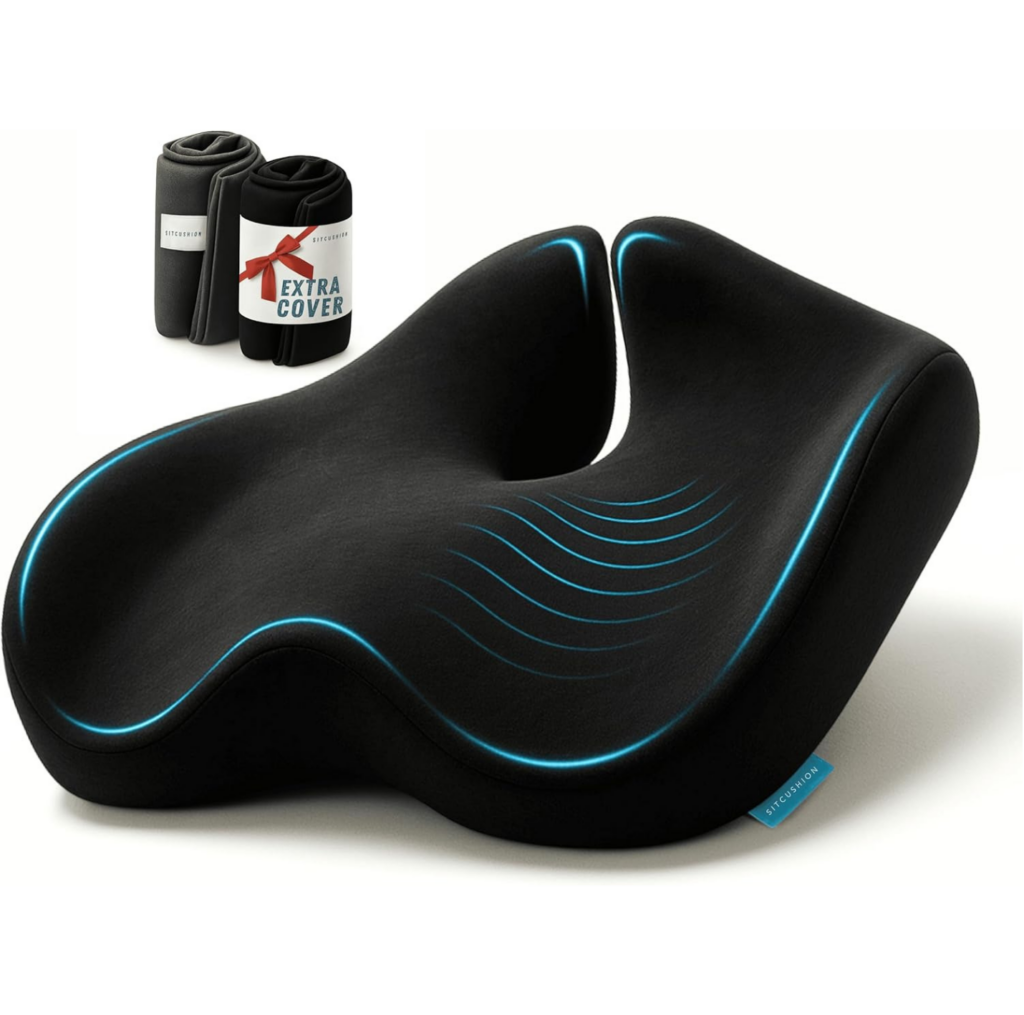
Our Office Seat Cushion was designed with several of these practical points in mind. It has a removable, machine-washable mesh cover and a non-slip base, and its core is memory foam with a U-shaped cutout that takes pressure off the tailbone. The cover is washed in cold water on a gentle cycle and air dried, so follow the extra-rinse approach from the care table above, and some versions include a spare cover. We do not market any sitcushion as “hypoallergenic,” because the word has no standard definition, and we would rather tell you exactly what each cushion is made of and how to look after it. You can compare the full range on our seat cushion page.
Sit Longer and Feel Better at Your Desk
The sitcushion Office Seat Cushion adds pressure relief and a U-shaped tailbone cutout to your office chair, backed by a lifetime money-back guarantee.
Frequently Asked Questions About Hypoallergenic Seat Cushions
Is memory foam hypoallergenic?
Memory foam is often described as hypoallergenic because it is a dense synthetic foam that does not contain natural latex, but no foam is allergy-proof. Dust mite allergens, skin flakes and moisture collect on the surface and cover over time, so how clean and dry you keep the cushion matters as much as the foam itself.
Does memory foam attract dust mites?
Memory foam does not attract dust mites on its own, because mites feed on shed skin cells and thrive in warm, humid conditions rather than on the foam. A cushion you sit on every day can still collect skin flakes and moisture, which is why a washable cover and a dry cushion are the best protection.
What does hypoallergenic mean on a seat cushion?
Hypoallergenic means a product is made to be less likely to cause an allergic reaction, not that it is free of allergens. In the United States the term has no federal standard, so each manufacturer decides how to use it. Look at the actual materials, cover and care instructions rather than the label alone.
What is the best seat cushion material for allergies?
The best material depends on what triggers your symptoms. For a dust mite allergy, choose a cushion with a removable, machine-washable cover. For a latex allergy, avoid natural latex foam and choose memory foam or polyester fiberfill instead, after checking the label. For sensitive skin, a smooth, breathable cover such as cotton or mesh is usually gentler than a rough or heavily dyed one.
Can a seat cushion cause allergic reactions or skin irritation?
Yes, it can, although the cause is usually something on or in the cushion rather than the cushion itself. Common triggers are dust mite allergens that build up in the cover, mold from trapped moisture, natural latex, and sensitivity to dyes or to the odor of new foam. If symptoms continue after you clean the cushion or stop using it, see a doctor or allergist.
Why does my new memory foam cushion smell, and how long does it last?
A new memory foam cushion can smell because freshly made foam releases volatile organic compounds, a process called off-gassing. For most cushions the smell fades within a few days when the cushion is aired in a ventilated room, although denser foam can take a week or longer. If the smell causes headaches, irritation or breathing problems, stop using the cushion and consider returning it.
How often should I wash a seat cushion cover?
Wash the cover every two to four weeks with daily use, and every one to two weeks if you have allergies or notice symptoms. Follow the care label for temperature and let the cover dry completely before putting it back. Water of at least 130°F (54.4°C) kills dust mites, but only use it if the label allows. For the full routine, see our guide on how to clean and wash a seat cushion cover.
Can you wash a memory foam seat cushion?
No, the memory foam core should not be machine washed or submerged, because it holds water and can be damaged or grow mold if it stays damp. Remove the cover and wash it, then spot-clean the foam with a damp cloth and a little mild soap and let it air dry completely before putting the cover back on.
Can a seat cushion help with asthma or allergies?
A seat cushion cannot treat asthma or allergies, but a washable, easy-to-clean one helps you avoid collecting allergens on a surface you sit on every day. If you have asthma or a diagnosed allergy, talk to your doctor about a plan for reducing exposure, and treat any cushion as one small part of it.
Choosing a Seat Cushion With Allergies in Mind
There is no such thing as an allergy-proof seat cushion, but you can choose and care for one in a way that keeps allergen exposure low. The word “hypoallergenic” has no standard definition, so the details behind it matter far more than the label.
Four points are worth remembering:
- Know your trigger. Dust mites, mold, latex and chemical sensitivity call for different choices.
- Prioritize the cover. A removable, machine-washable, breathable cover is the single most useful feature, because it is the part you can actually clean.
- Follow the care label. Wash the cover regularly, spot-clean the foam core, and let both dry completely.
- Question big promises. Be cautious of any product that claims to cure allergies or uses “hypoallergenic” without naming a material.
If you are still comparing options, our guide to the best seat cushions for pain relief and comfort covers shapes and use cases in more depth, and our article on how to assess seat cushion durability explains how to tell a cushion that lasts from one that flattens quickly. You can also browse the full range on our seat cushion page or explore more practical guides in the Knowledge Center.
This article is general ergonomic information, not medical advice. If you live with asthma, a diagnosed allergy or ongoing skin symptoms, talk to your doctor or allergist about what is right for you.