
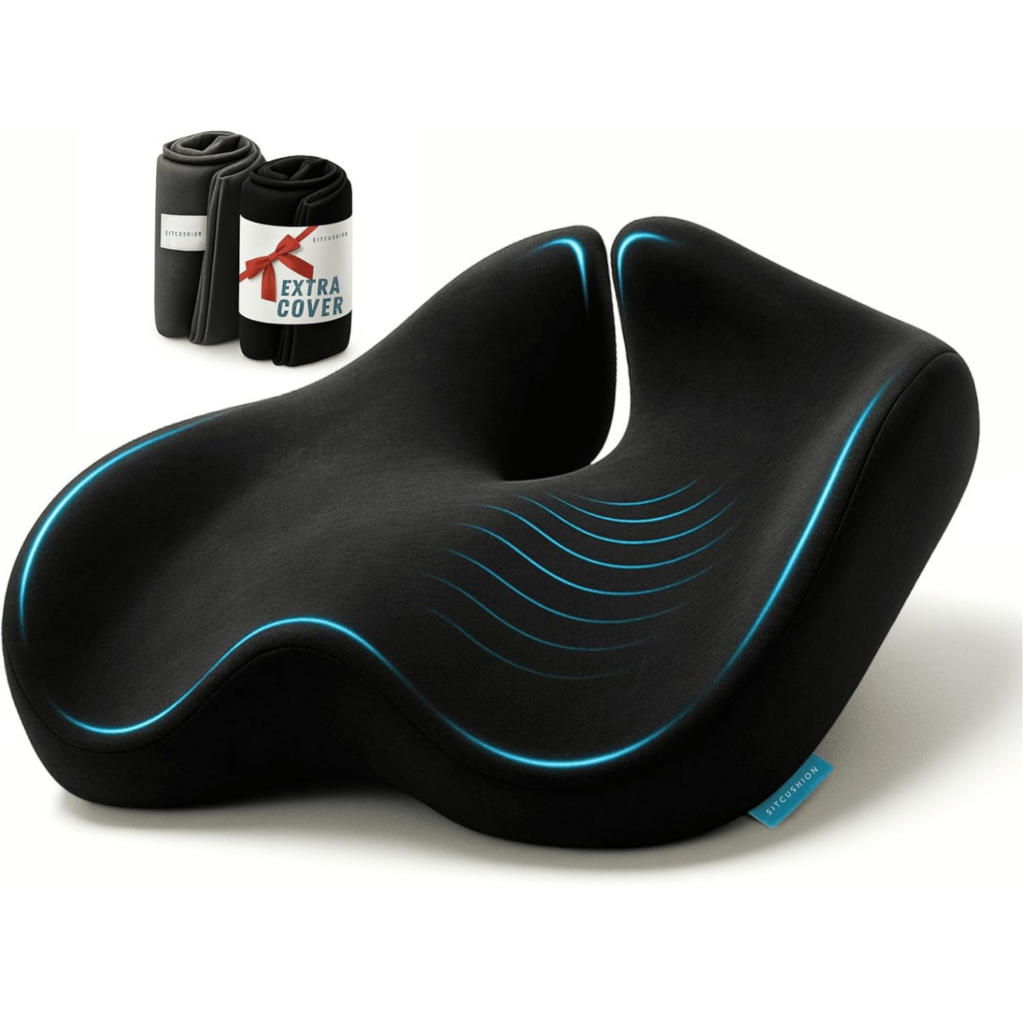







The best seat cushion for pain relief is the one that matches where you feel pressure when you sit. A U-shaped (coccyx cutout) cushion suits tailbone and sciatica pressure at a desk or in a car, a donut-style cushion suits post-surgery, hemorrhoid and postpartum sitting, and a cooling cushion suits people who run hot during long sessions. Below, we explain how each type works, how to choose by pain type and seat, and where cushions stop being enough.
Sitting for hours concentrates your body weight on a small area: the tailbone (coccyx), the sit bones (ischial tuberosities) and the thighs. A good cushion spreads that load across a wider surface and keeps sensitive areas off the seat. It is a comfort tool, not a medical treatment. If your pain is severe, lasts for weeks, or comes with numbness, leg weakness or bowel or bladder changes, see a doctor before relying on any cushion.
One note on transparency: Sitcushion makes seat cushions, so our own products appear in the table below. We describe only what each design actually does, and we link to our detailed guides when a topic deserves more depth.
| If your main problem is… | Cushion type to look for | What to check | Sitcushion option |
|---|---|---|---|
| Tailbone or sciatica pressure during long desk hours | U-shaped rear cutout, memory foam | Cutout sized for your tailbone, non-slip base, fits your chair width | Office Seat Cushion |
| Lower back and hip fatigue on long drives | Angled (wedge) profile with coccyx cutout | Fits sedans, hatchbacks and compact SUVs, anti-slip base, adds seat height | Car Seat Cushion |
| Hemorrhoids, post-surgery or prostate-area sitting comfort (men) | Donut-style ring with center opening | Firm foam, low profile, works best on flat firm seats | Men Donut Cushion |
| Postpartum or pelvic-area sitting comfort (women) | Donut-style with V-shaped front | Firm support, low profile, breathable cover | Women Donut Cushion |
| Heat build-up during long sitting | Cooling or breathable cover | Breathable 4D mesh or cooling variant, removable washable cover | Cooling Office Seat Cushion |
Why Sitting Hurts and How a Seat Cushion Helps
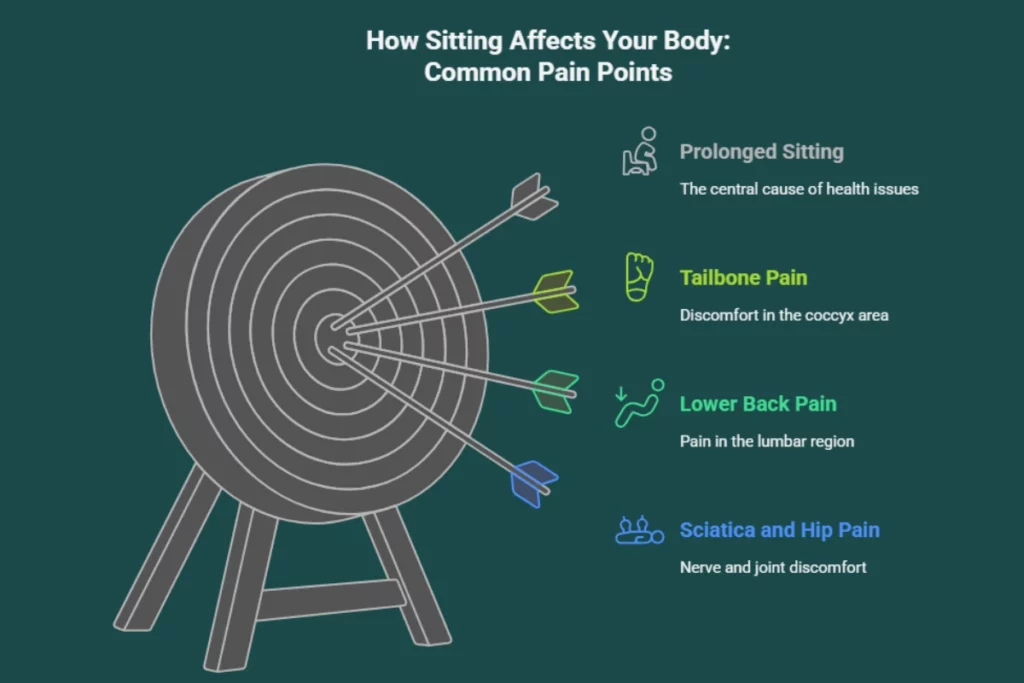
A seat cushion helps by spreading your body weight over a larger area and keeping pressure off the bony spots that carry it, mainly the tailbone (coccyx) and the sit bones (ischial tuberosities). It does not treat the cause of your pain, but it can make long hours of sitting more tolerable while you deal with that cause. For the evidence behind this, see our guide on whether a seat cushion really helps. The four problems below are the ones people search for most, and each calls for a slightly different cushion.
Tailbone Pain (Coccyx) When Sitting
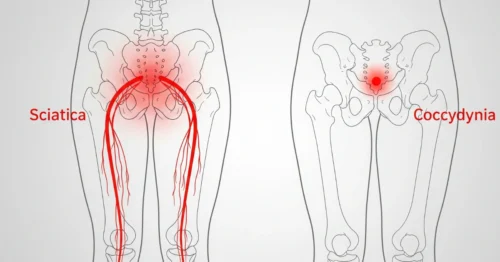
Tailbone pain when sitting usually comes from direct pressure on the coccyx, and a cushion with a rear cutout keeps that bone off the seat. Doctors call this pain coccydynia, and it is typically worse when you sit and when you stand up after sitting. Spine specialists at Mayfield Clinic describe a shaped cushion with a cutout under the tailbone as a common first step in nonsurgical care. Firm foam matters too, because a cushion that collapses under your weight cannot keep the tailbone off the seat.
Lower Back Pain and Sitting Posture
Lower back pain from sitting is often linked to posture and long stretches in one position, and a cushion can only help by changing how your pelvis sits and how pressure is shared under you. It is not a replacement for lumbar support in your chair. Look for a cushion with a non-slip base that keeps your feet flat and your knees about level with your hips, because one that lifts you too high can push your pelvis out of position. For the daily habits that matter more than any product, see our lower back pain guide.
Sciatica and Leg Pain When Sitting
Sciatica is pain that travels along the sciatic nerve from the lower back through the buttock and down one leg, and a seat cushion can only reduce pressure where you sit, not the nerve compression behind it. Mayo Clinic explains that it usually comes from a herniated disk or bone spur pressing on the nerve, and that prolonged sitting can aggravate symptoms. A contoured cushion with a cutout may make sitting more comfortable by taking pressure off the tailbone and buttocks, but it should sit alongside medical guidance, not replace it. For a deeper comparison, see our guide to seat cushions for sciatica and tailbone relief.
Buttock, Sit Bone and Hip Pain
Sit bone pain is pain under the buttocks where the ischial tuberosities, the rounded bones you sit on, press against the seat. It often comes from sitting for a long time on a hard surface, and Cleveland Clinic describes one common cause, ischial bursitis, as irritation of the small fluid-filled sacs that cushion those bones. A thick, firm cushion can spread your weight over a wider area and soften a hard seat. Short movement breaks reduce the load whatever cushion you use. Pain on one side of the lower back and buttock can also come from the sacroiliac joint, which we cover in our sacroiliac joint sitting guide.
| Where it hurts | What is under pressure | What to look for in a cushion |
|---|---|---|
| Tailbone, at the base of the spine | Coccyx | A rear cutout or ring that keeps the tailbone off the surface, with firm foam that does not sink |
| Lower back | Pelvis position and lower back muscles | A stable, non-slip base and a profile that keeps hips level with knees, plus a chair with back support |
| Buttock and leg pain when sitting | Sit bones, hips and thighs | Contoured, firm foam that spreads weight, used alongside medical guidance |
| Sit bones, under the buttocks | Ischial tuberosities | A thick, firm cushion that spreads load across a wider area |
When a Seat Cushion Is Not Enough
A seat cushion is a comfort tool, not a medical treatment. Contact a doctor promptly if you have numbness or weakness in a leg or trouble controlling your bowels or bladder, which are warning signs of a serious nerve problem. See a doctor as well if your pain keeps getting worse, does not improve after a few weeks, or limits your daily activities.
Types of Seat Cushions for Pain Relief
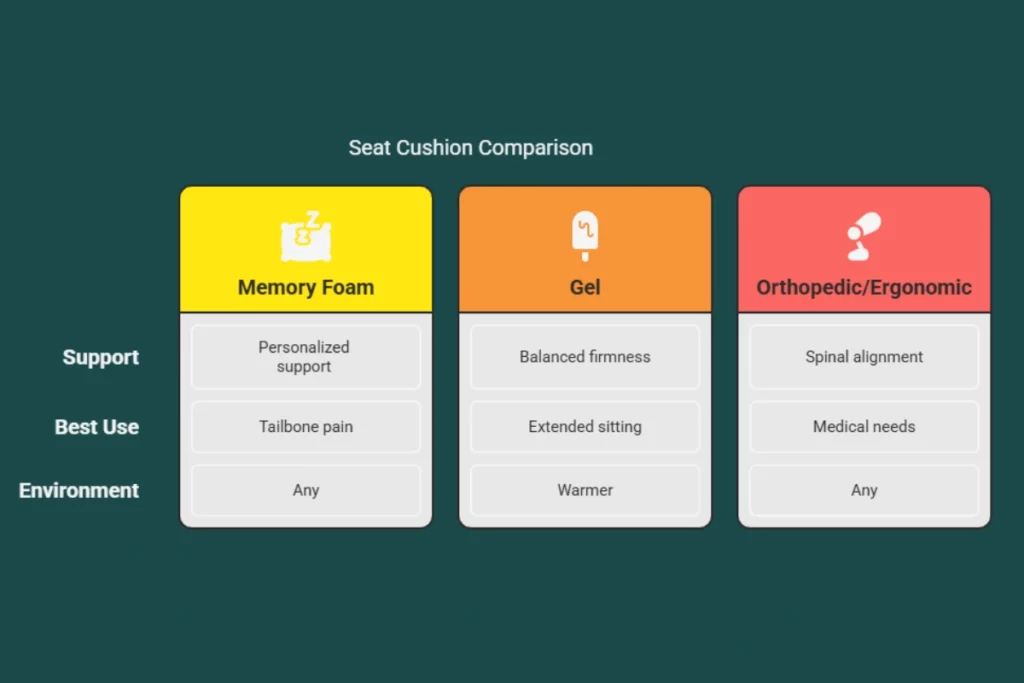
Seat cushions differ in two ways that matter. Shape decides where pressure is taken off, and material decides how the cushion feels, how long it lasts and how warm it sits. Choose by shape first, because shape determines whether a cushion suits your type of pain.
U-Shaped Cushions With a Coccyx Cutout
A U-shaped cushion has an open notch at the back, so your tailbone hangs free of the seat while your sit bones and thighs share the load. It is the most common design for tailbone pain, sciatica-type discomfort and long hours at a desk or behind the wheel, and it works best on flat, firm seats such as office chairs and car seats. Check that the cutout is large enough for your body and that the base does not slide when you sit down or get up. Our Office Seat Cushion and Car Seat Cushion use this design.
Donut Cushions
A donut cushion is a ring of foam with an opening in the center, so the area over the opening does not press against the seat. People often choose it for hemorrhoid flare-ups, recovery after surgery or childbirth, and tailbone pain. It does not suit everyone. A ring that is too soft, or an opening that is too small, can press on the tissue around the edge, so firmness and opening size matter, and anyone with a medical condition should check with a doctor first. For a closer comparison, read our guides on donut pillows versus coccyx cutouts and donut versus memory foam cushions for hemorrhoids. We make a Men’s Donut Cushion and a Women’s Donut Cushion, each with a front contour shaped for the way men and women sit. Like most cushions, they work best on firm, flat seats.
Wedge Cushions
A wedge cushion is thicker at one edge, which tilts your pelvis slightly and changes your sitting angle. Some people find this helps them sit more upright, while others find it makes their lower back arch. If a wedge makes you slide forward or your pain increases in the first few days, switch to a flatter profile. Some designs combine a gentle wedge with a coccyx cutout, as our Car Seat Cushion does. The added seat height can help shorter drivers, but re-check your seat and steering wheel position after adding any cushion.
Flat and Contoured Foam Pads
A flat or contoured pad has no cutout and simply adds cushioning and surface area. It suits general sitting fatigue and pressure under the sit bones, but it gives less relief for tailbone pain, because the coccyx still rests on the foam.
Cushion Materials
Memory foam is a viscoelastic foam that slowly molds to your shape and softens with body warmth, which spreads pressure well but can feel warm during long sessions. Quality varies, so check firmness and how quickly the foam springs back. Our Office and Car Seat Cushions use charcoal-infused memory foam with a removable, washable cover, and some models come with a 4D mesh or Cooling Black option. Our guide on assessing seat cushion durability explains what to look for.
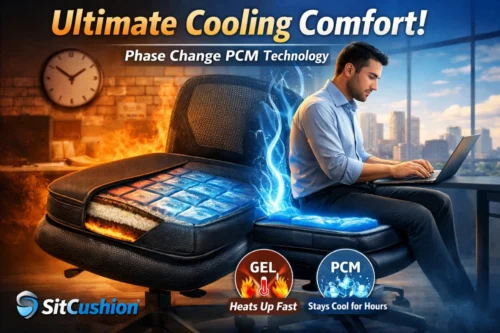
Gel and gel-infused foam often feels cooler to the touch at first, but it can warm up during long sitting, and gel layers add weight. For a closer look at cooling options, see our comparison of PCM and gel seat cushions.
Firm polyurethane or high-resilience foam feels springier and molds less closely, which suits people who find memory foam too soft.
Air and adjustable cushions let you tune the pressure, but they can lose air and are mostly used for wheelchair seating. If you use a wheelchair, read our wheelchair cushion guide and ask a clinician before choosing.
Whatever the foam, look for a removable, washable, breathable cover and a non-slip base. You will also see “orthopedic” on many listings, but for seat cushions it is a marketing term rather than a standardized or regulated certification, so judge a cushion by its actual shape, firmness and size.
| Type | Best for | Watch out for | Sitcushion option |
|---|---|---|---|
| U-shaped with coccyx cutout | Tailbone pressure, sciatica-type discomfort, long desk or driving hours | Cutout size must fit you, and it needs a flat, firm seat | Office Seat Cushion, Car Seat Cushion |
| Donut (ring) | Post-surgery, postpartum and hemorrhoid sitting comfort, tailbone pressure | A soft ring or small opening can press on surrounding tissue, and medical conditions need a doctor’s advice | Men’s Donut, Women’s Donut |
| Wedge | Changing your sitting angle, adding seat height | Can arch the lower back in some people, so try it before committing | Car Seat Cushion (angled profile with cutout) |
| Flat or contoured pad | General sitting fatigue, pressure under the sit bones | Less relief for tailbone pain | Not part of our range |
How to Choose the Right Seat Cushion for Your Pain and Your Seat
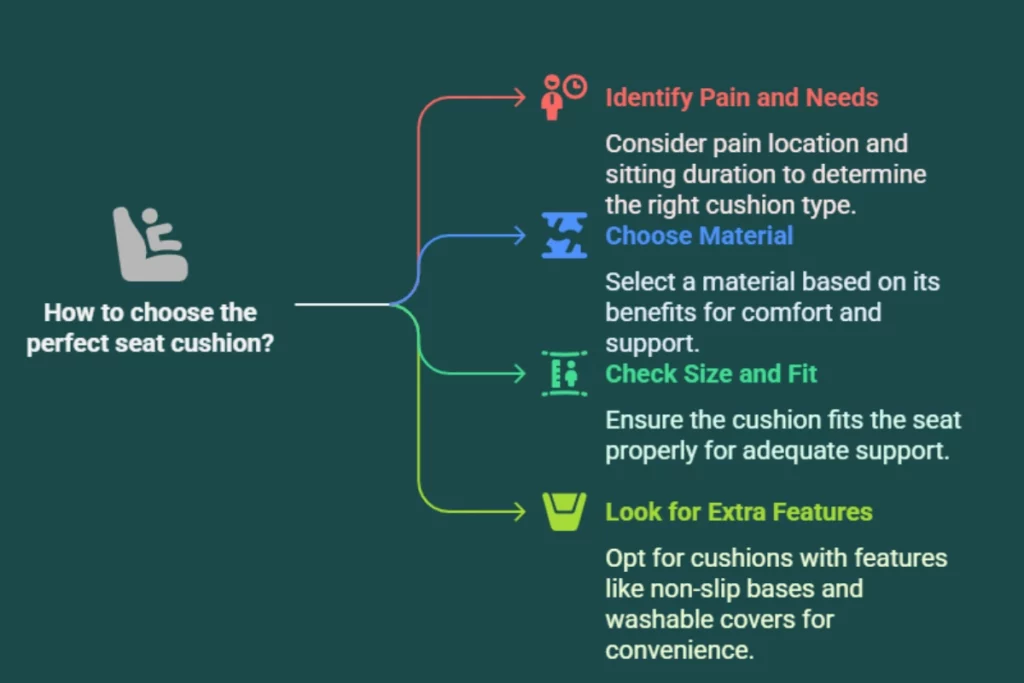
The right cushion is the one that matches your pain location, your seat and your body size. Shape comes first, as explained above, and the checks below decide whether a cushion of that shape will work for you.
Check Your Seat First
Most seat cushions work best on a firm, flat seat, such as an office chair, a car seat or a dining chair. On a soft sofa or a deep recliner they sink, which cancels the pressure relief. Look at your seat’s width, depth and slope before buying, because a deeply bucketed car seat or a steeply sloped seat can push a flat cushion out of position.
Match the Size to Your Seat
A cushion should cover your seat without hanging over the edges. Measure the seat’s width and depth and compare them with the listed size of the cushion. One that is too large bunches up or slides, and one that is too small leaves your thighs unsupported.
Mind Thickness and Seat Height
A thicker cushion raises your seat height, which changes how your feet and knees sit. After adding a cushion, your feet should rest flat on the floor or a footrest, your knees should be about level with your hips, and your arms should still reach your desk comfortably. In a car, re-check your steering wheel distance and seat belt fit after adding any cushion.
Choose Firmness for Your Body
Firmness should match your body weight. A cushion that is too soft collapses and stops relieving pressure, while one that is too firm can create new pressure points. Try the 15-minute check: sit on the cushion on a hard chair for about 15 minutes. If the foam compresses fully or you notice new pressure points, choose a firmer or thicker option. Lighter sitters may find very firm cushions uncomfortable.
Look at the Cover, Base and Portability
A non-slip base and a removable, washable cover deserve a check before anything else on the spec sheet. A base that grips keeps the cutout under your tailbone instead of drifting, and a breathable cover helps if you run warm. A carrying handle helps if you move the cushion between your desk, car and home.
Allow a Short Adjustment Period
Give a new cushion a week or two. Memory foam can feel firm at first and softens as it warms and breaks in, and your body also needs time to adjust to a new sitting position. If your pain gets worse instead of better, stop using the cushion and check with your doctor. Before buying any cushion, read the return terms and what the warranty actually covers.
| Cushion | Size | Best on | Worth knowing |
|---|---|---|---|
| Office Seat Cushion | 17.5″ x 20″ x 5″ | Office, desk and dining chairs with a firm, flat seat | About 5 inches thick, so it raises your seat height. Check your feet and desk height |
| Car Seat Cushion | 18″ x 20″ x 4″ | Standard sedans, hatchbacks and compact SUVs | Not designed for extra-deep bucket seats or bench-style truck seats. The angled profile adds seat height |
| Men’s Donut Cushion | 16″ x 17.2″ x 2.5″ | Firm, flat seats | A firm, low-profile ring, best suited to sitters of about 160 lb and above |
| Women’s Donut Cushion | 16.3″ x 17.1″ x 2.5″ | Firm, flat seats | Low profile, so it changes your seat height less than a thicker cushion |
To avoid the most common buying mistakes, read our guide on 7 reasons to avoid buying any seat cushion. For a deeper look at foam and features, see our guide to choosing a memory foam seat cushion.
Who Benefits Most From a Seat Cushion
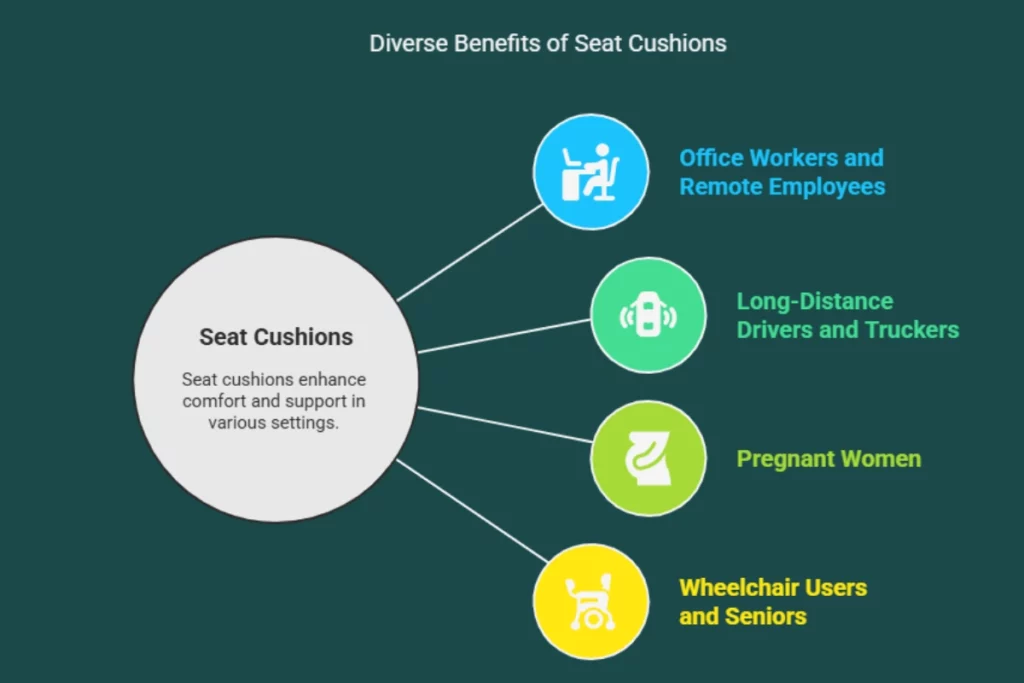
Anyone who sits for long stretches on a hard seat can find a cushion more comfortable, but the right choice depends on your situation.
Office Workers and Remote Professionals
Office workers and remote professionals usually need a cushion that fits a firm desk chair and takes pressure off the tailbone and sit bones during long workdays. A U-shaped cushion such as our Office Seat Cushion (17.5″ x 20″ x 5″) is a common choice. Because it is thick, check that your feet still rest flat on the floor and that your desk height still works. A cushion does not replace movement breaks or a chair with good back support. For a closer look at desk setups, see our guide to finding the best office chair seat cushion for back pain.
Long-Distance Drivers and Commuters
Long-distance drivers and commuters sit in one position for hours on a seat shaped for the car, not for them, so a cushion with a tailbone cutout can take pressure off that area. Our Car Seat Cushion (18″ x 20″ x 4″) has an angled profile and fits standard sedans, hatchbacks and compact SUVs. It adds seat height, so re-check your steering wheel distance and seat belt fit after adding any cushion, and plan regular breaks to stand and stretch, about every 60 to 90 minutes. For recommendations for long drives, read our guide on the best car seat cushions for lower back pain.
Pregnancy and Postpartum Sitting
Pregnancy and postpartum sitting often calls for a supportive, low-profile cushion that reduces pressure on the tailbone and pelvic area. A U-shaped cushion is a common pick for desk and driving hours, while a donut with a contoured front, such as our Women’s Donut Cushion, is often chosen for pelvic-area pressure or sitting after birth. A cushion is a comfort tool and does not treat pelvic or back pain, so talk to your doctor or midwife about pain that is severe or comes with other symptoms. Our pregnancy seat cushion guide covers office, car and home use in detail.
Older Adults and Wheelchair Users
Older adults and wheelchair users who sit for many hours should talk to a clinician or seating specialist before choosing a cushion, because protecting the skin during long periods of sitting needs more than a comfort cushion provides. Sitcushion cushions are comfort products, not medical devices, and are not designed to prevent or treat pressure injuries. Our guide to wheelchair cushions for elderly people, veterans and SCI patients explains the main cushion types to discuss with your care team.
How to Care for Your Seat Cushion
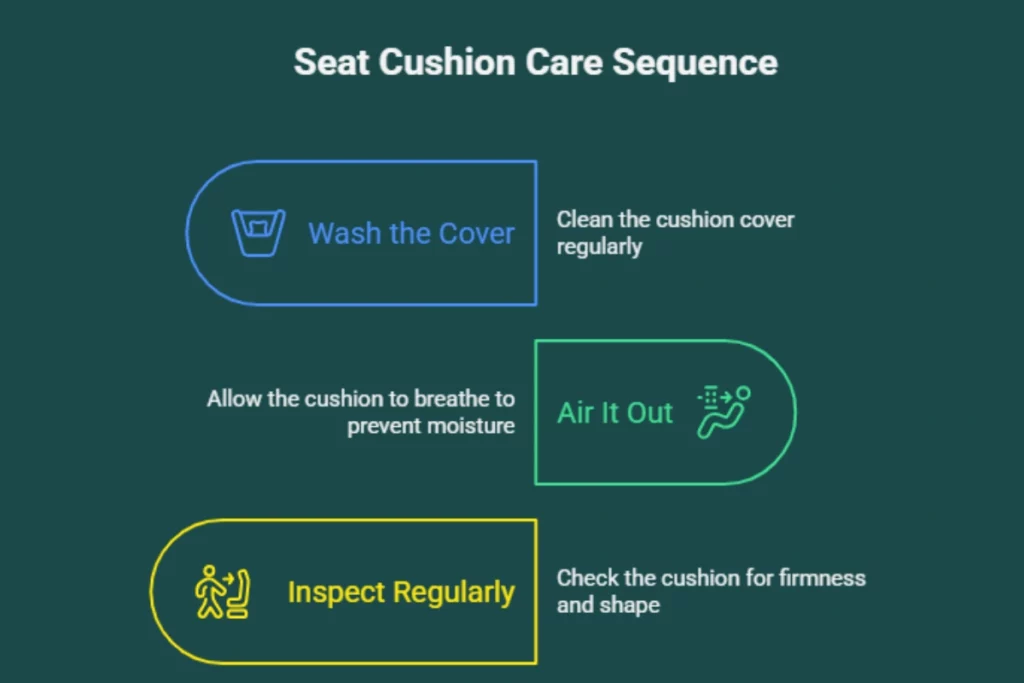
Proper care keeps a seat cushion hygienic and helps the foam hold its shape for longer. Three habits cover most of it.
Wash the Cover Regularly
Wash the removable cover on a regular schedule, following the care label. Most covers can be machine washed on a gentle cycle in cold water, and high heat in the dryer can shrink the fabric. Never put the foam core in the washing machine, because moisture and harsh detergents can break down the foam. If the core gets damp or dirty, spot clean it lightly and let it dry completely before putting the cover back on.
Air Out the Foam
Take the cover off now and then and let the foam air out in a well-ventilated room. This helps release trapped moisture and odors. Keep the foam out of direct sunlight and away from heat sources, which can damage it over time.
Know When to Replace It
Replace your cushion when it no longer holds its shape or stops relieving pressure. The warning signs are a cushion that bottoms out, a dip that does not spring back after you stand up, or pain that returns after the cushion used to help. With everyday use, a seat cushion typically lasts about 2 to 5 years, and thinner portable ones tend to wear faster. Our guide on assessing seat cushion durability explains what to check and which warning signs matter most.
Our Sitcushion Seat Cushion Range
Sitcushion makes four seat cushions, each designed for a different sitting situation. All of them use memory foam with a removable cover and a non-slip base, and they work best on firm, flat seats. They are ergonomic comfort products, not medical devices, so the guidance below is based on each cushion’s design and size, not on treating a condition. You can compare all models on our seat cushion page.
Office Seat Cushion
The Office Seat Cushion measures 17.5″ x 20″ x 5″ and combines a U-shaped coccyx cutout with charcoal-infused memory foam, a carrying handle, a non-slip base and a removable, washable cover. It comes in several color options, including a Cooling Black version, and some versions include a spare cover. It suits long desk hours on a firm office chair. It is about 5 inches thick, so it raises your seat height, and it is less suited to low desks where you cannot adjust your chair.
Car Seat Cushion
The Car Seat Cushion measures 18″ x 20″ x 4″ and has a U-shaped coccyx cutout, an angled wedge profile, a carrying handle, an anti-slip rubber base with no straps, and a removable, washable cotton cover. It suits long drives and daily commutes in standard sedans, hatchbacks and compact SUVs. It is not designed for extra-deep bucket seats or bench-style truck seats, and drivers of large SUVs or pickups, or tall drivers, may need to lower the seat to keep a comfortable position.
Men’s Donut Cushion
The Men’s Donut Cushion measures 16″ x 17.2″ x 2.5″ and is a firm, low-profile ring of high-density memory foam with a front contour shaped for men, a removable 4D mesh cover and a non-slip bottom. It suits sitting after surgery and pressure-sensitive sitting, including hemorrhoid and tailbone discomfort. It is best suited to sitters of about 160 lb and above, and it can sink on a soft sofa or deep recliner. Talk to your doctor about any medical condition before relying on it.
Women’s Donut Cushion
The Women’s Donut Cushion measures 16.3″ x 17.1″ x 2.5″ and is a low-profile donut with a contoured front and a removable 4D mesh cover. It suits pregnancy and postpartum sitting, and pelvic-area pressure. Because it is thin, it changes your seat height less than a thicker cushion, but it also gives less lift than the Office or Car cushions. Talk to your doctor or midwife about pain that is severe or comes with other symptoms.
Frequently Asked Questions About Seat Cushions for Pain Relief
What is the best seat cushion for pain relief?
The best seat cushion for pain relief is the one that matches where you feel pressure. A U-shaped cushion with a coccyx cutout suits tailbone and sciatica-type discomfort on a desk chair or car seat. A firm donut cushion suits post-surgery, hemorrhoid and postpartum sitting. A thick, firm cushion helps spread weight when your sit bones are sore. Whatever the shape, check that it fits your seat and stays put on a non-slip base.
Do seat cushions actually work for pain?
Seat cushions can make sitting more comfortable, but research on them is still limited. In one randomized trial of 75 drivers with chronic low back pain, pain scores improved with both gel and foam cushions over three months. The study had no group without a cushion, so it cannot show how much of the improvement came from the cushion itself. A cushion works best alongside good posture and regular movement, and it is not a treatment.
What is the best seat cushion for tailbone pain?
A U-shaped cushion with a rear cutout is the most common choice for tailbone pain, because it keeps the coccyx off the seat. A firm donut-style cushion can work as well, especially for recovery after surgery or childbirth, as long as the opening is large enough and the ring does not collapse. Choose firm foam, and see a doctor if tailbone pain is severe or keeps getting worse.
Can a seat cushion help with lower back pain?
A seat cushion can help with lower back pain by changing how your pelvis sits and spreading pressure under you, but it is not a replacement for lumbar support. Pair it with a chair that supports your lower back, keep your feet flat and your knees about level with your hips, and take regular movement breaks. If back pain is severe, lasts for weeks or comes with leg weakness or numbness, see a doctor.
What is the best seat cushion for sciatica or hip pain?
For sciatica-type pain and hip pressure, look for a contoured, firm cushion with a cutout that takes pressure off the tailbone and buttocks, in a size that fits your seat. A cushion cannot treat the nerve problem behind sciatica, so get shooting leg pain, numbness or weakness checked by a doctor.
What is the best seat cushion for an office chair?
The best seat cushion for an office chair is a firm, U-shaped cushion that fits your seat width and has a non-slip base. Measure your chair before buying, because a cushion that overhangs or slides will not stay under your tailbone. A thick cushion raises your seat height, so you may need a lower chair setting or a footrest to keep your feet flat on the floor.
What is the best seat cushion for long drives?
For long drives, choose a cushion with a tailbone cutout, a non-slip base and a size that suits your seat. An angled profile adds seat height, so re-check your steering wheel distance and seat belt fit after adding it, and stop to stretch and walk regularly. Cushions designed for standard car seats may not fit extra-deep bucket seats or bench-style truck seats.
Is a donut cushion or a U-shaped cushion better?
Neither is better for everyone, because the right one depends on where you feel pressure and what you are recovering from. A U-shaped cushion suits tailbone pressure during long desk or driving hours, while a donut cushion is often chosen for hemorrhoid, post-surgery or postpartum sitting. Firmness and opening size matter more than the shape name, and anyone with a medical condition should ask a doctor first.
How do I choose the right size and thickness?
Choose a cushion that covers your seat without hanging over the edges, with a thickness that keeps your feet flat and your knees about level with your hips. A thicker cushion raises your seat height, so check your desk height or steering wheel distance after adding it. Sit on it for about 15 minutes on a hard chair, and if the foam compresses fully, choose a firmer or thicker option.
What should I look for in a seat cushion’s durability and warranty?
Look for foam that springs back after pressure, even and reinforced stitching, a non-slip base that keeps its grip, and a removable, washable cover. Check the return and warranty terms to see exactly what is covered, and note the foam type and a stated density figure if the seller provides one. With everyday use, a seat cushion typically lasts about 2 to 5 years, and thinner portable cushions tend to wear faster.
How long does it take to get used to a seat cushion?
Most people need a week or two to adjust, because memory foam can feel firm at first and your body needs time to adapt to a new sitting position. Use the cushion for shorter periods at first and build up gradually. If your pain gets worse instead of better, or you notice numbness, stop using it and talk to your doctor.
Can a seat cushion make pain worse?
Yes, a cushion that is too soft, the wrong size, too thick for your chair or wrong for your type of pain can make sitting less comfortable. Common causes are foam that bottoms out, a cushion that slides, or a thickness that leaves your feet unsupported. If a cushion increases your pain, switch to a firmer or flatter option or stop using it, and ask a clinician if the pain continues.
Is it okay to sit on a seat cushion all day?
Most people can use a seat cushion through the workday, but no cushion replaces changing position. Stand up, walk and stretch regularly, and adjust your posture through the day. If you have a medical condition, or your care team has given you specific advice about sitting, follow that advice first.
Are seat cushions medical devices?
Most seat cushions sold for comfort are not medical devices, and Sitcushion cushions are ergonomic comfort products that are not intended to diagnose, treat, cure or prevent any condition. If you have a medical condition, such as a pressure injury risk, a recent surgery or severe pain, talk to your doctor or a seating specialist before choosing a cushion.