Skip to content
The adoption of a strategic sit stand schedule is no longer a professional luxury; it is a physiological necessity for modern desk workers. In developed nations, people typically spend between 3 to 8 hours a day sitting, with many office professionals logging 70% to 85% of their working hours sedentary.
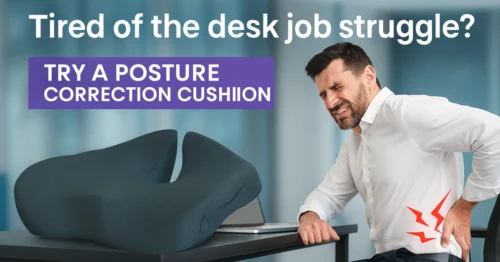
This chronic, uninterrupted stillness triggers a cascade of detrimental health effects, ranging from systemic risks like heart disease, diabetes, and certain cancers to the pervasive daily discomfort known as desk fatigue and Chronic Low Back Pain (LBP). While physical activity outside of the workday is essential, research indicates that even intense exercise cannot fully undo the damage caused by continuous static sitting. The most effective solution must, therefore, reside in frequent, constant micro-interventions: the dynamic, repeating sequence known as the Sit-Stand-Move cycle.
I. The Science of Stillness: How Prolonged Sitting Causes Muscle Atrophy and Spinal Ligament Weakening
To truly understand why the sit stand schedule is so powerful, we must examine the specific physiological damage caused by long periods of seated immobility. The human body interprets extended stillness not as rest, but as mechanical unloading, triggering systemic degeneration and structural failure.
Atrophy from Prolonged Sitting: The Silent Decline of Spinal Support
When the body remains statically seated for hours, it enters a state akin to disuse or immobilization. This is the mechanism underlying atrophy from prolonged sitting. This disuse is sufficient to induce significant decreases in muscle mass and strength, leading to functional weakness. The weight-bearing leg musculature, such as the quadriceps, is highly vulnerable. More critically, the deep stabilizers of the spine suffer as well.
This includes the lumbar multifidus muscle—a small, but vital, deep muscle that plays a critical role in maintaining posture and stabilizing the vertebrae. Atrophy, or weakening and shrinking, of the multifidus can lead directly to spinal instability, poor posture, and chronic lower back pain.
Therefore, the core deconditioning that results from inactivity is a key factor in the long-term loss of muscle strength and mobility. The mechanism of how prolonged sitting causes muscle atrophy and spinal ligament weakening is through a combination of muscle deactivation and sustained mechanical strain on the spine’s passive structures.
Core Muscle Weakness Back Pain: Gluteal Amnesia and Slouching
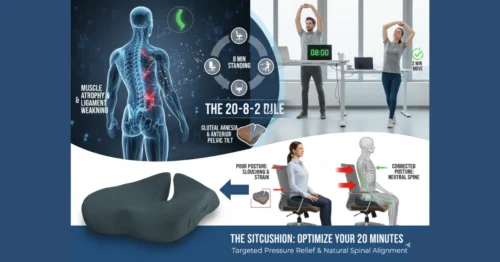
The primary driver of core muscle weakness back pain in desk workers is a fundamental muscular imbalance induced by sedentary behavior. Prolonged sitting tightens the hip flexors while causing the gluteal (buttock) muscles to become deactivated and weakened over time—a condition frequently referred to as “Gluteal Amnesia.”
This combination of inactive glutes and tight hip flexors often leads to Anterior Pelvic Tilt (APT), an unhealthy forward inclination of the pelvis. APT fundamentally alters the natural spinal alignment, perpetually stretching and weakening the abdominal muscles (the core) and forcing the lower back muscles to work harder just to maintain an upright position. This constant, exhaustive work results in chronic muscular tension, stiffness, and pain. Furthermore, static, slumped sitting postures—characterized by a kyphotic curvature of the lumbar spine—rely heavily on the passive spinal ligaments to maintain position, which can overstretch and strain these ligaments, making the spine vulnerable to injury.
Long Hours of Sitting Are Destroying Your Body Faster Than You Think
Why Long-Hour Drivers and Desk Workers Need a Memory Foam Seat Cushion
II. Mastering the Sit-Stand-Move Blueprint: Implementing the 20-Minute Rule for Standing and Walking Breaks to Prevent LBP
To effectively counteract this physiological degradation, a structured and consistent dynamic work pattern is required. The definitive, evidence-based approach is the Sit-Stand-Move cycle, built around the precise frequency of the 20-8-2 Rule.
Defining the Sit-Stand-Move Blueprint (The 20-8-2 Rule)
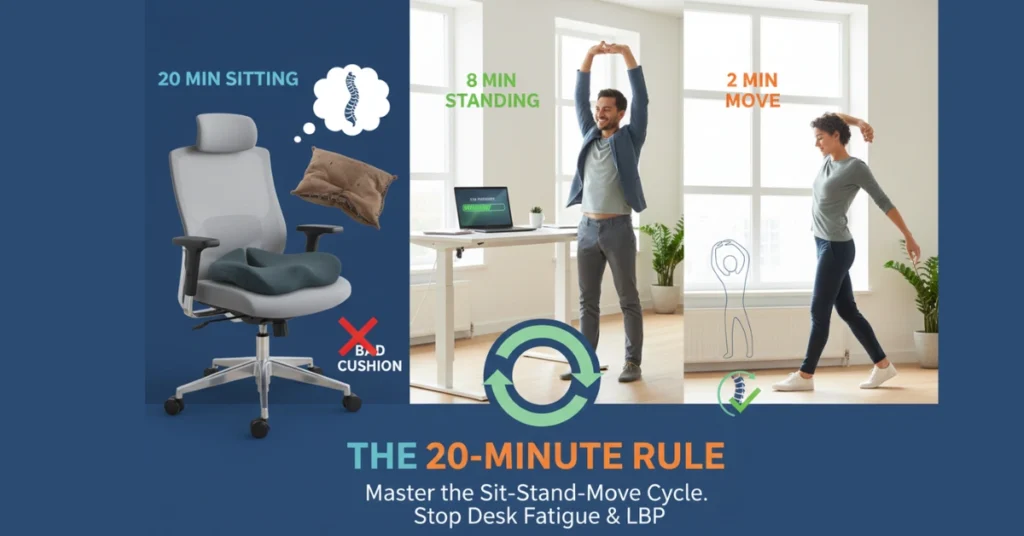
The 20-8-2 Rule, recommended by experts in ergonomics, is the optimal guideline for organizing work, specifically designed to minimize musculoskeletal strain and fatigue by avoiding the risks of both sitting too long and standing too long. This 30-minute cycle should be repeated throughout the workday:
-
20 minutes of sitting: This period is dedicated to focused, deep work while maintaining an optimal posture, known as the 20 minute rule sitting phase.
-
8 minutes of standing: This time is sufficient to promote better posture and increase energy expenditure without inducing standing-related fatigue, as experts caution against standing for more than 10 minutes at a time.
-
2 minutes of movement: This brief interval is crucial for light activity—stretching or walking—to boost circulation, lubricate joints, and re-energize the body.
The successful implementation of implementing the 20-minute rule for standing and walking breaks to prevent LBP lies in its frequency. For a worker operating a standard 7.5-hour shift (excluding a lunch break), this regimen necessitates a total of 16 sit-to-stand changes and 30 minutes of total movement. This consistent, low-impact positional change is far more effective than trying to correct damage after it has occurred.
The Optimal Sit-Stand Ratio to Maximize Productivity and Minimize Back Fatigue
While the 20-8-2 rule provides the best starting benchmark, the ratio can be personalized. The determination of the optimal sit-stand ratio to maximize productivity and minimize back fatigue is adaptive, depending on your fitness level and comfort. The core principle remains that frequency of change is more important than the duration of any single position.
| Target Group | Recommended Ratio | Example Timing | Key Benefit |
| Beginners/Lower Fitness | 3:1 (Sitting:Standing) | 45 minutes sitting, 15 minutes standing per hour | Gentle adaptation, easily achievable |
| Experienced/Active Users | 1:1 Ratio | 30 minutes sitting, 30 minutes standing | Maximum dynamic work, high calorie expenditure |
| Older Workers (40+) | 3:2 Ratio | 36 minutes sitting, 24 minutes standing | Balances movement needs with physiological adaptation |
How Often to Stand Up from Desk: Quantifying Your Breaks
The ideal frequency for positional changes is every 30 to 60 minutes. This provides the consistent alternation necessary to reap the full metabolic and ergonomic benefits.
The clear answer to how often to stand up from desk is every 20-30 minutes, based on the 20-8-2 cycle. This directly addresses the question: How many breaks should I take during an 8-hour workday to prevent pain?—the structured approach guarantees a minimum of 16 sit-to-stand changes and 16 separate 2-minute movement breaks (32 structured micro-breaks total) throughout the day. Using digital timers or physical reminders, such as getting a glass of water, can help maintain this rigorous sit stand schedule.
III. Mastering the “Sit” Phase: The Best Sitting Angle to Prevent Slouching and Muscle Guarding
The success of the entire sit stand schedule relies heavily on the quality of the sitting phase, which accounts for two-thirds of the total cycle time. If the 20 minutes of sitting introduces unnecessary postural stress, the benefits of standing are quickly erased.
Proper Posture Principles for the 20-Minute Interval
The goal of the seated phase is to achieve and maintain a neutral spine position, which has a slight “S” shape, ensuring the hips, shoulders, and ears align vertically.
Key adjustments for maximizing support include:
-
Optimal Angle and Support: A recline of 100 to 110 degrees is often recommended as the best sitting angle to prevent slouching and muscle guarding, as this posture can minimize pressure on the spinal discs more effectively than a rigid 90-degree angle. Furthermore, the chair must provide adequate lumbar support to maintain the spine’s natural inward curve.
-
Lower Body Alignment: Hips and knees should maintain a 90-degree angle or slightly higher, with feet resting flat on the floor or a footrest. This promotes proper weight distribution and reduces strain on the lower back.
If a chair lacks proper support, the user is forced into a slumped posture, which causes muscle guarding—the involuntary tightening of muscles—in an attempt to stabilize the unstable spine, leading to rapid pain and fatigue.
Sitting Shouldn’t Hurt Your Tailbone
Sit-Stand-Move Cycle: Optimizing Your Sitting Phase with an Ergonomic sitcushion
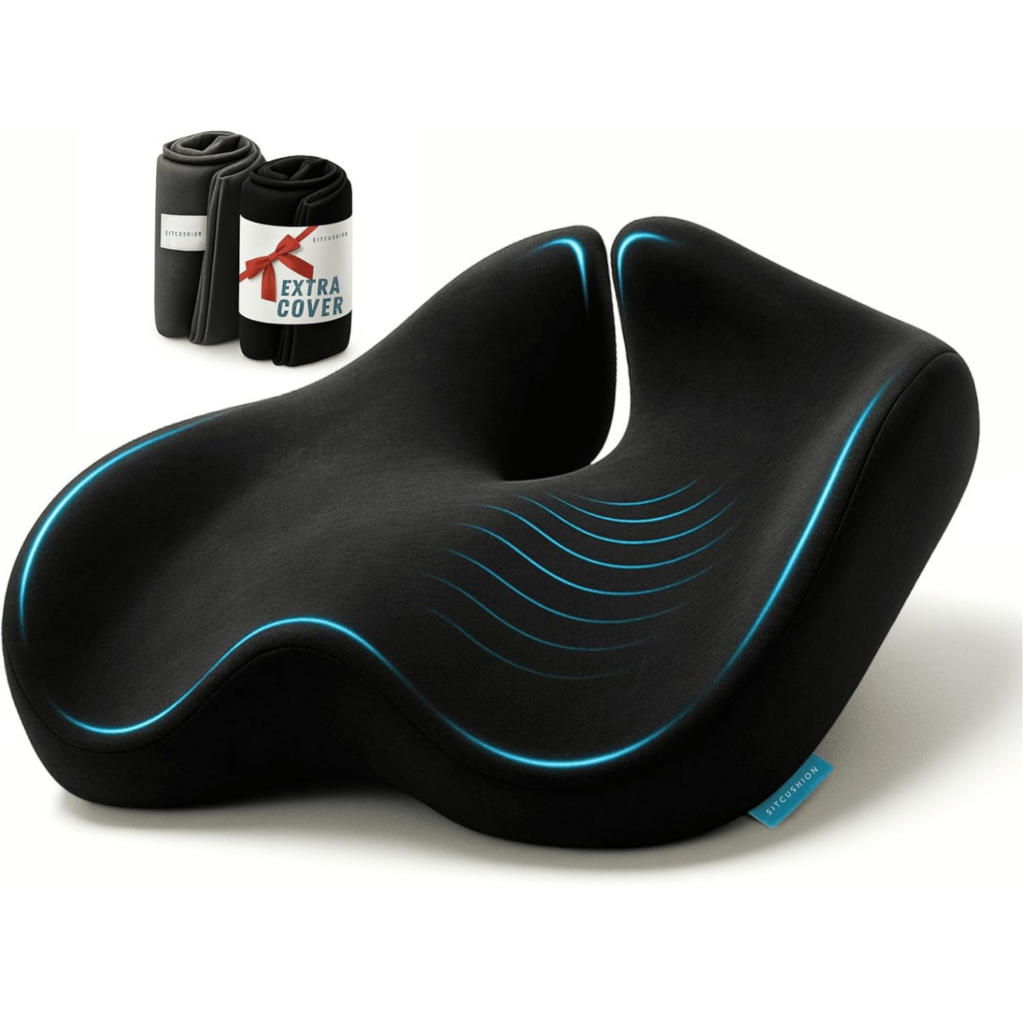
For the 20-minute seated interval to be truly restorative, external support is vital. This is where the specialized solution, the sitcushion ergonomic cushion, becomes an essential tool for the Sit-Stand-Move cycle: optimizing your sitting phase with an ergonomic cushion.
The sitcushion memory foam cushion is designed to transform any chair into a posture-correcting environment, making it easy to remain comfortably supported in a neutral, strain-free posture for the entire 20 minutes:
-
Re-establishing the Natural S-Curve: The uniquely contoured design of the sitcushion works by gently tilting the pelvis forward. This natural pelvic realignment encourages the lumbar spine (lower back) to return to its healthy inward curve, correcting posture from the base up.
-
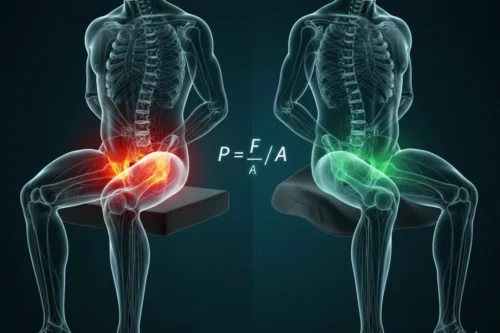
Targeted Pressure Distribution: The premium, high-density memory foam in the sitcushion distributes your body weight evenly across the sitting bones (ischial tuberosities) and thighs. This action drastically reduces the localized stress placed on the sensitive coccyx (tailbone), hips, and lower spine, providing immediate relief from pressure points.
-
Circulation Improvement and Comfort: Sitting slows blood flow, leading to fatigue and stiffness. By minimizing pressure on the lower body, the sitcushion helps improve blood circulation to the pelvis and legs, countering the fatigue associated with reduced oxygen delivery and increasing your overall comfort threshold.
-
Passive Core Engagement: When the spine is properly aligned by the cushion, the core muscles are naturally more engaged without straining. This provides a constant, low-level strengthening effect, helping to maintain good posture even when you stand up.
The quality of the sitting phase directly dictates the success of your entire sit stand schedule. The sitcushion ensures that the most time-intensive phase (66% of the cycle) is utilized to reinforce, rather than erode, your musculoskeletal health.
IV. Mastering the “Move” Phase: Active Recovery and Core Health
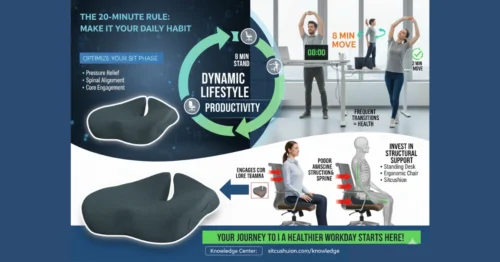
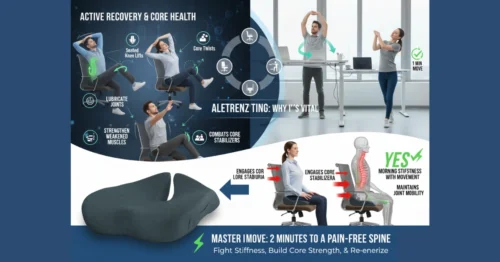
The 2-minute movement break is functionally the most critical component of the 20-8-2 cycle. It is dedicated to active recovery, joint lubrication, and conscious strengthening of the muscles weakened by sitting.
Simple 3-Minute Stretches You Can Do at Your Desk to Combat Stiffness
Movement is vital for joint health because it stimulates the production and circulation of synovial fluid, the natural lubricant that cushions cartilage and prevents premature joint wear. The brief interval should be utilized for dynamic stretching, often expanding into simple 3-minute stretches you can do at your desk to combat stiffness.
Targeted stretches for desk workers must focus on the areas most susceptible to strain:
-
Torso Rotation (Spine Twist): This exercise relieves stiffness in the lower back. Sit tall, keep your hips facing forward, and slowly twist your upper body to one side, holding the stretch for 10–30 seconds per side.
-
Neck and Shoulder Relaxation: Desk work often leads to a forward head posture. Exercises like the Head Glide (gently pushing the head back) or Neck Relaxer (dropping the head slowly toward the shoulder) help counter this stress and stretch tense muscles.
-
Wrist Flexion/Extension: Essential for preventing stiffness and injury in the hands and wrists from prolonged keyboard use.
Why Alternating Between Sitting and Standing is Vital for Core Muscle Health
Frequent positional change is the most effective way to combat the core weakness and muscle deactivation caused by sedentary behavior. This is precisely why alternating between sitting and standing is vital for core muscle health.
Each transition from sitting to standing forces the user to momentarily engage their core stabilizers and glutes against gravity, providing a low-impact strength exercise repeated multiple times a day. This frequent activation combats muscle weakness and Gluteal Amnesia far more effectively than trying to hold a rigid posture all day. Furthermore, brief, seated core exercises are highly effective in alleviating the muscular fatigue induced by prolonged sitting.
Exercises to Strengthen Abdominal Muscles and Support the Spine While Sitting
The 2-minute movement break also provides a structured opportunity for low-impact exercises to rehabilitate the core. These are effective exercises to strengthen abdominal muscles and support the spine while sitting:
-
Seated Knee Lifts: While holding the sides of the chair, tighten your abdominal muscles (pulling the belly button toward the spine) and lift one knee at a time. This tones the abs and works the quadriceps.
-
Abdominal Strengthener (Seated Lean Back): Sit near the front of the chair. Tighten your core and slowly lean back until your back grazes the chair, then return upright. This simulates a controlled sit-up without the stress of lying on the floor.
-
Core Twists: Sit tall and twist slowly from the waist, engaging the oblique muscles, which are crucial side stabilizers for the spine.
Strengthen Your Core Without Leaving Your Chair
Can Regular Movement Prevent the Stiffness Associated with Inflammatory Back Conditions?
The proactive movement inherent in a dynamic sit stand schedule extends its benefits beyond mechanical pain prevention and into the clinical management of inflammatory conditions. For patients experiencing Inflammatory Back Pain (IBP)—often associated with conditions like ankylosing spondylitis—morning stiffness is a classic distinguishing feature that characteristically improves with movement or exercise.
Physical therapy and movement-based therapies are primary treatment approaches for IBP. Regular, moderate exercise reduces joint pain and stiffness, maintains good posture and mobility of the spine, and strengthens the postural muscles. Therefore, the structured, frequent movement breaks inherent in the 20-8-2 cycle act as necessary therapeutic micro-sessions.
The answer to Can regular movement prevent the stiffness associated with inflammatory back conditions? is a resounding yes; movement is a fundamental component of managing symptoms, maintaining joint range of motion, and preventing spinal stiffness.
V. Frequently Asked Questions (FAQ)
This section addresses common questions about the Sit-Stand-Move cycle and maximizing comfort during the seated phase.
Q: What is the primary benefit of the sitcushion ergonomic cushion?
The primary benefit of the sitcushion is multi-region pressure relief and posture correction. It ensures even body weight distribution, which significantly reduces localized stress on sensitive areas like the coccyx (tailbone), hips, and lower back. By promoting a neutral spinal position, it provides effective support for lower back pain and stiffness.
Q: How does the sitcushion help correct my sitting posture?
The contoured design of the sitcushion works by gently tilting the pelvis. This pelvic tilt encourages your lumbar spine (lower back) to return to its natural inward “S” curve. This realignment ripples up the rest of your spine, making it easier to maintain proper alignment and reducing slouching without conscious effort.
Q: How long is the maximum time I should sit according to the 20-Minute Rule?
The 20-Minute Rule advises sitting for a maximum of 20 minutes at a time. The goal of this formula (20 minutes sitting, 8 minutes standing, 2 minutes moving) is to force frequent position changes every half hour. Sitting for longer than 20 minutes can reduce beneficial bone and muscle activity, leading to stiffness and fatigue.
Q: Does using the cushion weaken my core muscles?
No, the cushion does not weaken your core. Instead, by properly aligning your spine and pelvis, the sitcushion naturally encourages your core muscles to be more engaged. This passive engagement helps strengthen the muscles that are key to maintaining good posture over time, even when you are not using the cushion.
VI. Conclusion: Making the 20-Minute Rule Your Daily Habit
The 20-Minute Rule—the comprehensive sit stand schedule defined by the 20-8-2 formula—is the definitive strategy for combating desk fatigue and chronic LBP. This strategy relies on the scientific necessity of frequent positional change to prevent muscle atrophy, combat core weakness, and relieve chronic postural stress.
Achieving a pain-free, productive workday requires an integrated approach. The success of the cycle is dependent not only on dynamic adherence to the daily transitions and movement breaks but also on the quality of support provided during the static phases. The fundamental principle is that every component of the Sit-Stand-Move cycle must be optimized to prevent the overall process from failing.
While utilizing a standing desk addresses the critical “Stand” and “Move” components, mastering the most time-intensive “Sit” component is where the final, crucial step is taken. By investing in structural support like the sitcushion memory foam cushion, you ensure that the bulk of your workday (the 20-minute seated intervals) is spent constructively. The sitcushion offers superior pressure distribution, improved circulation, and stabilized support for the neutral spine, actively reinforcing the spine and core.
The transition to a dynamic ergonomic life is an essential systemic change. By implementing the scientifically validated 20-Minute Rule and investing in structural support for the crucial seated phase, professionals can guarantee a more comfortable, focused, and healthy work life, transforming a source of chronic pain into a source of sustained productivity.
To continue your journey toward an ergonomic, pain-free workday, we invite you to explore the foundational knowledge and specific tools designed for professionals like you:
-
For deeper understanding of ergonomic health, visit our Knowledge Center.
-
To purchase the ultimate seating solution for the 20-minute phase, visit the Product Page.
📩 Download This Article
The 20-Minute Rule: How to Master the Sit-Stand-Move Cycle to Stop Desk Fatigue and LBP