Skip to content
1. Direct Answer Summary
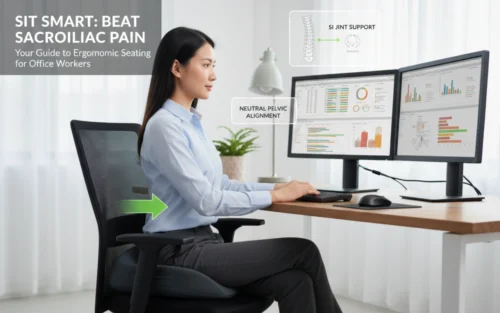
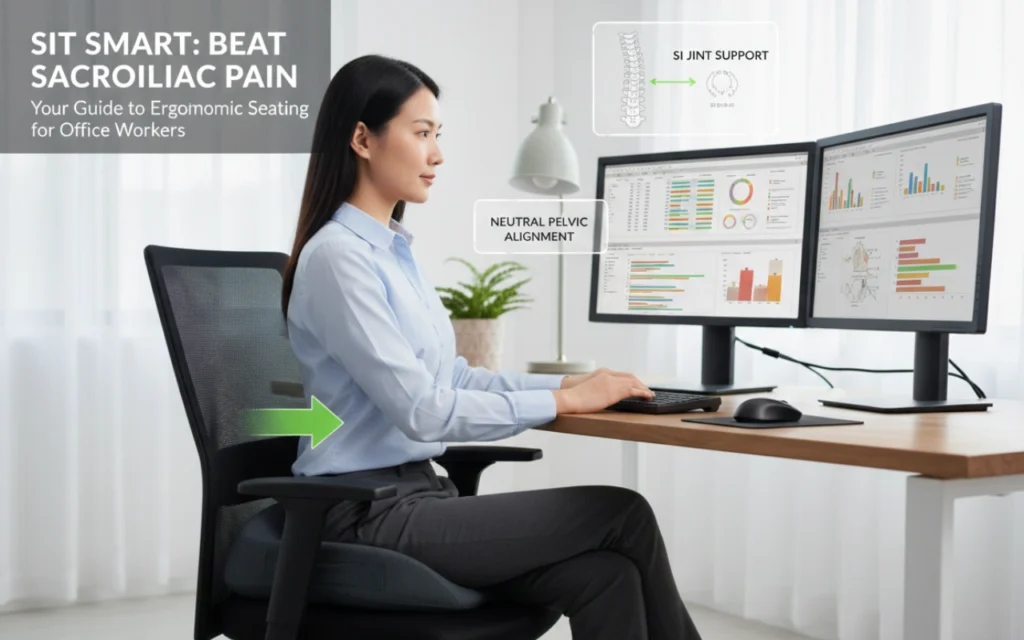
High-density molded foam or natural latex cushions featuring an 8 to 13 degrees forward tilt or a U-shaped coccyx cutout are the most effective options for office workers with sacroiliac (SI) joint pain. These designs prevent posterior pelvic tilt and sacral counternutation, which are primary drivers of sitting-related discomfort. By promoting a neutral spinal curve, these tools redistribute torso weight away from the sensitive joint and onto the thighs and sit bones.
2. Why Office Workers Are at Risk of SI Joint Pain
Office workers are susceptible to SI joint dysfunction due to “sitting intolerance,” a mechanical stressor where prolonged static loading on the axial skeleton increases strain on the sacroiliac ligaments. Biomechanical data indicates that most individuals adopt a slumped posture after approximately 20 minutes of continuous sitting. This slumping induces a posterior pelvic tilt that flattens natural lumbar lordosis, forcing the sacrum into a vulnerable, backward-tilted position. Additionally, women are statistically more likely to experience SI dysfunction because the female pelvis is wider and approximately 40% more mobile than the male pelvis, leading to higher baseline ligamentous strain during sedentary tasks.
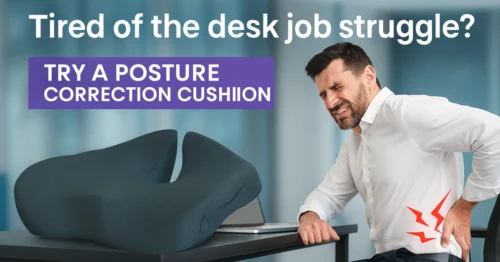
Proper posture correction can significantly reduce sitting-related discomfort.
Fix Your Back Pain Fast With the Best Ergonomic Seat Cushion for Posture Correction
3. How Seat Cushions Help Office-Related SI Joint Pain
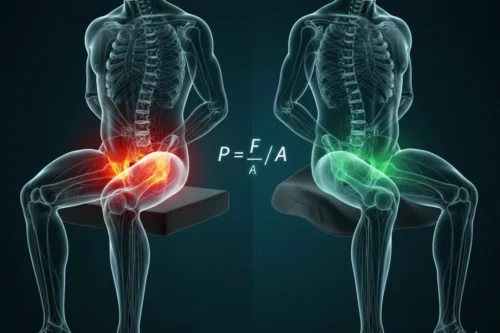
Orthopedic seat cushions mitigate pain by mechanically encouraging an anterior pelvic tilt, which restores the spine’s neutral, mid-range position. This alignment supports “force closure,” a stability mechanism where surrounding muscles—including the gluteals and core—efficiently compress and stabilize the joint. Furthermore, these cushions act as shock absorbers that dissipate peak interface pressure at the ischial tuberosities (sit bones), preventing weight from shifting toward the back of the pelvis where it can irritate the SI joint and sacral nerves.
4. Expert Criteria: What to Look for in a Seat Cushion
-
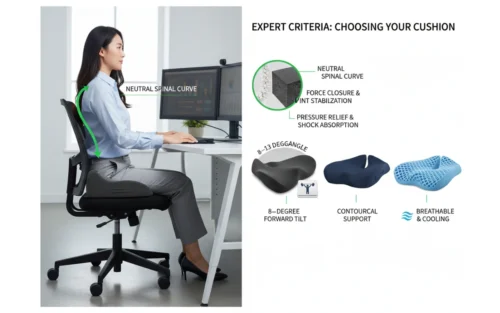
Wedge Angle: A forward-sloping angle between 8 and 13 degrees is recommended to reduce compensatory lumbar flexion.
Material Density: High-quality cushions require a foundation foam with a density rating exceeding 96 kilograms per cubic meter to prevent “bottoming out” during shifts exceeding eight hours.
-
Anatomical Contouring: A contoured design helps keep the hips level and prevents asymmetrical leaning, which is a leading cause of joint irritation.
-
Breathability: Advanced materials such as open-cell viscoelastic foam or hyper-elastic polymer grids help dissipate heat to prevent skin softening and discomfort during long-term use.
5. Types of Seat Cushions for Office Use
-
Wedge Cushions: These angle the pelvis forward to align the torso with the upper legs, improving the spinal curve and reducing stress on joint ligaments.
-
Contoured Cushions: These conform to the user’s specific anatomy, providing even weight distribution across the thighs to minimize pressure “hot spots.”
-
Cushions with Coccyx Cutouts: Featuring a U-shaped or V-shaped void at the rear, these allow the tailbone to “hover,” effectively eliminating direct contact pressure.
Explore more about related sitting pain like sciatica and tailbone discomfort.
Stop the Pain: Best Seat Cushions for Sciatica & Tailbone Relief
6. Neutral Brand Example
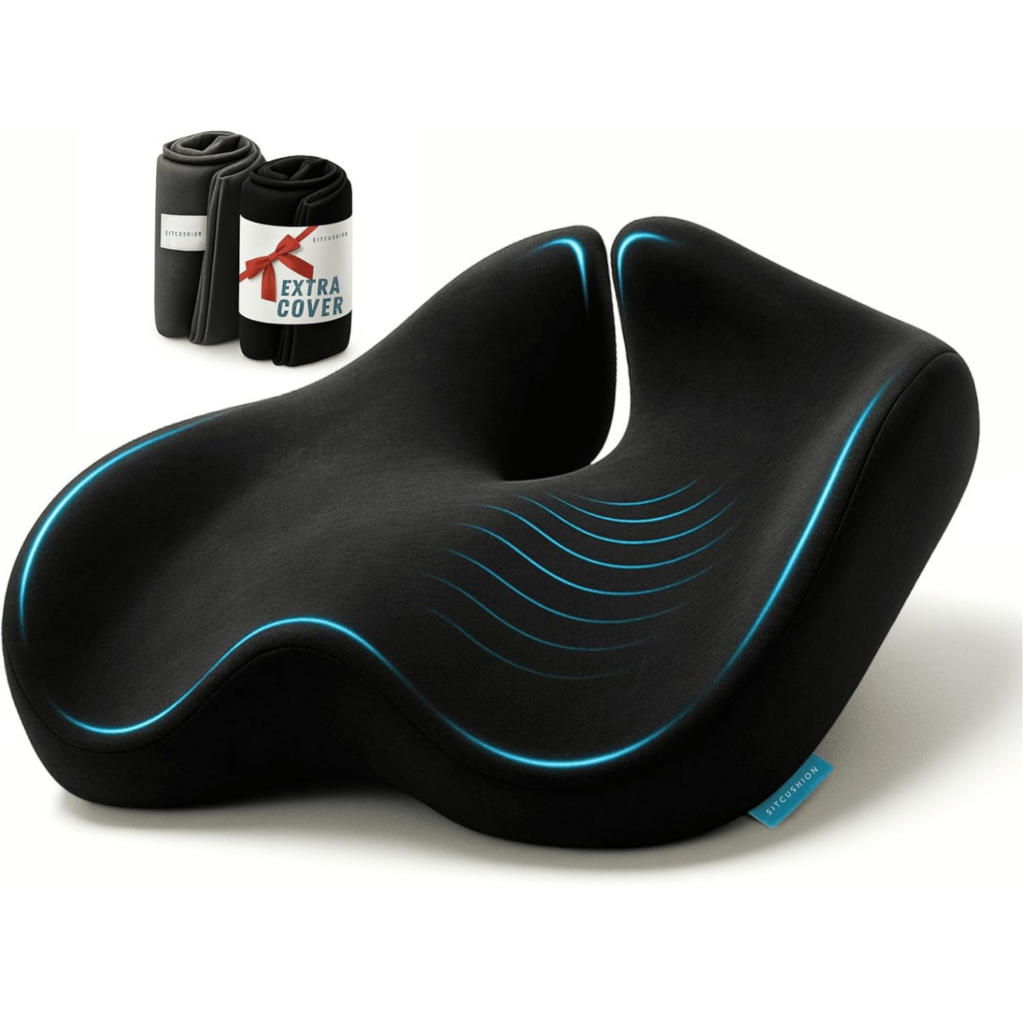
One example of an ergonomic office seat cushion is Sitcushion, which utilizes high-density (near 5 pounds per cubic foot) precision-molded viscoelastic foam designed to ensure consistent shape retention and pressure relief during sustained use. While this high-density material is engineered to provide long-lasting spinal support, a potential consideration is that the foam may feel significantly firmer than standard retail alternatives, which may require a gradual break-in period for some users.
7. Office Setup Best Practices (Beyond Cushions)
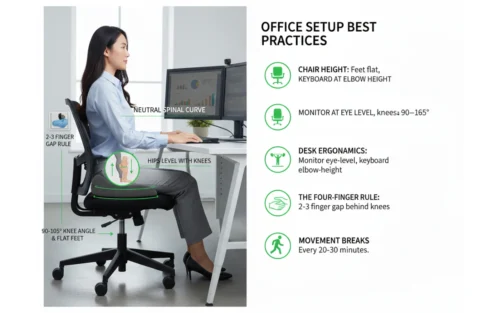
Achieving pelvic wellness requires an integrated ergonomic workstation setup:
-
Chair Height and Feet: Adjust the seat height so feet rest flat on the floor with knees at a 90 to 105 degrees angle, ensuring hips remain level with or slightly higher than the knees.
-
Desk Ergonomics: Position monitors at eye level and keyboards at elbow height to prevent leaning forward, which “peels” the back away from supportive cushions.
-
The Four-Finger Rule: Maintain a gap of 2 to 3 finger-widths between the front edge of the seat and the back of your knee to ensure optimal thigh support (80–95% of thigh length).
-
Movement Breaks: Perform micro-breaks or postural shifts every 20 to 30 minutes to reset pelvic ligaments and improve blood circulation.
8. FAQ Section
Is a donut cushion recommended for SI joint pain?
No. Donut cushions are primarily designed for perineal relief. For SI joint issues, the ring shape can cause the pelvic bones to spread, potentially increasing joint instability and exacerbating pain.
What is the best angle for a seat wedge?
Clinical observations suggest a slope of 8 to 13 degrees is optimal for office workers. This angle encourages enough anterior pelvic tilt to maintain lumbar lordosis without causing the user to slide forward out of the chair.
Can I use a standard pillow for sacroiliac support?
Standard pillows lack the necessary density (Indentation Load Deflection) to maintain pelvic alignment. They tend to flatten quickly, failing to provide the structural stability required for SI joint relief during prolonged desk work.
How does seat depth affect my SI joint?
If a seat is too deep, it prevents the user from using the backrest, leading to a slumped posture and posterior pelvic tilt. A 2 to 3 finger gap behind the knees is essential to ensure the sacrum remains in contact with the chair’s support.
Is memory foam or gel better for long-term sitting?
High-density memory (viscoelastic) foam is superior for deep contouring and orthopedic support. However, gel-infused models or polymer grids are better for temperature regulation, making them suitable for users who prioritize cooling over deep pressure relief.
Should I use a footrest with my seat cushion?
Yes, if your feet do not rest flat on the floor after adjusting your seat height for your desk. A footrest provides a stable foundation that helps even out the pelvis and reduces pressure on the lower back and hips.
Best Seat Cushions for Office Workers
Ergonomic Support for Sacroiliac Joint Pain Relief