Skip to content
🛑 The Donut Deception: Why Doctors Discourage Using a Donut Pillow for Chronic Tailbone Pain
When the agonizing, persistent ache of coccydynia (tailbone pain) strikes, seeking relief becomes the top priority. Many people instinctively search for a cushion with a hole, believing the donut cushion offers the ultimate quick fix. However, a crucial ergonomic and medical distinction must be made in the battle of coccyx cutout cushion vs donut. For chronic pain, extended sitting, and maintaining long-term spinal health, that seemingly helpful hole is often a significant detriment.
The initial, intuitive appeal of the donut cushion is flawed because its design is fundamentally misaligned with the biomechanical needs of the spine. While it offers temporary, localized pressure relief for specific, acute conditions (like hemorrhoids or post-childbirth recovery), it fails catastrophically when used as a long-term orthopedic aid. Physicians and physical therapists are clear: The biggest mistake people make when sitting on a donut pillow is believing it supports healthy sitting. It does not. The issue of coccyx cutout cushion vs donut is one of long-term health versus short-term, misleading relief.
The design of the donut cushion is often cited by medical experts as unsuitable for sustained ergonomic support because it compromises the body’s natural alignment. When patients ask what type of seat cushion is recommended by physical therapists for coccyx pain, the answer rarely points to the donut cushion. We need to look beyond simple pressure removal to the comprehensive support offered by a true ergonomic solution.
⚠️ A Serious Warning About the Donut Cushion’s Impact on Spinal Posture
The core problem with the donut cushion is not what it relieves, but what it forces the rest of your body to do. Its use often introduces several donut cushion disadvantages that counteract any minor relief it might provide.
The Biomechanical Flaw: An Unstable Sitting Surface
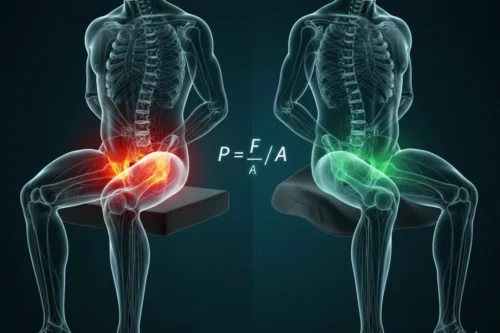
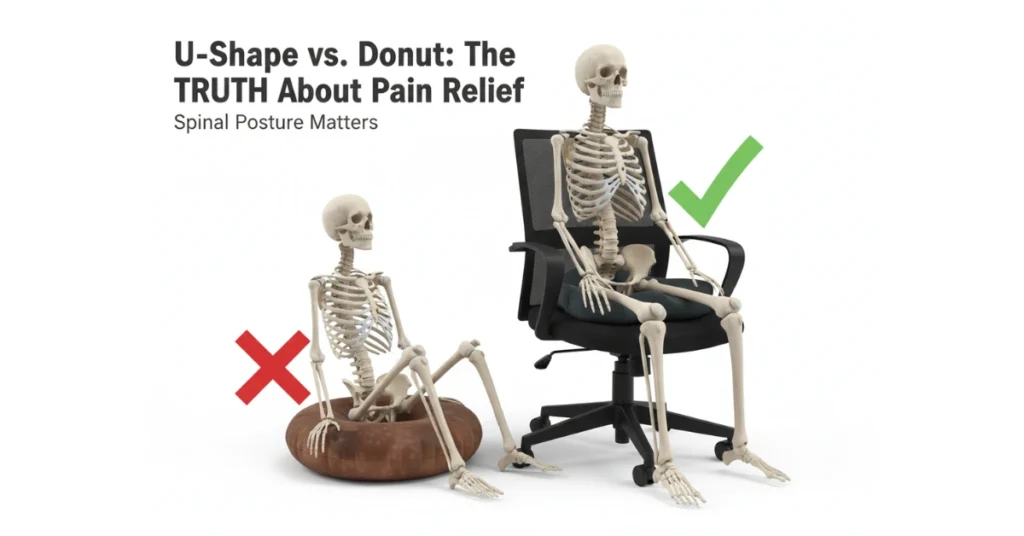
The design of a donut cushion creates an inherently unstable, uneven surface. When you sit on it, the primary support comes only from the inner thighs and the perimeter of the ring. This configuration often causes the hips and pelvis to roll backward, forcing the lower back into a rounded, slumped position—what experts call a posterior pelvic tilt.
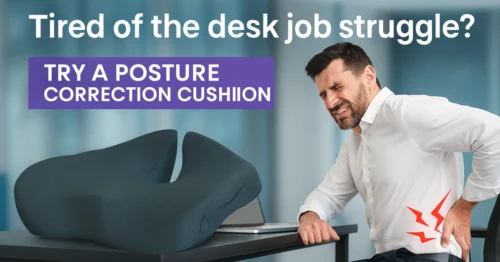
This is the crucial link: A posterior pelvic tilt eliminates the natural lumbar curve (the slight inward curve of your lower back). When this natural curve is lost, the stress on the lower vertebral discs increases exponentially. Long-term sitting in this compromised, slumped posture, driven by the donut cushion, directly contributes to worsening chronic back pain, hip discomfort, and, ironically, increased pressure on the very tailbone it was meant to protect. It violates the core principles of spinal alignment while sitting. The choice of coccyx cutout cushion vs donut is a choice between stability and instability, where the latter leads to widespread musculoskeletal issues.
Why Doctors Discourage Using a Donut Pillow for Chronic Tailbone Pain
Many patients are surprised to learn that the very cushion they bought for coccyx relief is actively harming their spine. Doctors discourage the use of donut pillows because they are historically designed to relieve pressure on the perineal area (often related to hemorrhoids or specific post-surgical healing), not specifically to maintain the healthy curvature of the lumbar spine necessary for extended sitting. The instability inherent in the ring shape makes it difficult to achieve true pressure distribution seat cushion benefits.
🧐 U-Cutout Design vs. Donut: Which Offers Better Spinal Alignment?
The ergonomic superiority of the U-shape design becomes undeniable when focusing on spinal alignment. The goal of a professional seat cushion should not just be pressure removal, but posture correction and pressure redistribution. The comparison of coccyx cutout cushion vs donut highlights this difference in design philosophy.
U-Shape Cushion Benefits: The Posture-Perfecting Wedge
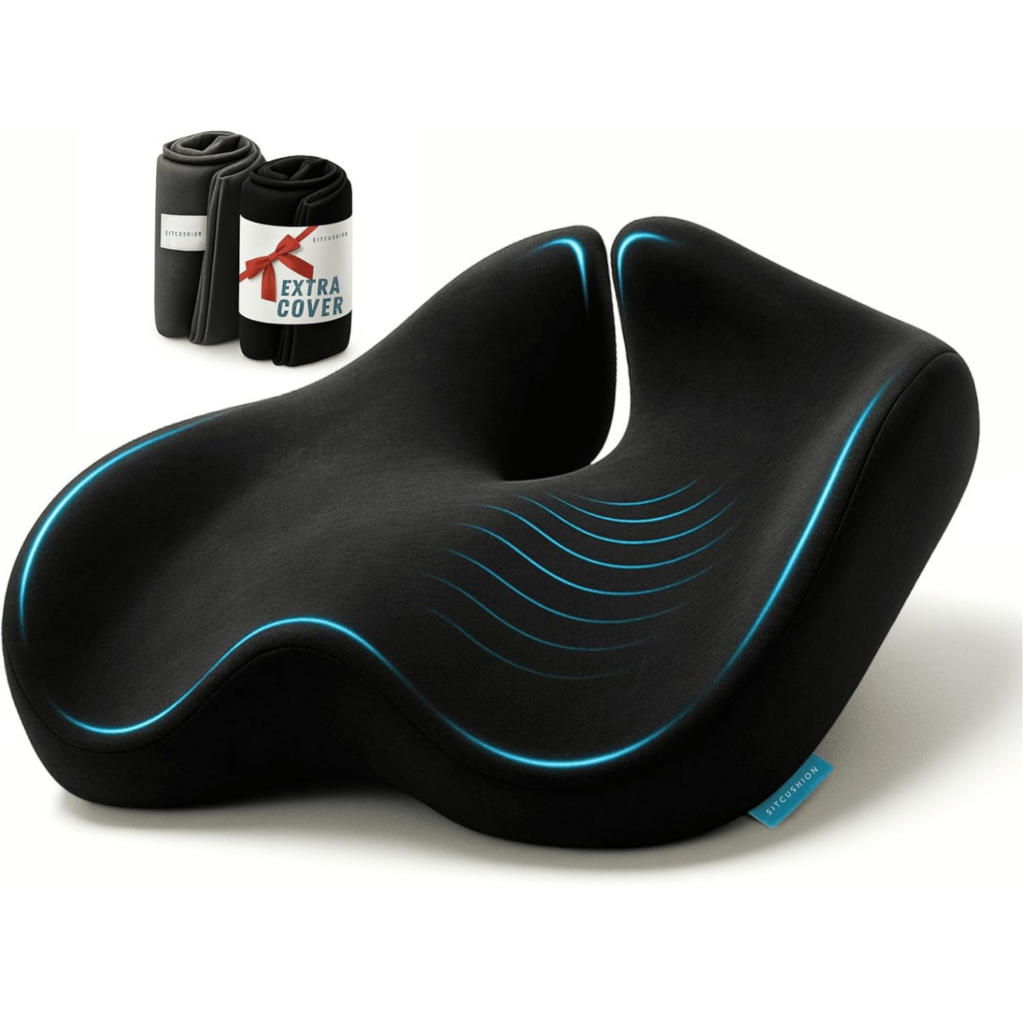
A quality coccyx cutout cushion is almost always shaped like a wedge. This wedge shape is the key to providing U-shape cushion benefits that directly address poor posture. This design is recognized as among the best wedge-shaped cushions with coccyx cutouts for pain relief.
The wedge performs a critical function: it encourages a slight forward tilt of the pelvis (anterior pelvic tilt). This subtle tilt instantly restores the natural lordotic curve of the lumbar spine. When the lumbar curve is maintained, the spine is correctly stacked, and the body weight is distributed efficiently across the Ischial Tuberosities (sitting bones), not concentrated on the delicate coccyx bone or the compromised lower discs. This superior approach is why the coccyx cutout cushion vs donut debate usually ends with the cutout cushion being the recommended solution.
Improve Your Posture Fast With These Chiropractor-Approved Cushions!
How to Ensure Your Coccyx is Suspended in the Cutout to Avoid Contact with the Chair
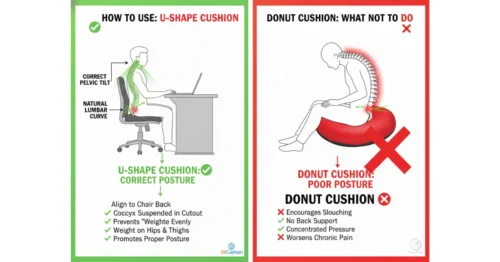
The effectiveness of the U-cutout is entirely dependent on correct usage. To gain true tailbone pain relief cushion design benefits, you must ensure the cushion is placed at the very back of your chair, allowing your coccyx to hang freely over the void. You should feel your weight primarily on your hips and thighs, with absolutely no pressure on the tailbone itself. The precise angle and depth of the U-cutout, combined with the structural integrity of the foam, guarantee this suspension, which is impossible to consistently achieve with the donut’s unstable ring design.
Struggling With Tailbone or Sciatica Pain? Start With the Right Cushion!
⚖️ Ergonomic Showdown: Coccyx Cutout Cushion vs Donut

| Feature | U-Shape/Coccyx Cutout Cushion (SitCushion – The Solution) | Donut Cushion (The Short-Term Fix) |
|---|---|---|
| Primary Goal | Spinal Alignment & Pressure Relief. Promotes an anterior pelvic tilt to maintain the natural lumbar curve. | Local Pressure Relief for a small, sensitive, often perineal area. |
| Coccyx Interaction | The U-cutout ensures the coccyx is suspended in the cutout to avoid contact with the chair, offering true tailbone pain relief. | Often fails to suspend the coccyx effectively, especially in larger individuals, potentially making contact or causing the user to slouch. |
| Posture Impact | Actively supports and maintains proper, upright spinal posture. (Key U-shape cushion benefits) | Can encourage slouching and poor posture, potentially exacerbating chronic back and tailbone pain (donut cushion disadvantages). |
| Ideal Use | Chronic tailbone pain, long-term sitting (office, driving), sciatica, and general ergonomic support. | Acute, temporary conditions like hemorrhoids, post-surgery healing (perineal area), or childbirth recovery. |
| Pressure Distribution | Engineered for pressure distribution seat cushion benefits across the sitting bones and thighs. | Weight-bearing restricted to the outer ring, creating concentrated pressure points that can restrict circulation. |
💡 The Science of Support: Coccyx Cushions and Proper Posture
The U-shape cushion is designed based on known orthopaedic principles. It understands that coccyx cushions and proper posture: how the U-shape supports the spine naturally are intrinsically linked.
Correcting Pelvic Tilt
The most beneficial cushions, like the ergonomic offerings from SitCushion, feature a slight incline—a wedge. This incline gently rotates the pelvis forward, a movement called anterior pelvic tilt. This single action is vital: it naturally pulls the spine into its optimal ‘S’ curve, relieving disc compression and taking direct load off the sacrococcygeal joint. The donut cushion, having no wedge or structural support at the back, simply cannot achieve this critical posture correction.
Does a Coccyx Cutout Cushion Reduce Pressure on the Pelvic Floor?
Absolutely. While the primary function is coccyx relief, the secondary benefit of the U-cutout cushion is its holistic effect on the lower body. By ensuring the body’s weight is properly channeled to the ischial tuberosities (sitting bones) and not allowed to compress the perineal or coccygeal area through slouching, the overall pressure on the pelvic floor is managed and minimized more effectively than the standard donut cushion design.
🛠️ Comparing Memory Foam and Gel Coccyx Cushions for Chronic Pain
The structural integrity of the cushion material is just as important as the cutout design. This is particularly true for long-term solutions addressing chronic pain. When comparing memory foam and gel coccyx cushions for chronic pain, the density and performance under prolonged compression must be evaluated.
High-density, therapeutic-grade ergonomic memory foam seat cushion material, like the foam used in our SitCushion products, is widely preferred. It offers superior conformance to the individual’s unique contours while maintaining its supportive wedge structure, ensuring the spine stays aligned and the coccyx stays suspended, hour after hour. Unlike lower-quality foams or thinner gel products, premium memory foam resists “bottoming out,” meaning your tailbone will not gradually sink until it touches the hard surface beneath. This is critical for sustained tailbone pain relief.
❓ Frequently Asked Questions (FAQ)
1. The U-cutout design vs. Donut: What’s the biggest difference in function?
The donut cushion is designed to relieve pressure on the soft tissue of the perineum. The U-cutout design, conversely, is designed to suspend the coccyx bone while simultaneously utilizing a wedge shape to correct the pelvic tilt and promote proper spinal alignment. The donut fails at this secondary, but crucial, ergonomic function.
2. Why is memory foam better than standard foam for coccyx pain?
Memory foam is viscoelastic, meaning it conforms to your shape under heat and pressure. This provides uniform pressure distribution seat cushion benefits across the hips and sitting bones. Standard foam tends to compress fully (“bottom out”) or maintain pressure points, which can lead to localized pain and inconsistent support for the spine.
3. Will using a U-shape cushion fix my posture immediately?
A U-shape cushion with a wedge design is an essential tool for maintaining good posture, but it does not “fix” your posture immediately. It creates the correct foundation (spinal alignment while sitting) for you to sit properly. Consistent use, combined with active awareness and occasional stretching, is required to see long-term improvements in chronic pain and posture.
4. Is the U-shape design suitable for use in a car?
Yes, the U-shape design is highly suitable for cars. Its compact, wedge shape helps maintain the slight forward pelvic tilt, which is crucial for reducing strain during long drives. When choosing for a car, ensure the cushion is thin enough not to push your head too high against the roof or too far forward from the headrest.
5. What if I have both hemorrhoids and chronic coccyx pain?
While a donut cushion offers acute relief for hemorrhoids, its long-term impact on your spinal health is a major concern. For simultaneous, chronic issues, many specialists recommend starting with a high-quality U-cutout cushion, like the SitCushion ergonomic memory foam seat cushion, because correcting spinal posture often alleviates secondary pressure issues, offering a superior long-term solution.
🔑 Conclusion: Ending the Coccyx Cutout Cushion vs Donut Debate
If you are dealing with chronic pain from long hours of sitting, or if your pain is related to improper posture and spinal alignment, you must move beyond the flawed logic of the donut cushion. The ergonomic solution is a structurally sound, posture-correcting cushion that addresses both pressure relief and spinal health simultaneously. The U-shape cushion does this by: suspending the coccyx, correcting posture, and distributing pressure evenly.
The coccyx cutout cushion vs donut question is not about preference; it’s about proven biomechanics. Choose the design endorsed by physical therapists for long-term spinal support and genuine relief. The donut cushion is a mistake you can afford to correct today.
To learn more about the science of ergonomic sitting and maintaining spinal health, visit our educational resources.
Ready to find sustainable relief?
The SitCushion Ergonomic Memory Foam Seat Cushion is the definitive answer in the coccyx cutout cushion vs donut competition. Stop wasting time on cushions that sabotage your back.
Explore our best-selling Seat Cushions now and Dive deeper into our ergonomic guides in the Knowledge Center.
📩 Download This Article