Skip to content
I. Strategic Overview: The Golden Framework for Seated Relief
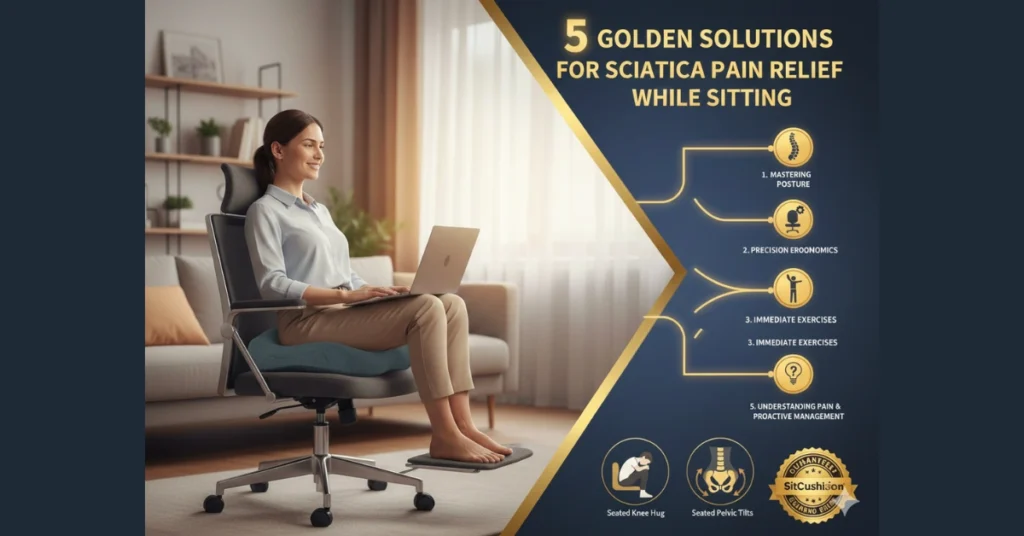
Sciatica pain relief while sitting is perhaps the single greatest challenge for individuals living with this radiating nerve discomfort. The simple, daily necessity of remaining seated—whether navigating a long commute or working an 8-hour shift—can become a source of intense, debilitating pain that runs from the lower back through the hips and down one leg. This discomfort doesn’t just reduce productivity; it fundamentally compromises quality of life. This report presents a comprehensive, five-part framework—our “Golden Solutions”—designed not only to reduce seated pain but to transform your environment from a trigger of nerve irritation into a pathway toward genuine, lasting sciatica pain relief while sitting.
The Core Biomechanics: What Happens When You Sit?
To effectively manage seated sciatica, one must first understand the primary mechanical failures that occur when sitting incorrectly or for too long.
-
The Posterior Pelvic Tilt: The healthy lower back (lumbar spine) possesses a natural inward curve. When you slouch, the pelvis rolls backward, creating a posterior pelvic tilt. This action flattens or even reverses the natural lumbar curve, which directly stretches or compresses the nerve roots in the lower spine, leading to the irritation of the sciatic nerve.
-
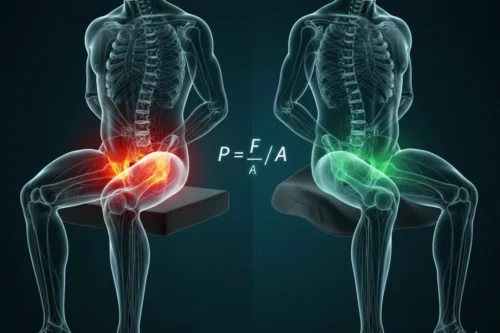
Concentrated Pressure: Sitting on hard or flat surfaces concentrates the body’s weight onto the ischial tuberosities (sit bones) and the coccyx (tailbone). This excessive localized pressure can cause inflammation (a pressure contusion) and directly irritate the sciatic nerve as it travels beneath the gluteal muscles.
These five golden solutions address both spinal alignment and pressure distribution, offering a holistic strategy for achieving consistent sciatica pain relief while sitting.
II. Golden Solution 1: Mastering Posture and Positioning
The foundation of pain management while seated is establishing and maintaining a posture that actively reduces mechanical pressure on the sciatic nerve. This requires conscious alignment and strategic positioning of the legs and hips.
The Best Sitting Position to Minimize Pressure on the Sciatic Nerve
Optimal seated posture is not just about “sitting straight”; it is about achieving a specific, low-strain alignment that supports the spine’s natural curve and minimizes tension on the affected nerve.
-
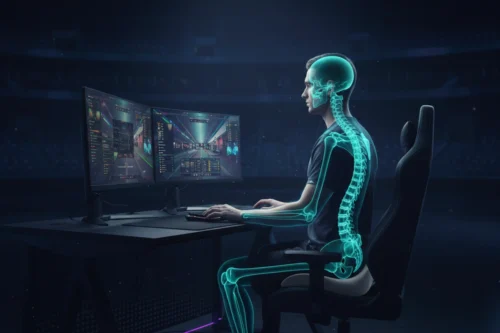
Sit Deep and Upright: Ensure your back rests completely against the chair’s backrest. Keep your shoulders relaxed and maintain a straight-up position. This prevents the tendency to slouch or lean forward, which overexerts the lumbar spine.
-
Feet Firmly Grounded: Both feet must remain flat on the floor or a stable footrest. Allowing the feet to dangle compromises your overall balance and places undesirable tension on the core muscles and, by extension, the sciatic nerve.
Why Raising Your Knees Higher Than Your Hips Can Help Relieve Sciatica Pain (The Open Angle Rule)
Perhaps the most impactful postural adjustment for the sciatica pain relief while sitting is the Open Hip Angle. Instead of maintaining the standard 90-degree angle where your knees and hips are perpendicular, you should position your hips at more than 90 degrees.
-
When the knees and hips are perfectly perpendicular (90 degrees), tightness increases in the hip flexors and pelvis, which can aggravate sciatic pain.
-
By positioning the hips wider than 90 degrees (an open angle), you relax these muscles and reduce compression or irritation on the sciatic nerve. This position can often be achieved by slightly increasing the height of the seat or by consciously pushing your knees slightly lower than your hips. This simple change is a powerful technique for immediate relief.
Can Sitting Cross-Legged Worsen Sciatica Pain? (Navigating Postural Pitfalls)
Medical professionals strongly advise against sustained sitting in a cross-legged position for anyone managing sciatica. This common habit is problematic because it:
-
Induces Unnecessary Pressure: Crossing one leg over the other places disproportionate pressure on one side of the body, potentially worsening sciatica on the affected side.
-
Causes Muscle Imbalances: Chronic crossing of the same leg can lead to muscle imbalances and restrict blood flow.
-
Irritates Nerves: Holding the position for prolonged periods can put pressure on nerves, such as the sciatic nerve or femoral nerve, especially if the position is held for a long time.
For sustained sciatica pain relief while sitting, remain flat-footed with a neutral spine.
III. Golden Solution 2: Precision Ergonomics at Your Desk
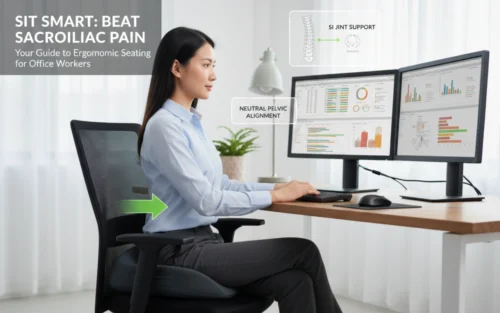
Optimal posture is only sustainable if the sitting environment supports it. Ergonomics is the practice of modifying your chair and workstation to passively maintain correct spinal alignment, thus minimizing the conscious effort required to keep the best sitting position for sciatica.
How to Adjust Your Chair Height and Angle to Relieve Sciatic Pain
A systematic chair setup is crucial for preventing the posterior pelvic tilt that strains the lower spine.
-
Set Your Seat Height: Stand in front of your chair and adjust its height so the highest point of the seat is just below your kneecap. Once seated, your feet should be flat, and your hips should be slightly higher than your knees, ensuring the open hip angle (Solution 1).
-
Adjust the Seat Depth: Slide the seat forward or backward to ensure there is a comfortable gap between the front edge of the seat and the back of your knees (calves). This gap should accommodate a clenched fist or roughly 2 to 4 fingers. This prevents contact stress behind the knees.
-
Position the Lumbar Support: The adjustable lumbar support should fit perfectly into the natural inward curve of your lower back, typically near your beltline. The support must gently hold the lower back in its natural curve without forcing your chest forward, thus preventing the nerve-compressing posterior pelvic tilt.
Aligning Your Spine: The Role of Lumbar Support and the Rolled Towel
Effective chair setup ensures you maintain a neutral spine, where the ears, shoulders, and hips align in a straight line. Lumbar support, whether built into the chair or added externally, is critical here.
While an ergonomic chair provides the foundational structure for sciatica pain relief while sitting, chronic sufferers often require personalized refinement. An external support, such as a cushion or even a DIY option, is needed to achieve the precise alignment and pressure relief that standard chairs often lack.
IV. Golden Solution 3: Immediate Movement and Seated Stretches
Even with the best sitting position for sciatica, prolonged static posture leads to muscle stiffness and tension. Integrating movement breaks and targeted stretches helps to encourage nerve gliding, preventing the sciatic nerve from becoming irritated or stuck to surrounding tissues.
Don’t Let Back Pain Ruin Your Long Drive: See Which Cushion Truckers Swear By!
Best Car Seat Cushions for Lower Back Pain on Long Drives (Truckers Love #3)
Sciatica Stretching Exercises While Sitting: Why Movement is Crucial
Many cases of seated discomfort are linked to Piriformis Syndrome, where the piriformis muscle in the buttock becomes tight, compressing the sciatic nerve that runs nearby. Seated stretches are highly effective because they lengthen this muscle, potentially relieving this specific compression. These exercises provide immediate relief and are essential for long-term sciatica pain relief while sitting.
Three Easy Exercises to Reduce Sciatica Pain While Sitting at Your Desk
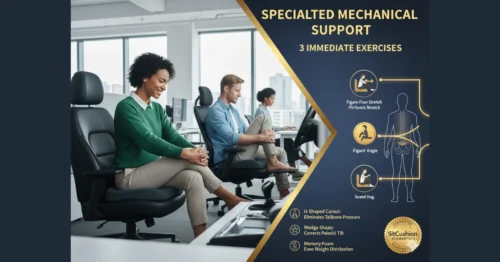
These three exercises can be performed quickly at your desk, offering targeted intervention for immediate relief:
The Essential Piriformis Syndrome Stretch in Chair (Figure-Four)
This is the definitive stretch for piriformis-related sciatica:
-
Technique: Sit on the edge of the chair, ensuring your back is straight. Place the ankle of the affected leg on the opposite knee, creating a figure-four shape. Maintain a straight back (tuck the tailbone slightly) and lean forward gently from the hips.
-
Instruction: The goal is to feel a deep, moderate stretch in the hip and gluteal region. Hold the stretch for up to 30 seconds. Return to the starting position and repeat up to five times on each side.
Simple Seated Stretches for Immediate Piriformis Muscle Relief (Seated Knee Hug)
This stretch offers a gentle way to relieve tension in the hip and gluteal region:
-
Technique: While sitting upright, cross the affected leg over the straightened opposite leg. Use the opposite arm to gently hug the affected knee toward the chest, making sure your back remains straight to isolate the stretch to the hip.
-
Instruction: Hold this stretch for 30 seconds to 1 minute, repeating several times, and then switch sides.
Gentle Seated Pelvic Tilts (Micro-Movements)
This exercise focuses on controlled mobility in the lower spine, which is crucial for reducing localized tension and promoting disc health.
-
Technique: Focus the movement entirely within the pelvis. Gently arch your lower back (anterior tilt) by pushing your belly slightly forward. Then, slowly flatten your lower back (posterior tilt) by drawing your abdominal muscles down, as if you are flattening your back against the chair.
-
Instruction: This is a small, controlled rocking motion. Perform 5 to 10 slow repetitions, focusing on muscle control, to relieve stiffness and promote movement without placing significant strain on the lumbar region.
V. Golden Solution 4 (The SitCushion Advantage): Specialized Mechanical Support
While conscious posture and regular stretching (Solutions 1 and 3) are vital, maintaining perfect alignment over hours of work or driving is impractical. This is where specialized support technology provides the necessary mechanical fail-safe. An ergonomic cushion corrects the pelvis passively and provides guaranteed pressure relief, which is the cornerstone for managing chronic sciatica pain relief while sitting.
Restore Comfort & End Sciatica Pain: Discover the Best Cushions for Nerve Relief
Best Seat Cushions for Sciatica & Tailbone Relief (2025 Guide)
What Kind of Orthopedic Seat Cushion is Best for Managing Chronic Sciatica?
Flat or hard chair surfaces concentrate pressure on the sit bones and coccyx, leading to pain and, critically, direct nerve compression. The correct cushion must offer both personalized support and superior pressure distribution.
-
The Material Advantage: High-quality memory foam is the preferred material. It adapts to the body’s shape, offering personalized support that is designed not to flatten over time, ensuring durable relief. High-density memory foam (around 4–5 lbs) offers superior support and durability compared to softer options.
-
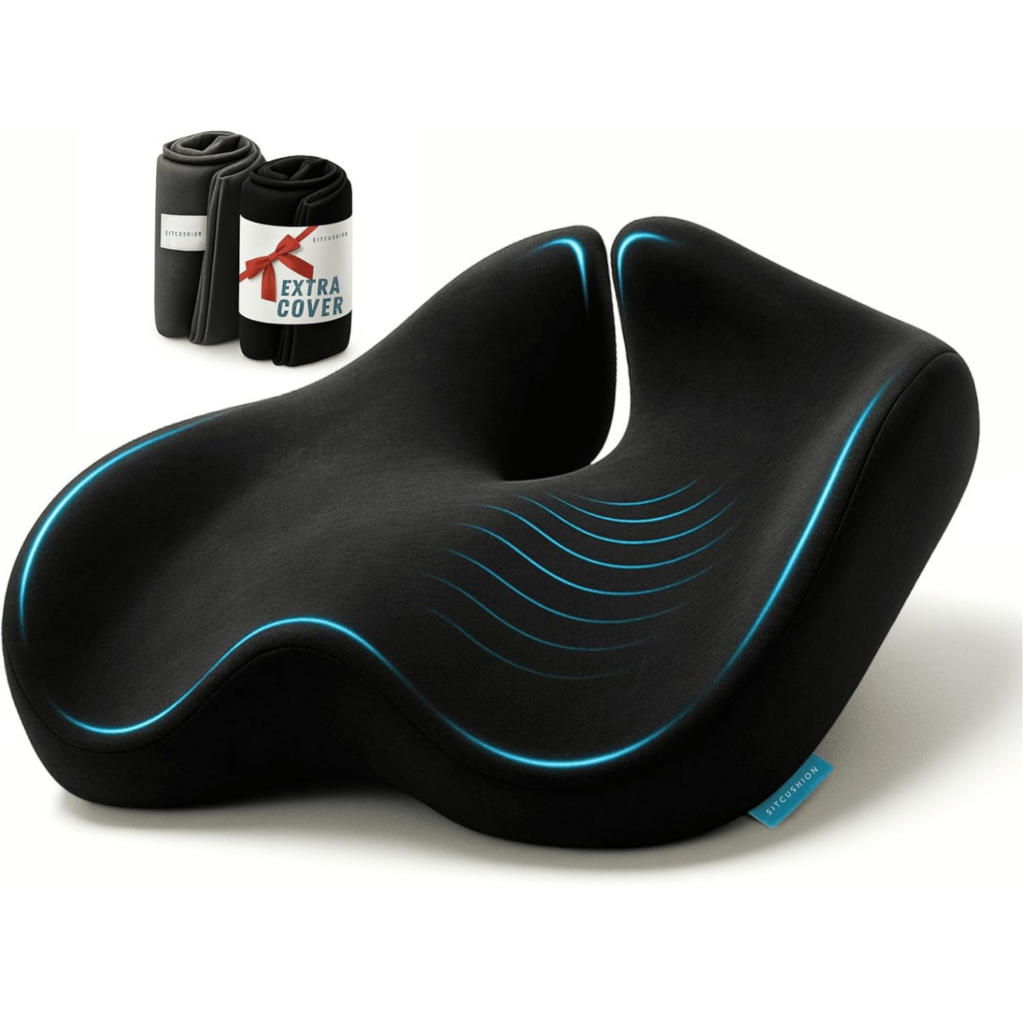
The Design Advantage: For definitive sciatica pain relief while sitting and coccyx pain, the coccyx cushion design is generally preferred. These cushions utilize a wedge shape combined with a crucial U-shaped cutout at the rear. This cutout eliminates direct contact pressure on the sensitive tailbone and sit bones. This design distributes pressure evenly across the hips while simultaneously maintaining a healthy, straight spinal alignment, critical for easing muscle strain and relieving pressure around the sciatic nerve.
Why Memory Foam is the Key to Seat Cushion for Nerve Compression
Our SitCushion orthopedic cushions are specifically engineered to minimize the mechanical pressure and stretching of the sciatic nerve. When coupled with proper posture, high-density memory foam provides the dual benefits required for long-term sciatica pain relief while sitting:
-
Conforming Support: The memory foam adapts perfectly to your unique contours, preventing pressure hot spots that trigger nerve irritation.
-
Structural Correction: The wedge shape encourages a neutral or anterior pelvic tilt, actively maintaining the Open Hip Angle (Solution 1) and supporting the lumbar curve.
The result is a reliable, continuous layer of support that passively ensures the biomechanical needs for nerve decompression are met, delivering tangible seat cushion for nerve compression.
How to Properly Align Your Spine with a Cushion to Ease Nerve Compression (The SitCushion Design)
The design of a specialized cushion, such as the SitCushion coccyx cushion, is engineered to address the root causes of nerve compression:
This design guarantees that you maintain the best sitting position for sciatica passively, without constant mental effort.
Still Unsure Which Cushion is Best for Your Sciatica and Tailbone Pain?
Stop the Pain: Best Seat Cushions for Sciatica & Tailbone Relief (2025 Guide)
Cushion vs. Rolled Towel: Should I Use a Cushion or a Rolled Towel for Sciatica Relief While Driving?
This long-tail question highlights the critical difference between generic lumbar support and targeted pressure relief.
-
The Rolled Towel Limitation: A rolled towel placed at the crack of the car seat is a common, inexpensive technique used for general lumbar support, helping to maintain the inward curve of the lower back. While it may help with generalized back pain, it is inconsistent, flattens quickly, and most critically, provides no specialized pressure relief under the buttocks where the sciatic nerve runs. The towel supports the spine but does not stabilize or correct the pelvis, nor does it cushion the sit bones.
-
The Cushion’s Superiority: A specialized ergonomic memory foam coccyx cushion (like the SitCushion) provides a dual action that the towel cannot match. It offers both targeted pressure elimination (via the U-cutout) and gentle pelvic correction (via the wedge shape). For long drives, which notoriously aggravate the sciatic nerve, the cushion is a dedicated mechanical intervention for reliable sciatica pain relief while sitting.
VI. Golden Solution 5: Understanding Your Pain Source and Proactive Management
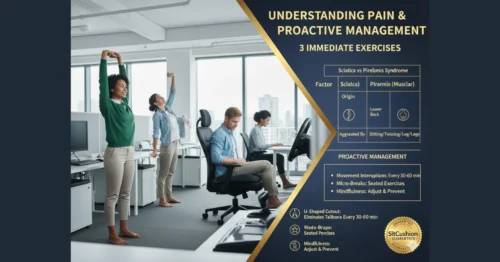
Effective management of seated pain demands not just physical adjustments, but also a precise understanding of the pain source. Distinguishing the origin of nerve irritation dictates the most effective strategy for achieving sciatica pain relief while sitting.
Understanding the Difference Between Sciatica and Piriformis Syndrome When Seated
The term “sciatica” is often used broadly. However, for those whose pain intensifies primarily while sitting, the cause may be Piriformis Syndrome rather than traditional spinal sciatica.
If your pain is localized to the buttock and worsens significantly with prolonged sitting, you should prioritize the Piriformis stretch (Solution 3) and targeted pressure relief using a coccyx cushion (Solution 4). If the pain starts strongly in the lower back and radiates with numbness, prioritize spinal alignment and posture correction (Solutions 1 & 2).
Proactive Management: Breaking the Cycle of Seated Pain
The final, non-negotiable solution for sciatica pain relief while sitting is movement. No posture, no matter how perfect, is sustainable indefinitely. Continuous fixed sitting is a major factor in escalating tension and discomfort.
-
Movement Interruptions: Make it a non-negotiable routine to stand up, walk, or stretch every 30 to 60 minutes.
-
Micro-Breaks: Integrate the three seated exercises (Solution 3) as quick micro-breaks throughout your day.
-
Mindfulness: Pay attention to your body signals. Small, conscious adjustments throughout the day help reduce tension around the sciatic nerve and prevent the habitual adoption of poor postures.
VII. Frequently Asked Questions (FAQ) for Sciatica Relief While Sitting
This section addresses common and critical questions users have about managing chronic sciatic pain while seated, ensuring comprehensive value and transactional relevance.
How often should I perform seated stretches to reduce sciatica pain?
You should incorporate movement interruptions and quick stretches, like the Seated Pelvic Tilts or the Piriformis Stretch, at least every 30 to 60 minutes while seated for prolonged periods. Consistent movement prevents the sciatic nerve from becoming irritated or adhered to surrounding tissues, offering the most reliable form of continuous sciatica pain relief while sitting.
Is memory foam better than gel for a seat cushion for nerve compression?
Both materials offer relief, but high-density memory foam is generally preferred for chronic nerve compression and the best sitting position for sciatica. Memory foam excels at body-contouring and provides superior, durable support that resists flattening over time. While gel-infused foam can offer cooling benefits, memory foam provides the consistent structural integrity required for long-term pelvic and spinal alignment.
If my pain is only in the buttock, is it still sciatica?
The pain you feel may be Piriformis Syndrome, which is often confused with traditional sciatica. Piriformis Syndrome involves the compression of the sciatic nerve by the piriformis muscle in the buttocks, causing pain primarily localized to the buttock area, which worsens with prolonged sitting. Traditional sciatica often originates from the lower back (lumbar spine) and radiates down the entire leg. If your pain is localized to the buttock, prioritize targeted piriformis stretching (Solution 3) and coccyx pressure relief (Solution 4).
What is the ideal sitting position to avoid nerve compression?
The single most effective posture adjustment is maintaining an Open Hip Angle—positioning your hips at greater than 90 degrees (knees slightly lower than the hips). This adjustment relaxes the hip flexors and prevents the posterior pelvic tilt, minimizing pressure on the sciatic nerve roots in the lower spine. Always ensure your feet are flat on the floor and your back is supported.
Can a standard pillow or rolled towel replace a specialized cushion for sciatica relief?
No. A standard pillow or a rolled towel provides general, inconsistent lumbar support, helping maintain the lower back curve, but they fail to address the primary mechanical issues of seated sciatica. They do not offer the targeted, non-flattening pressure elimination (via the U-cutout) or the pelvic stabilization (via the wedge shape) required for definitive sciatica pain relief while sitting. A specialized cushion, like the SitCushion coccyx cushion, is a mechanical tool designed specifically for nerve decompression.
Wondering if a Seat Cushion Really Helps Sciatica and Tailbone Pain?
VIII. Synthesis and Final Recommendation (Guaranteed Relief)
The comprehensive path to relieving sciatica pain relief while sitting requires the successful integration of all five golden solutions. You must commit to posture and movement, but you should not have to fight your furniture to achieve it.
Optimal Ergonomic Settings Summary for Nerve Decompression
The SitCushion Guarantee: Your Path to Sciatica Pain Relief While Sitting
While the commitment to proper posture and stretching is essential, the analysis confirms that the most reliable method for passive and continuous management of chronic seated pain is through specialized support. The ergonomic memory foam seat cushion is not merely a comfort accessory; it is an essential mechanical intervention that guarantees the biomechanically necessary neutral pelvic tilt and open hip angle (Solution 1) while simultaneously eliminating the painful pressure concentration (Solution 4).
If you struggle to maintain the best sitting position for sciatica during long work hours or extended drives, the SitCushion orthopedic memory foam cushion provides the active structural aid you need. It ensures you meet the five golden solutions passively and continuously, delivering the consistent, long-term sciatica pain relief while sitting that stretching and chair adjustments alone cannot guarantee.
To gain deeper insights into long-term spinal health and ergonomics, visit our dedicated Knowledge Center. If you are ready to invest in guaranteed seated comfort, explore our full range of orthopedic seat cushions, including the best options for sciatica pain relief while sitting, on our main Seat Cushionpage. Invest in the SitCushion today and transform your sitting experience from a source of pain into a pathway toward healing and productivity.