Skip to content
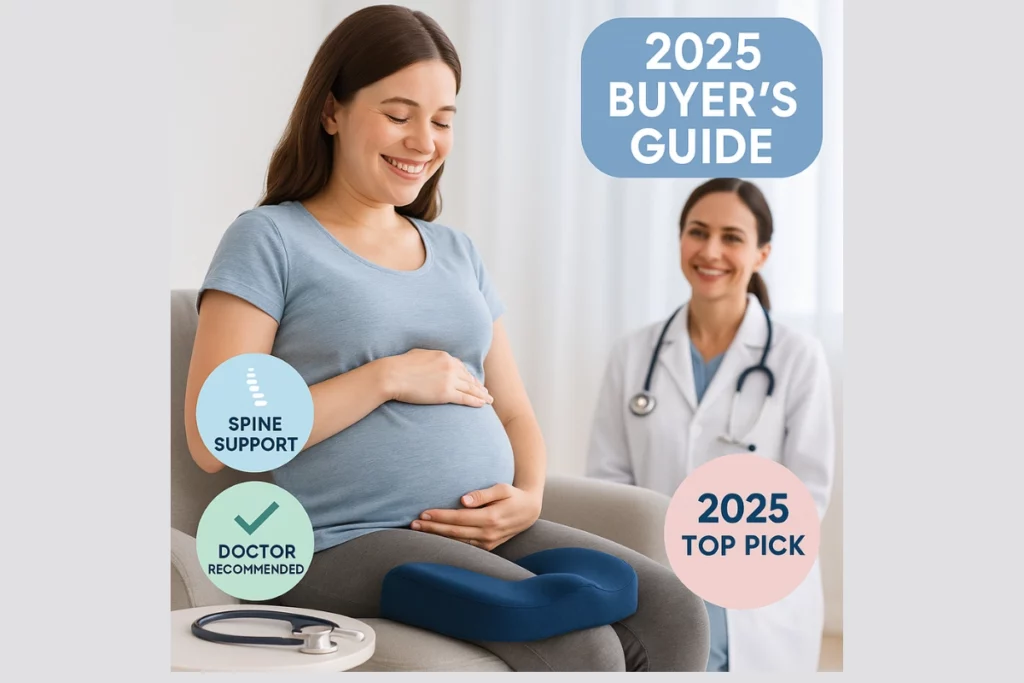
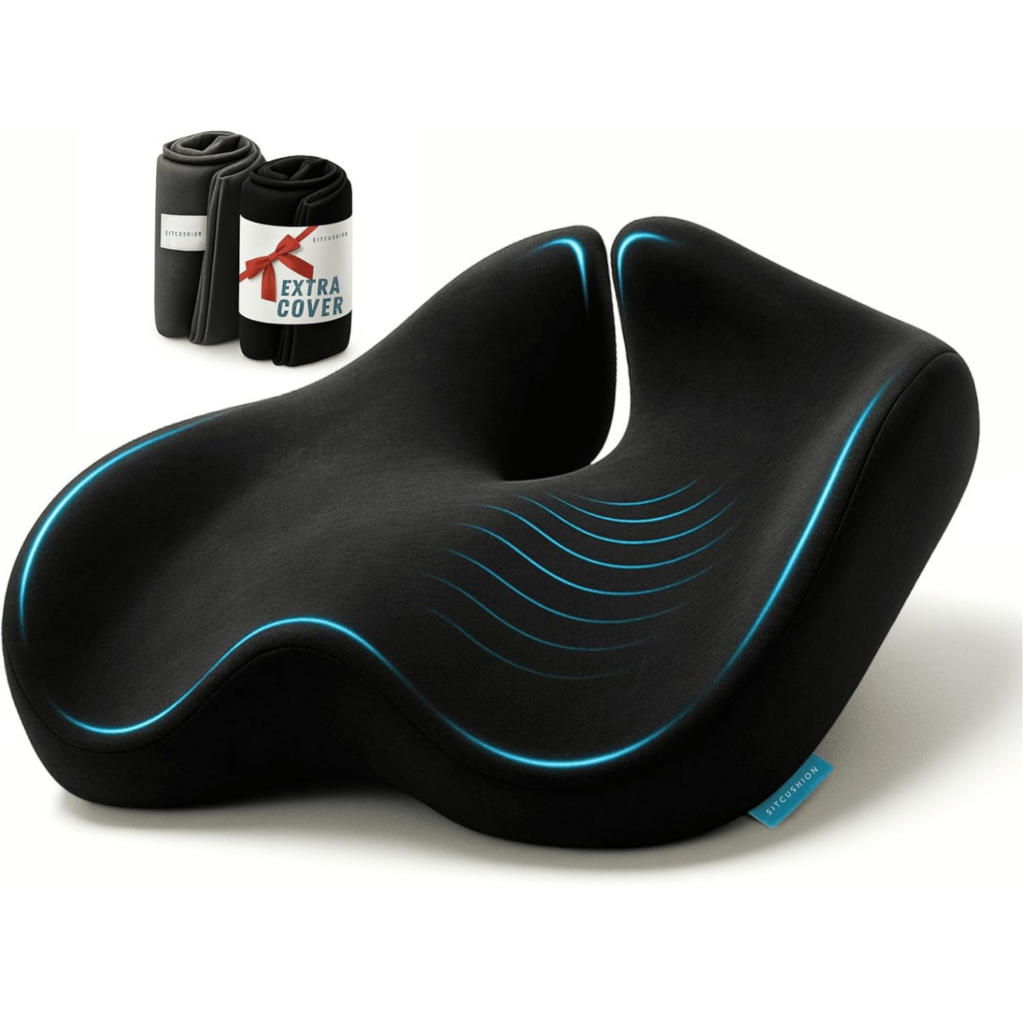
Why is finding the best seat cushion for pregnancy essential? Clinical experts agree that as a woman’s center of gravity shifts during the second and third trimesters, the pressure on the coccyx, hips, and pelvic floor increases significantly. Using the best seat cushions for pregnancy, such as the ergonomically designed Sitcushion, helps redistribute weight, maintain neutral spinal alignment, and prevent common issues like sciatica and lower back pain.
In this 2026 expert guide, we analyze doctor-recommended features—from high-density memory foam to U-shaped cutouts—to help you stay comfortable while working, driving, or relaxing.
Quick Summary: Best Seat Cushion Features for Pregnancy
Shape: U-shaped or Donut cutouts to relieve tailbone (coccyx) pressure.
Material: High-density, medical-grade memory foam (like Sitcushion).
Purpose: To alleviate sciatica, pelvic girdle pain (PGP), and lower back discomfort.
Versatility: Portable designs for office chairs, car seats, and home use.

Why the Best Seat Cushions for Pregnancy are a Medical Necessity
The physiological shift during pregnancy involves more than just weight gain. According to the Mayo Clinic, as the uterus expands, the body’s center of gravity shifts forward. This biomechanical change increases mechanical stress on the lumbar spine and the sacroiliac (SI) joints, often forcing expectant mothers to lean back, which further strains the lower back muscles.
Furthermore, the body releases a hormone called Relaxin, which is designed to loosen ligaments and joints in the pelvic area to prepare for childbirth. While essential, research published in the National Center for Biotechnology Information (NCBI) highlights that this ligament laxity can lead to pelvic girdle pain (PGP) and instability, making standard chairs insufficient for long-term sitting.
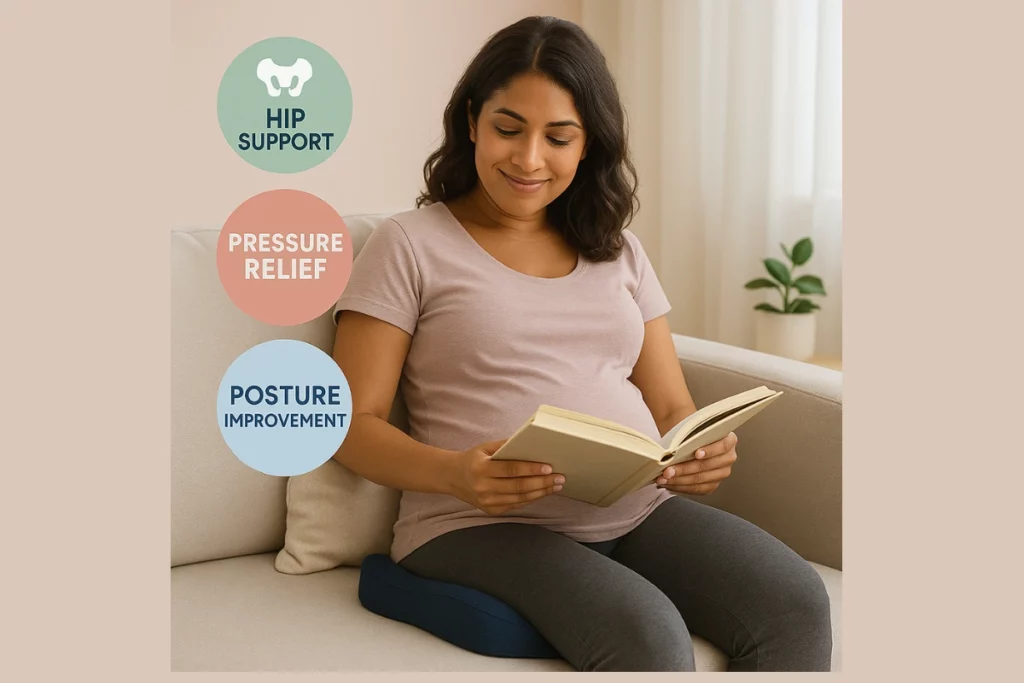
Common Pregnancy Pain Points Addressed by Sitcushion:
To provide the best seat cushion for pregnancy experience, our designs target the specific areas where discomfort typically peaks during the second and third trimesters:
Coccygodynia (Tailbone Pain): Sharp pain caused by the direct pressure of the growing fetus and the widening of the pelvis on the coccyx.
Symphysis Pubis Dysfunction (SPD): Discomfort in the pelvic girdle often exacerbated by uneven weight distribution while sitting.
Sciatica: Nerve compression that radiates pain from the lower back down to the legs, often relieved by a “cut-out” design that prevents direct contact with the nerve area.
Using a specialized Sitcushion creates a “floating” effect for the tailbone and provides a stable, ergonomic base for the pelvis, effectively neutralizing the strain caused by hormonal and structural changes.
Best Seat Cushions for Pregnancy: The Third Trimester Guide
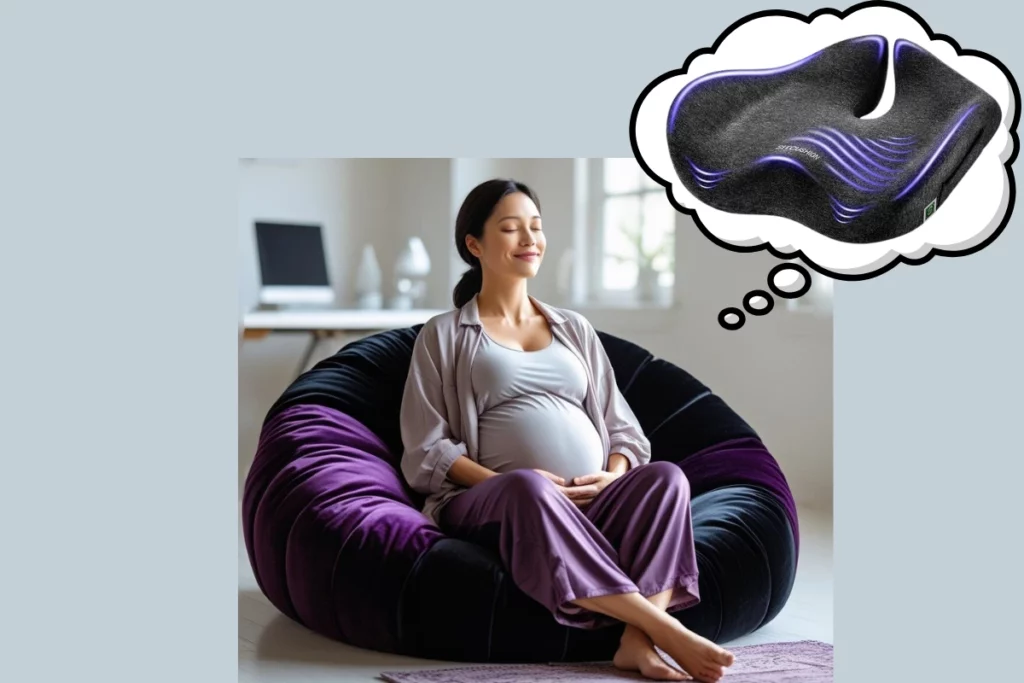
Why Extra Support is Non-Negotiable in Late Pregnancy
By the third trimester, significant physiological changes make standard seating inadequate. With the baby reaching full size, the additional weight (often 25–35 lbs) intensifies the downward pressure on the pelvic floor and increases the forward pull on the lumbar spine.
According to the Royal College of Obstetricians and Gynaecologists (RCOG), pelvic girdle pain (PGP) affects up to 1 in 5 pregnant women. During these final weeks, a specialized cushion isn’t just about “softness”—it’s about pelvic stabilization.
Critical Features of the Best Seat Cushions for Pregnancy
When choosing a Sitcushion for late-stage pregnancy, prioritize these three ergonomic pillars:
Ergonomic U-Shaped Cutouts: Essential for “offloading” the coccyx. By allowing the tailbone to hover, you prevent the sharp, stabbing pain often felt when rising from a seated position.
High-Density Therapeutic Memory Foam: Unlike cheap foam that flattens under third-trimester weight, Sitcushion uses heat-responsive memory foam that maintains its structural integrity while contouring to your changing shape.
Non-Slip Stability Base: As your balance shifts, a sliding cushion can be dangerous. A secure, anti-slip bottom ensures you remain stable on office chairs or car seats.
💡 Interactive Self-Test: Place your current cushion on a hard chair. If you feel “bottoming out” or pressure points after just 15 minutes, your cushion lacks the density required for third-trimester support. It’s time for an orthopedic upgrade.
Seat Cushions for Pregnancy Lower Back Pain Relief
How Posture Dictates Pregnancy Back Pain
During pregnancy, the natural inward curve of your lower back (lumbar lordosis) becomes exaggerated to compensate for the growing belly. Poor sitting posture—especially slouching—causes the pelvis to tilt backward (posterior pelvic tilt), which overstretches the ligaments and puts immense pressure on the intervertebral discs.
Without proper support, this misalignment leads to chronic muscle fatigue and sharp lower back pain. To prevent this, maintaining a neutral spine alignment is crucial, where the ears, shoulders, and hips are vertically aligned.
The Role of Lumbar and Pelvic Support Cushions
The best seat cushions for pregnancy perform two critical functions for back pain relief:
Pelvic Elevation: By elevating the hips slightly above the knees, a Sitcushion encourages an anterior pelvic tilt, restoring the natural curve of the spine.
Targeted Pressure Redistribution: It absorbs the weight that would otherwise be concentrated on the L4-L5 and L5-S1 vertebrae—the most common sites for pregnancy-related disc discomfort.
💡User Insight: Clinical data from physical therapists suggests that up to 80% of pregnancy-related lower back pain can be managed or significantly reduced through proactive posture correction and ergonomic interventions.
Suggested Read: If you’re also looking for ways to stay comfortable at work, don’t miss our guide on Finding the Best Office Chair Seat Cushion for Back Pain.
How Seat Cushions Help Relieve Pelvic Pain During Pregnancy
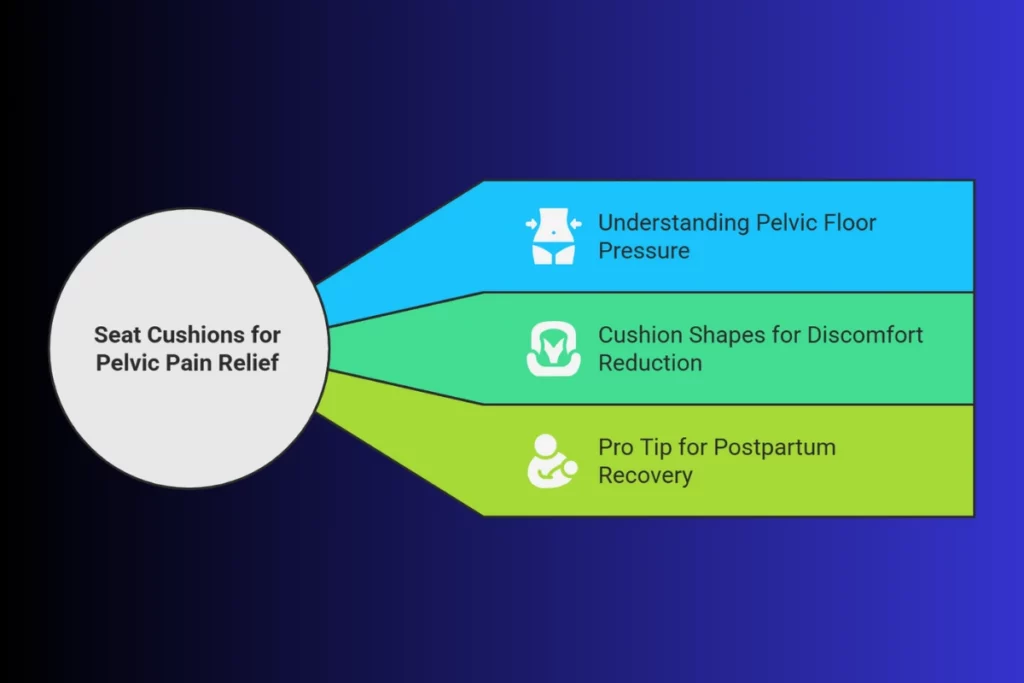
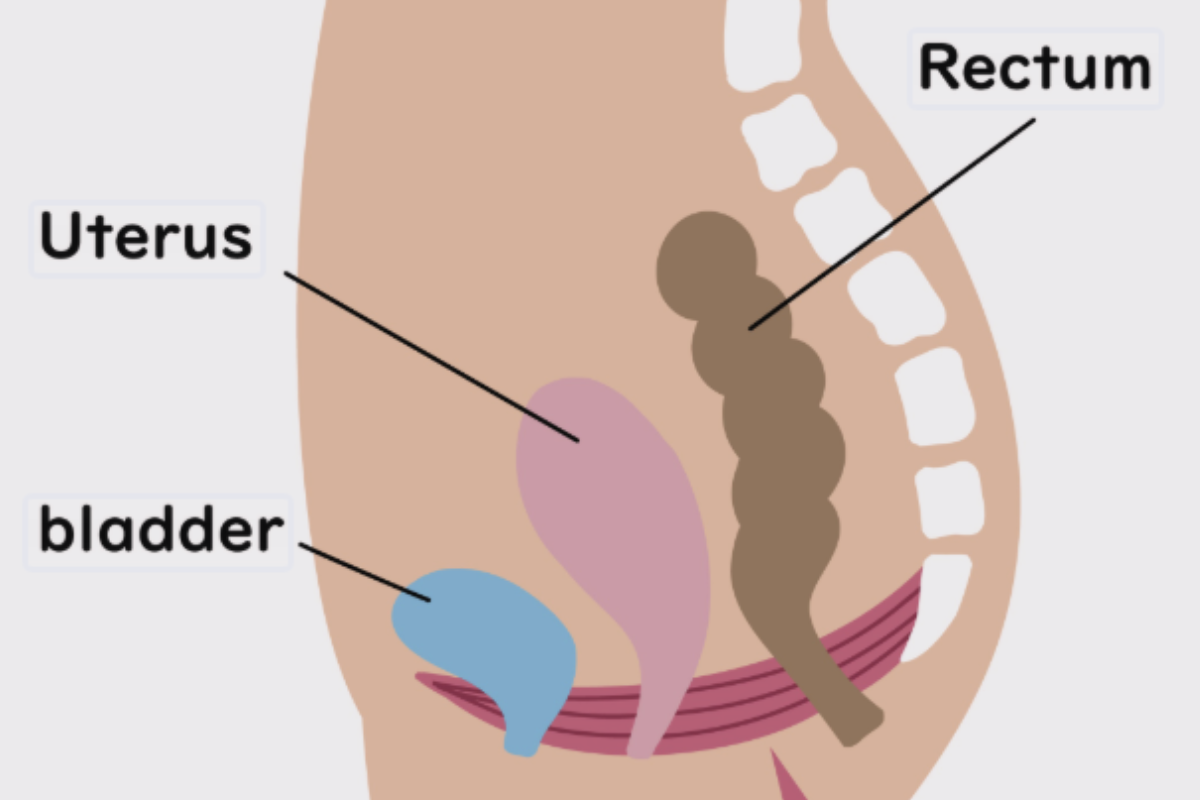
Understanding Pelvic Floor and Perineal Pressure
Pelvic pain during pregnancy—often referred to as Pelvic Girdle Pain (PGP)—is frequently caused by the increased downward force of the growing fetus on the pelvic floor muscles. This pressure can lead to inflammation of the Symphysis Pubis joint and constant discomfort in the perineal area, especially during prolonged sitting.
According to research on Pregnancy-Related Pelvic Girdle Pain, maintaining a seated position that “unloads” the pelvic basin is essential to prevent chronic inflammation and facilitate blood flow to the pelvic tissues.
Ergonomic Cushion Shapes for Pelvic Relief
The best seat cushions for pregnancy are engineered with specific geometries to provide a “zero-gravity” feel for the pelvic region:
U-Shaped Cutouts: By removing the central rear part of the cushion, Sitcushion ensures that the coccyx and the posterior pelvic floor do not make direct contact with hard surfaces, effectively reducing nerve compression.
Donut or O-Shaped Contours: These are particularly effective for redistributing weight away from the perineal area toward the ischial tuberosities (the “sit bones”), providing immediate relief for SPD (Symphysis Pubis Dysfunction).
💡Pro Tip for Postpartum Recovery: Your Sitcushion is a long-term investment. Clinical experts recommend continuing its use during breastfeeding after delivery. For those recovering from a vaginal birth or episiotomy, the pressure-free design of a U-shaped cushion is vital for tissue healing and comfort during long nursing sessions.
Ergonomic Seat Cushions Designed for Pregnant Mothers
What Defines a Truly "Ergonomic" Pregnancy Cushion?
In the context of maternity support, “ergonomic” means more than just comfort; it refers to anthropometric adaptation. A truly ergonomic cushion must facilitate a neutral pelvic tilt and reduce the load on the intervertebral discs. For a pregnant mother, this means the cushion must dynamically respond to her changing weight and shape while maintaining its structural integrity.
The Verdict: Memory Foam vs. Gel Seat Cushions
Choosing the right material is a balance between pressure redistribution and thermal regulation.
| Feature | High-Density Memory Foam (Sitcushion Choice) | Gel-Infused Cushions |
| Support Level | Provides deep contouring and adapts to body heat for a custom fit. | Offers a firmer, bouncy feel; less contouring. |
| Pressure Relief | Superior for coccyx and sciatica relief due to “slow-rebound” properties. | Good for general comfort but may “bottom out” under 3rd-trimester weight. |
| Breathability | Best when paired with a breathable mesh cover (like Sitcushion). | Naturally cooler to the touch; ideal for high-temperature environments. |
| Durability | Maintains shape for years; medical-grade quality. | Can lose elasticity or leak if the outer layer is punctured. |
Expert Recommendation: For most expectant mothers, High-Density Memory Foam is the gold standard. It provides the “viscoelastic” support necessary to cradle the pelvis and prevent the flattening that occurs with cheaper materials. However, if you live in a tropical climate, ensure your memory foam cushion comes with a breathable, 3D mesh cover to balance support with cooling.
💡Poll: Every pregnancy journey is unique. Do you prioritize the “hugging” support of memory foam or the cooling sensation of gel? Let us know in the comments below!
Seat Cushions to Reduce Pressure on Hips in Pregnancy
Hip Alignment and Mechanical Weight Distribution
As the pregnancy progresses, the hormone-induced loosening of the sacroiliac (SI) joints can lead to uneven weight distribution. When you sit on a flat, hard surface, the entire load of your upper body and the baby is concentrated on the Ischial Tuberosities (sit bones) and the hip joints. This concentration often causes inflammation and “shooting” hip pain.
A high-quality Sitcushion acts as a corrective interface. By providing a contoured surface, it ensures that your hips remain level and that weight is distributed across the thighs and buttocks, rather than just the joints. This alignment is crucial for preventing lateral hip pain and bursitis during long periods of sitting.
The Science of Density: Choosing the Right Support
For hip relief, the density of the cushion is more important than the thickness.
The Problem with “Too Soft”: Low-density cushions cause “bottoming out,” where the foam collapses completely, leaving your hips in direct contact with the hard chair.
The Problem with “Too Hard”: Excessive firmness creates new pressure points, restricting blood flow to the lower extremities.
The Sitcushion Solution: We recommend a medium-firm, medical-grade memory foam. This specific density (measured in Indentation Load Deflection or ILD) is calibrated to provide a “cradle” effect—firm enough to support the extra weight of the third trimester, yet soft enough to adapt to the sensitive contours of a mother’s body.
Pregnancy Seat Cushions for Long Car Rides & Commuting
Addressing Vehicle-Specific Discomfort
Driving or sitting as a passenger during pregnancy introduces unique challenges: vibration fatigue and restricted leg movement. Long commutes can lead to peripheral edema (swelling) and deep-vein discomfort due to the angle of standard car seats, which often tilt the pelvis backward and compress the femoral arteries.
Using a specialized Sitcushion in the car helps neutralize the bucket-seat dip, ensuring your hips are aligned with your knees. This improves circulation to the lower extremities and reduces the “numbness” often reported during the second and third trimesters.
Key Features of the Best Portable Pregnancy Cushions
For a seat cushion to be effective in a vehicle, it must meet specific “Travel-Ready” criteria that Sitcushion prioritizes:
Vibration Absorption: High-density memory foam acts as a shock absorber against road bumps, protecting the sensitive coccyx area.
Dimensional Fit: The cushion should fit within the side bolsters of a car seat without sliding. A non-slip rubber base is mandatory for safety during acceleration and braking.
Portability & Hygiene: Look for lightweight designs with integrated carry handles. Since car environments can get warm, a breathable 3D mesh cover is essential to prevent heat buildup, and it must be easily removable for machine washing.
💡Pro Tip for Expectant Travelers: Beyond using an ergonomic cushion, clinical experts recommend the “45-Minute Rule.” Take a stretch break every 45 minutes to promote lymphatic drainage and reduce the risk of blood clots (DVT). While seated, perform simple ankle pumps to keep circulation flowing.
How the Best Seat Cushions Prevent Pregnancy-Related Sciatica Pain
What is Sciatica and Why is it Common During Pregnancy?
Sciatica refers to the inflammation or compression of the sciatic nerve, which radiates from the lower back through the hips and down each leg. During pregnancy, the combination of fetal weight gain and the postural shift known as anterior pelvic tilt can lead to nerve impingement.
According to the Cleveland Clinic, sciatica affects a significant portion of expectant mothers, particularly in the third trimester. This discomfort is often exacerbated by sitting on improper surfaces that force the spine into a slouched position, further compressing the nerve roots.
Nerve Decompression: How Sitcushion Engineering Helps
To be categorized as the best seat cushion for pregnancy sciatica, a product must focus on nerve decompression. A standard flat cushion can actually worsen the pain by increasing the contact area between the nerve and the seat.
Strategic Cutouts: The U-shaped opening in a Sitcushion ensures the coccyx and the base of the sciatic nerve remain “suspended” in a pressure-free zone.
Ergonomic Contouring: By supporting the thighs and redistributing weight to the ischial tuberosities (sit bones), the cushion prevents the piriformis muscle from tightening—a common secondary cause of sciatica known as Piriformis Syndrome, which is frequently cited by physical therapists as a major contributor to pregnancy leg pain.
Raised Edges: These help maintain pelvic stability, preventing the micro-shifts in posture that trigger painful “flare-ups” during long periods of sitting.
Seat Cushions Designed for Pregnancy and Postpartum Use
Dual-Purpose Investment: Supporting the "Fourth Trimester"
The physical demands on a mother’s body do not end at delivery. The postpartum period, often called the Fourth Trimester, requires specialized support as the pelvic ligaments remain lax due to the lingering effects of the hormone Relaxin. Whether you are recovering from a vaginal birth, an episiotomy, or a C-section, sitting can remain uncomfortable for several weeks.
According to Postpartum Recovery Guidelines, reducing direct pressure on the perineal area is essential for promoting blood circulation and speeding up tissue repair. A Sitcushion provides a “pressure-free zone” that is vital during this sensitive healing phase.
Hygiene and Maintenance for Postpartum Recovery
Postpartum care demands high standards of cleanliness to prevent infections and ensure a sterile recovery environment. This is why the material of your cushion cover is just as important as the foam inside.
Medical-Grade Hygiene: The best seat cushions for postpartum recovery must feature a removable and machine-washable cover.
Hypoallergenic Fabrics: Sitcushion utilizes breathable, hypoallergenic materials (like 3D Mesh) that prevent heat buildup and moisture—factors that can irritate sensitive skin or surgical incisions during long nursing sessions.
Longevity: By investing in a high-density memory foam cushion, you ensure the product retains its orthopedic properties long after the initial recovery, serving as a permanent office or car ergonomic aid.
💡Expert Tip: If you’re breastfeeding, use your Sitcushion to maintain a neutral spine. This prevents “Nursing Slouch,” which often leads to secondary upper back and neck pain during the first few months of motherhood.
Tips for Sitting Comfortably During Pregnancy with a Seat Cushion
The "Golden Rules" of Posture for Expecting Mothers
Simply having the best seat cushion for pregnancy is half the battle; knowing how to sit on it completes the relief. To achieve optimal spinal alignment and minimize pelvic pressure, follow these ergonomic steps:
Neutral Foot Placement: Keep your feet flat on the floor. If your feet don’t reach, use a small footstool. This prevents strain on the lower back.
The 90-Degree Rule: Ensure your knees are at a 90-degree angle, ideally slightly lower than or level with your hips. A Sitcushion helps achieve this elevation, promoting healthy blood flow to the legs.
Upright Spinal Alignment: Sit back into the chair so your back is fully supported. Avoid leaning forward or “slouching” into the belly, which compresses the internal organs and the diaphragm.
Weight Distribution: Center yourself on the cushion so the U-shaped cutout is directly under your tailbone (coccyx).
Timing and Movement: The 45-Minute Limit
Even with the most advanced ergonomic support, the human body isn’t designed for static positions during pregnancy.
Avoid Prolonged Sitting: Limit continuous sitting to 30–45 minutes. Prolonged stasis can increase the risk of edema (swelling) and venous congestion.
Active Recovery: Set a “Movement Reminder” on your phone. Every 45 minutes, stand up and perform gentle stretches or a 2-minute walk. This encourages lymphatic drainage and redistributes the amniotic fluid pressure.
💡Expert Insight: According to Occupational Health and Safety (OHS) guidelines, micro-breaks are the most effective way to prevent musculoskeletal disorders (MSDs) during pregnancy, especially for office-based professionals.
What to Look for in a Seat Cushion During Pregnancy: A 2026 Buyer’s Guide
Choosing the best seat cushion for pregnancy requires looking beyond basic padding. To ensure long-term relief and spinal health, prioritize these four technical criteria:
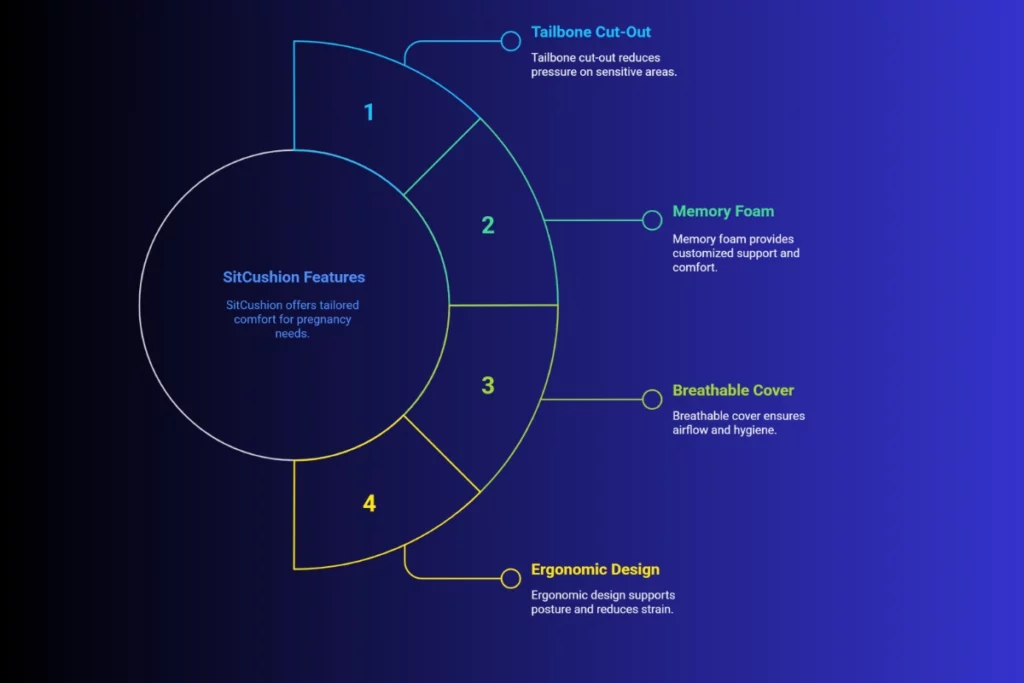
1. Ergonomic Shape: U-Shape vs. Donut
U-Shaped (Coccyx Cut-out): The gold standard for pregnancy. It features a rear cutout that allows the tailbone to “float,” preventing direct contact with the chair.
Donut (O-Shaped): Ideal if you are experiencing specific pelvic floor pressure or recovering from a vaginal birth.
The Sitcushion Edge: Our contoured design combines both, offering a tapered front to reduce pressure on the thighs while protecting the coccyx.
2. Material Density and “Slow-Rebound” Memory Foam
Material is the most critical factor for durability. Low-quality foam will flatten within weeks of third-trimester use.
Preferred: High-Density, Medical-Grade Memory Foam. It responds to body heat to mold to your unique shape.
The Science: According to Ergonomics Health Resources, memory foam with a high density-to-firmness ratio provides the best pressure redistribution for pregnant users.
3. Thermal Regulation and Breathability
Hormonal changes often lead to increased body temperature during pregnancy.
Mesh Covers: A 3D breathable mesh cover (like the one used in Sitcushion) allows for maximum airflow, preventing heat traps.
Hypoallergenic Cotton: A great alternative for sensitive skin, provided it is removable and washable.
4. Safety and Portability
Anti-Slip Base: Essential for safety on wooden chairs or leather car seats to prevent sudden shifts in posture.
Lightweight Design: Look for cushions with an integrated handle. A pregnancy cushion is only effective if you can easily move it between your office, car, and dining room.
Why Choose Sitcushion for Your Pregnancy Journey?
When it comes to maternal health, not all cushions are created equal. Sitcushion has engineered a specialized orthopedic solution that goes beyond basic padding to provide medical-grade support. Here is why thousands of expectant mothers and healthcare professionals trust us:
Precision Engineering for Maternal Needs
- Advanced Coccyx Decompression: Our signature U-shaped tailbone cut-out is strategically measured to ensure zero contact between the seat and your sensitive nerve endings, providing immediate relief for coccygodynia.
Premium “Slow-Rebound” Memory Foam: Unlike standard foam that collapses under the weight of the third trimester, Sitcushion uses a high-density, heat-responsive polymer that maintains its ergonomic shape while providing a customized “cradle” for your pelvis.
Designed for Comfort, Built for Health
- Optimal Pelvic Alignment: Our contoured surface promotes a neutral spinal posture, preventing the forward pelvic tilt that causes chronic lower back pain during pregnancy.
- 3D Breathable Mesh Technology: To combat pregnancy-related heat flashes, our covers feature advanced airflow technology to keep you cool and dry in the office or on long car rides.
- Hygienic & Hypoallergenic: Every Sitcushion comes with a removable, machine-washable cover made from hypoallergenic fabrics, ensuring a safe and sterile environment for both pregnancy and postpartum recovery.
💡Endorsed by Experts: Sitcushion is designed in collaboration with ergonomic specialists to ensure it meets the rigorous demands of prenatal orthopedic care.
Frequently Asked Questions
Is it safe to use an ergonomic seat cushion every day throughout all trimesters?
Can using a seat cushion now prevent chronic posture problems after delivery?
Do I need separate cushions for my office chair and car seat?
Final Thoughts: Invest in Your Comfort During Pregnancy
Pregnancy doesn’t have to mean enduring constant discomfort. With the right , you can sit comfortably at work, in the car, or at home. Reduce pressure, prevent pain, and support your posture during this life-changing period.
📍 Explore SitCushion’s full line of pregnancy Seat Cushions or visit our for Expert Advice, buyer guides, and more articles like this one.
Have a question we didn’t answer? Drop it in the comments below or contact us—we’re here to help!