






A bad seat cushion usually gives itself away before you pay for it: thin or flimsy foam, a cover that traps heat, a shape that doesn’t fit your chair, and no real support design under your tailbone and hips. Spotting these signs early is the difference between a cushion that helps and one that ends up in the closet.
This matters because a well-made cushion can genuinely help when you sit for long hours, while a poorly made one only adds padding without changing how pressure is spread. Below are seven warning signs of a low-quality seat cushion, plus what to look for instead, whether you sit at a desk, in a car, or at home.
Quick Checklist Before You Buy
| Warning sign | What to look for instead |
|---|---|
| Thin, low-density foam | Foam that recovers after you press it, with a stated foam type |
| Flat pad with no support design | A contoured shape or cutout that matches your pain point |
| Claims to fix your lower back | A clear role as seat support, plus separate lumbar support if needed |
| Wrong size or slides around | A measured fit and a non-slip base |
| Hot, non-washable cover | A breathable, removable, washable cover |
| Missing specs | Listed foam type, dimensions, cover fabric, and return terms |
| Promises that sound too big | Honest wording about comfort and pressure relief |
1. The Foam Is Thin or Low Density
Low-density foam is the most common reason a cushion goes flat within weeks. Foam density describes how much material is packed into the foam. According to the Polyurethane Foam Association, higher density generally means better durability, while firmness is a separate property that only describes how the foam feels. That is why a cushion can feel firm in the box and still collapse quickly.
A simple test is to press your hand into the center and release. Good foam recovers steadily. If it stays dented, or you can feel the hard seat underneath, the cushion is bottoming out and will only get worse. Even a well-made cushion wears out eventually, and everyday use typically lasts roughly 2 to 5 years, which our guide on how to assess seat cushion durability explains in more detail.
2. There Is No Real Support Design
A flat slab of foam adds softness but does little to change where your body weight goes. A well-designed cushion either spreads your weight over a wider area or takes pressure off one specific spot, such as a coccyx cutout under the tailbone. In a six-month randomized controlled trial of high-risk office workers, a cushion designed to encourage position changes was linked to far less new low-back pain than a placebo cushion, which suggests that design matters, not just padding.
Check whether the shape matches your problem. For general tailbone or lower back discomfort, see which seat cushion is best for lower back pain. If you need relief from hemorrhoids or postpartum pressure, that is a different job, covered in donut pillows vs coccyx cutouts.
3. It Promises Lower Back Support but Is Only a Seat Pad
A seat cushion supports your hips and tailbone, not the curve of your lower back. That job belongs to the backrest. OSHA states that a chair’s backrest should provide lumbar support, and suggests a rolled towel or a removable back support cushion if your chair lacks it. In other words, the two products do different things.
Be cautious with listings that imply a seat pad alone will fix lower back pain. If your lower back is your main complaint, you may need lumbar support in addition to a seat cushion. Our office chair cushion guide shows how the two work together at a desk.
4. It Does Not Fit Your Chair or Slides Around

A cushion that is too big, too small, or slippery changes how you sit, and not for the better. If it bunches up, hangs off the edge, or shifts every time you move, you will keep readjusting and your posture suffers. Measure the width and depth of your seat first, then check the cushion’s listed dimensions and look for a non-slip base.
Also consider the surface. A cushion works best on a firm, flat seat. On a soft sofa or deep recliner it sinks along with you and loses its effect. In a car, a thicker cushion raises your seating position, so read whether a cushion changes your seating height and visibility before buying. If you plan to move one cushion between office, car, and home, see whether a seat cushion can be used on multiple chairs.
5. The Cover Traps Heat and Is Hard to Clean
A cover that traps heat and can’t be washed makes long sitting less comfortable and less hygienic. Memory foam can feel warm for some people, so the cover matters. Look for breathable mesh and a removable, machine-washable cover with a zipper, so you can clean it without soaking the foam.
If heat is your main concern, our comparison of phase change vs gel cooling cushions explains what actually helps. For care instructions, see how to wash a Sitcushion cover.
6. The Listing Hides the Specs
If a seller won’t tell you what the cushion is made of, you can’t judge its quality. Words like “premium,” “orthopedic,” and “ergonomic” mean nothing without details. A trustworthy listing names the foam type, gives exact dimensions, describes the cover fabric, and explains its return terms.
Treat a very low price combined with missing specs as a warning. If a listing says “high-density” but gives no figure or foam type, you have no way to verify it. Ask the seller or move on.
7. It Promises Too Much
No seat cushion cures back pain, and a seller who says otherwise is overselling. A good cushion can relieve sitting pressure and improve comfort. Claims like “cures sciatica” or “doctor recommended” with no named source are red flags. We cover this more in 5 things no seat cushion seller would tell you.
Even the best cushion doesn’t replace movement. A small Columbia University study of 11 adults found that a 5-minute walk every 30 minutes of sitting lowered blood sugar and blood pressure compared with sitting continuously. Pair your cushion with short breaks, and see a healthcare professional if you have persistent pain, numbness, or pain that travels down your leg.
How to Choose a Better Seat Cushion
Choose by where and how you sit, then verify the specs. Start with your main situation:
- At a desk all day, see the best office chair seat cushion for back pain.
- Driving long distances, see the best car seat cushion for back pain.
- Not sure where to start, the seat cushion pain relief guide compares options by pain type.
Foam versus gel is less important than fit and design. In a double-blind trial of drivers with chronic low back pain, both foam and gel cushions produced significant improvement, so don’t rule out a well-made foam cushion because of material alone.
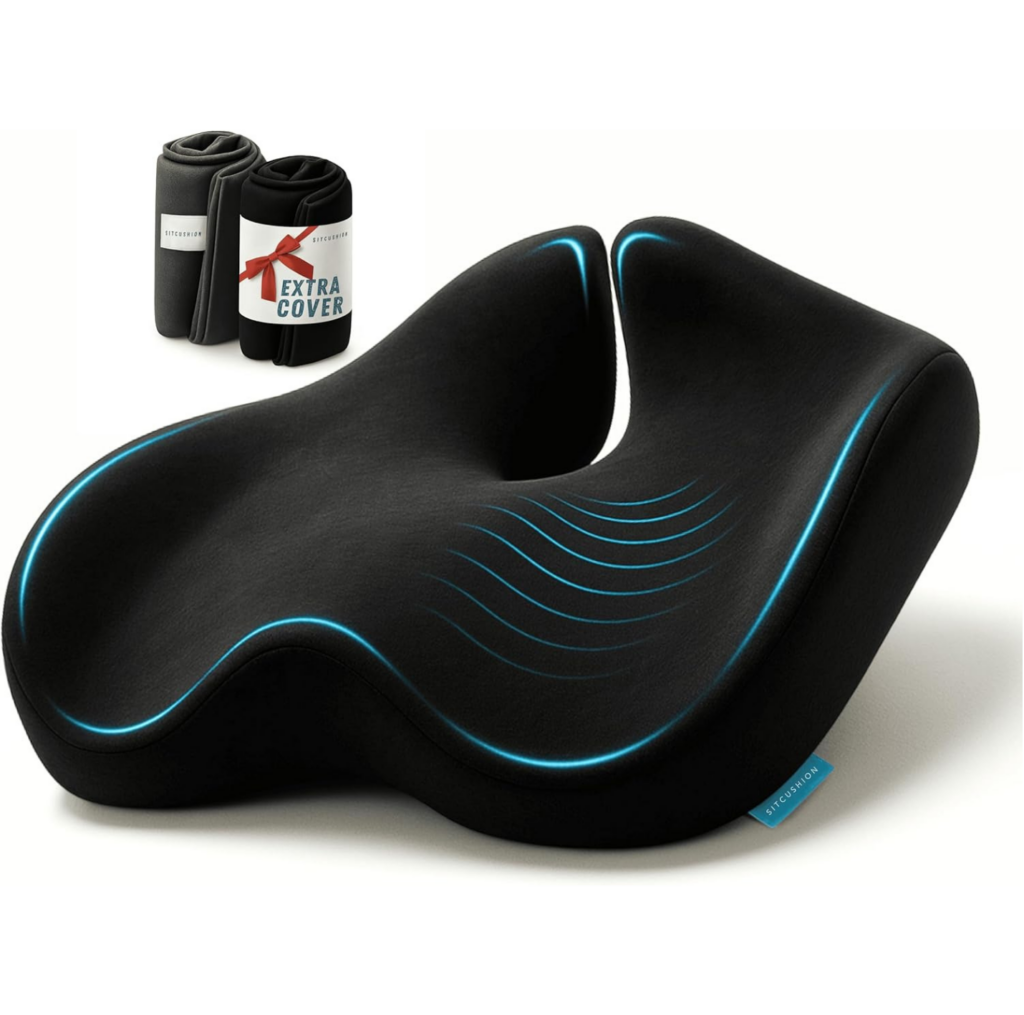
For a reference point, the Sitcushion Office Seat Cushion uses charcoal-infused memory foam, a U-shaped coccyx cutout, a 3D breathable mesh cover, a non-slip base, and a carrying handle. You can compare all models on our seat cushion comparison page.
Frequently Asked Questions
What makes a seat cushion bad?
A bad seat cushion has thin or low-density foam that flattens quickly, no real support design, a poor fit for your chair, a cover that traps heat, and a listing that hides its specs or makes unrealistic promises.
Is it bad to sit on a pillow instead of a seat cushion?
A pillow is fine as a short-term stopgap, but bed and sofa pillows are made for sleeping or decor, not sitting. They tend to flatten unevenly, slide around, and offer no shaped support. A seat cushion built for sitting uses denser foam and a stable base.
Can a bad seat cushion make back pain worse?
It can. A poorly shaped or poorly fitting cushion may leave you tilted or unsupported, so discomfort can continue or feel worse. A new cushion usually needs one to two weeks of adjustment, but if your pain increases, stop using it and talk to a healthcare professional.
How do I know if my seat cushion is worn out?
Common signs are foam that no longer springs back within a few minutes, a cushion that feels noticeably flatter than when new, and discomfort returning that the cushion used to relieve. See our durability guide for more.
Why do people carry seat pads around?
Mostly to make hard seating more comfortable, such as stadium benches, bleachers, trains, and event seats. See three places a seat cushion can help beyond the office and car.
The Bottom Line
A seat cushion is worth buying only if it’s well made, well designed, and honestly described. The seven signs above help you filter out cushions that flatten fast, don’t fit, or overpromise. Choose by how and where you sit, verify the specs, and keep moving through the day. When you’re ready, browse the Sitcushion seat cushions or visit our Knowledge Center for more guides.